Crises have a tendency to bring the best out of people, but also the worst. They can be a great force for creativity and innovation, but can also amplify divisions and discord. Evidently, the current coronavirus pandemic has produced all of these characteristics. However, most significantly, it has demonstrated the need for effective and humane leadership and adequate institutions that are capable of coping with a disaster of almost unimaginable proportions — one that demands the agility to adapt to constantly changing circumstances and knowledge.
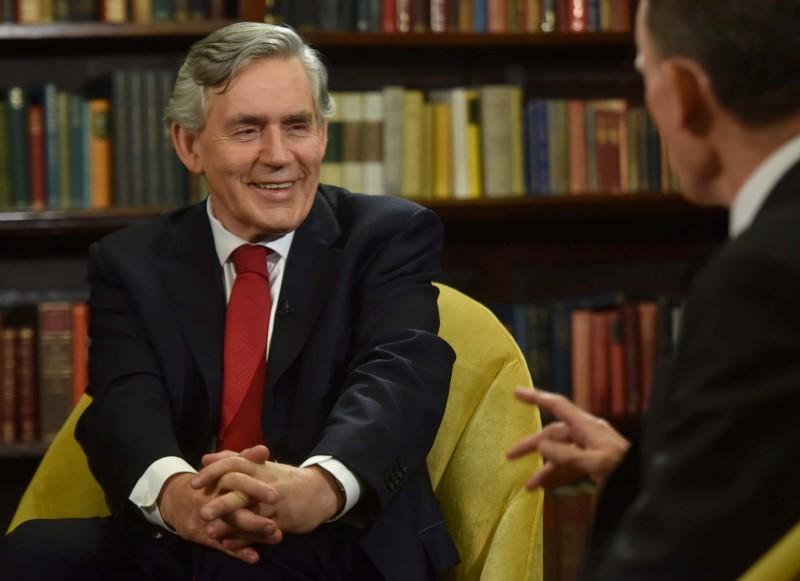
An essential approach in the struggle to successfully contain, overcome and then recover from this crisis is to consider the issue of global governance. Hence, former British Prime Minister Gordon Brown’s proposal to create a temporary form of global government to tackle the twin medical and economic crises caused by the coronavirus disease (COVID-19) pandemic deserves more attention that it has received to date.
A constructive move in the right direction was taken last week in a virtual G20 meeting convened by Saudi Arabia, the current G20 chair. The summit launched a global initiative to accelerate access to the health tools required to combat COVID-19 and recognized the World Health Organization’s centrality in these efforts, despite the Trump administration’s recent attacks on that organization. In a further glimmer of hope for wider international cooperation, the European Commission will early next month host a global pledging effort and replenishment campaign aimed at raising €7.5 billion ($8.1 billion) to support the ramping up of COVID-19 diagnostics and treatments.
Yet, in the fight against the coronavirus so far, unilateralism has been a more distinctive feature of states’ behavior than multilateralism. The debate over the merits of a concentration of power versus those of a diffusion of power is as old as attempts by human beings to organize their social structures. It is an intellectual and ideological debate with profound practical implications that go to the core of the role of governing bodies and their effectiveness. The current crisis is highlighting the danger of a concentration of too much power in the hands of too few people or bodies. Such a scenario harbors the menace of arbitrary behavior, curbs on human and civil rights, and a lack of transparency and accountability, unless there are built-in mechanisms to avert these dangers.
In the 13th century, the Italian poet Dante Alighieri maintained that peace, prosperity and justice are more likely to be achieved under a unitary government — “therefore the best order of the world demands world government.” In the 20th century, the most prominent engines of greater international collaboration were the two world wars: The First World War produced the League of Nations, and it was in the aftermath of the Second World War that both the UN and the EU’s predecessor were established. Contemporary international relations theorists, including Alexander Wandt and Daniel Deudne, argue, albeit in a different context, that what the current pandemic has so devastatingly exposed is that the modern state is vulnerable to global developments and, therefore, only global governance can fix such issues.
Brown’s welcome intervention derives not only from his reading of the current situation, but also his experience as prime minister in the thick of the 2008 financial crisis, when the world was threatened by total economic meltdown. Back then, the world recovered, at least in some respects, through taking some painful measures, characterized by powerful international cooperation — though a world government was never considered.
However, the current challenge is even more complex than the 2008 crisis, which was economic in nature and which decision-makers were more accustomed to dealing with. It is mainly the magnitude that is profoundly different. In the current predicament, although the economic implications are even more catastrophic than those of 2008, they are caused by an invisible enemy that most countries were not prepared for and that has left leaders completely outside their comfort zone. They are learning through trial and error, without a coherent approach and, in some cases, more concerned with their individual political future than the health of their people.
Moreover, COVID-19 is presenting the decision-makers, especially the more thoughtful ones, with the tough dilemma of dealing with both the human suffering caused directly by the coronavirus and the hammer blow to their economies from the prolonged lockdowns, which further exacerbate the human suffering. This is what makes Brown’s idea of a temporary world government worth considering.
Leaders can quarrel over which country is to blame, which country reacted too slowly or which country might be concealing information to the detriment of others, but only a coordinated approach can stop the spread of this deadly viral enemy. Joint efforts to find a vaccine and a cure, share methods of treatment, and move equipment as the coronavirus is suppressed in one place but reaches its peak in another could be done most effectively when coordinated and executed globally.
Brown is an idealist with very strong moral foundations, but also a seasoned politician and statesman who has operated at the highest levels of domestic and international politics. He is not so naive as to truly believe that a global government is going to be formed, even in this desperate time of need. Those with an instinct for cooperation and multilateralism are operating with even more zest and conviction, but, sadly, in this crisis of biblical proportions, nationalistic-chauvinistic misperceptions among individuals and institutions are frequently being reinforced.
The current crisis is highlighting the danger of a concentration of too much power in the hands of too few.
Yossi Mekelberg
Those who thrive on discord and conflict are seeking only to blame others and are working unilaterally with even more gusto. In Washington, Beijing, Moscow, London and elsewhere, multilateralism had been under attack long before COVID-19 and old habits die hard, despite the dramatic change in the rules of the game.
A global government, even a temporary one, is not feasible in a world so extremely divided and accustomed to politicians apportioning blame, rather than looking for common ground. However, instead of the whims and wishful thinking of politicians, the recent virtual meeting of the G20 and other international initiatives to shift the discourse toward more multilateral and evidence-based policies has demonstrated the right approach for dealing with the coronavirus pandemic. They might be the precursor for addressing the global challenges that are yet to unfold.
- Yossi Mekelberg is professor of international relations at Regent’s University London, where he is head of the International Relations and Social Sciences Program. He is also an associate fellow of the MENA Program at Chatham House. He is a regular contributor to the international written and electronic media. Twitter: @YMekelberg