- Pakistan’s government levies Rs114 per liter in taxes and duties on petrol and Rs100 per liter on diesel
- In recent weeks, the exorbitant levy has sparked protests across the country amid multiple fuel price hikes
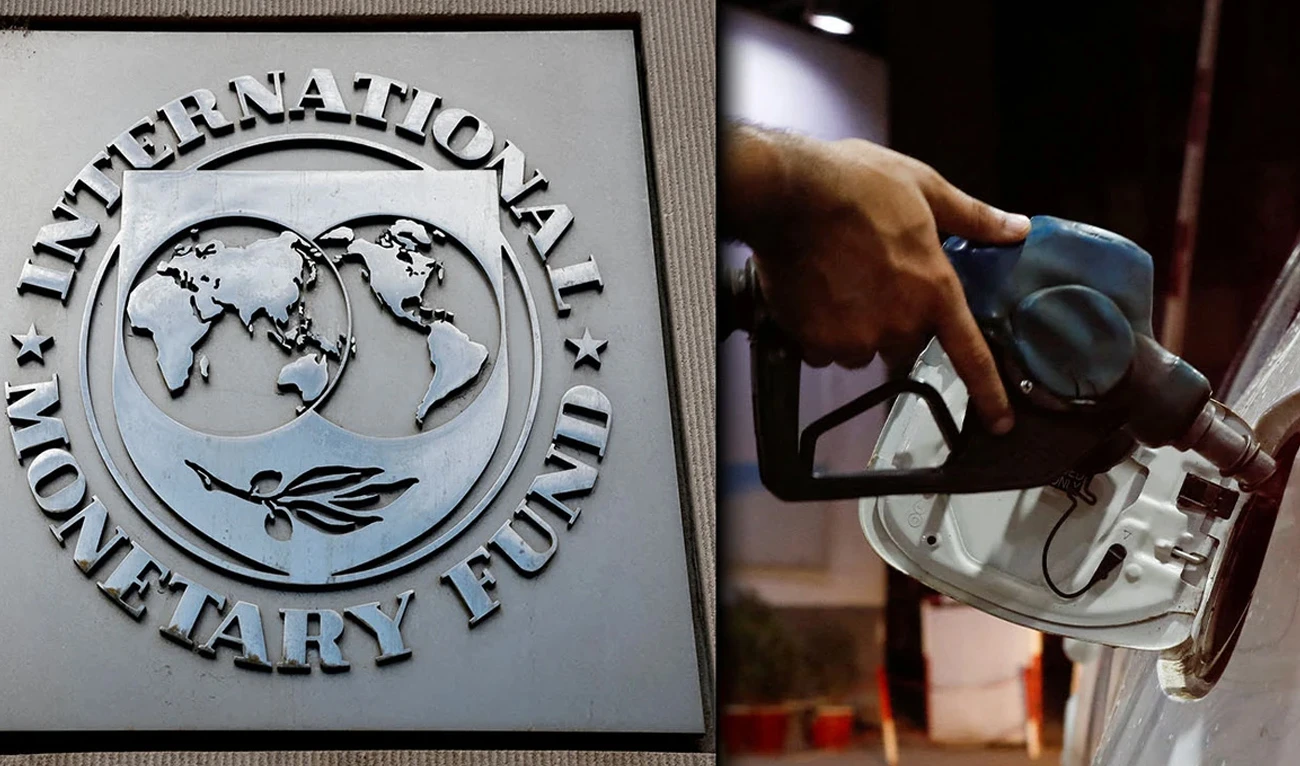
KARACHI: Pakistan’s finance ministry on Tuesday said that petroleum levy was not a “central point” of the country’s $7 billion International Monetary Fund (IMF) program, rejecting media reports that linked the levy to the lender’s conditions.
The statement came in response to a report published by Pakistan’s Express Tribune newspaper, which suggested that the ministry had made petroleum levy the central point of the IMF program that is due to be reviewed in the coming weeks.
Pakistan’s government levies Rs114 [$0.41] per liter in taxes and duties on petrol and Rs100 [$0.36] per liter on diesel. In recent weeks, the exorbitant levy has sparked protests across the country, amid multiple hikes in fuel prices due to Gulf supply disruptions.
In a statement on Tuesday, the finance ministry dismissed the assertion it had made the petroleum development levy (PDL) the “central point” of the IMF program, describing the report as “misleading.”
“The program fiscal strategy is substantially broader and revolves around FBR (Federal Board of Revenue) revenue mobilization, expansion of tax base, provincial taxation, expenditure rationalization etc,” the finance ministry said.
“For FY27, the program specifically emphasizes additional revenue mobilization and strengthening FBR performance rather than relying solely on petroleum taxation. PDL is one of the revenue instruments and describing it as center piece of program materially overstates its role.”
Citing Planning Minister Ahsan Iqbal, the newspaper also reported that Iqbal had sought Prime Minister Shehbaz Sharif’s intervention to include his ministry in IMF parleys, saying that the $7 billion program was not just about numbers but about people and economic development.
The report came amid a long march toward the federal capital of Islamabad by the Jamaat-e-Islami (JI) religious party, seeking complete abolition of the levy. However, the JI on Tuesday announced temporarily halting the march on the request of PM Sharif.
The finance ministry sought to dispel the perception that it had “tight control” over the IMF program design and negotiations.
“IMF’s EF (extended fund) and RS (Resilience and Sustainability) facilities encompass reforms and commitments falling within the mandates of multiple federal and provincial institutions, including Finance Division, Planning Commission/Ministry of Planning, Ministry of Energy, provincial governments, FBR, SBP (State Bank of Pakistan) and other relevant stakeholders,” it said.
“Concerned ministries and institutions participate and lead technical discussions, including benchmarks setting relating to their respective mandate.”