- Say mosques will welcome everyone except for coronavirus patients and elderly worshippers
- Religious affairs minister says decision regarding special Ramadan prayers will be taken on April 18
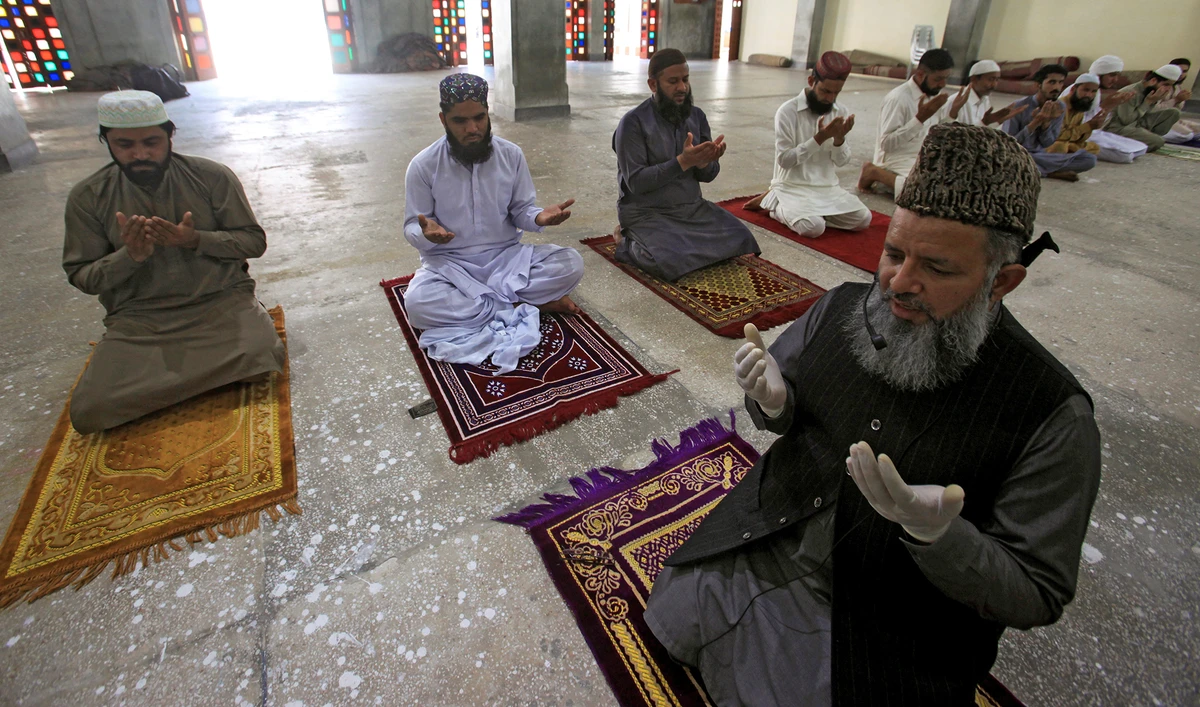
KARACHI: Top Pakistani religious clerics belonging to different schools of thought announced on Tuesday to open mosques for prayers in defiance of a government directive restricting congregational prayers only to five people to impose social distancing and prevent the spread of coronavirus.
At least 100 people have died and 5,812 others infected by the virus in Pakistan. To stop the spread of COVID-19, the government of Sindh banned congregations of more than five people in mosques, a decision which was later followed by other provinces as well.
However, there have been incidents of violations and, in one such occurrence last Friday, worshippers assaulted a female police officer, Sharafat Khan, after she tried to stop them from gathering in a Karachi neighborhood.
To review the situation, religious clerics of Deobandi, Barelvi and Ahl-e-Hadith schools sat together at Karachi’s Darul Uloom seminary and decided to open mosques for everyone, except for old and ailing individuals or those suffering from coronavirus.
The decision was announced by Mufti Muneeb-ur-Rehman and Mufti Taqi Usmani, two leading clerics of Deobandi and Barelvi schools.
“The lockdown will not be applicable to mosques anymore,” Mufti Muneeb told a news conference at the Karachi Press Club after the meeting, adding that Prime Minister Imran Khan had asked to see the ground realities before going for the lockdown.
Mufti Taqi Usmani, a religious scholar and former judge of the Federal Shariat Court, said the mosque would remain open with protective measures in place. He urged elderly and ailing people, including those suffering from coronavirus, to refrain from visiting the mosques.
Usmani added that the participants of the meeting had also consulted the Jamiat Ulema-e-Islam chief, Maulana Fazlur Rehman, chief of Jamiat-e-Ahl-e-Hadith, Sajid Mir and Jamaat-e-Islami’s General Secretary Liaquat Baloch, among others, on phone and approved some guidelines for mosques.
These, he continued, included disinfecting these worship places, removing carpets, placing hand sanitizers on entrances, maintaining distance among the rows of worshippers, performing ablution, offering Sunnah at home and putting an end to the Urdu sermon.
“Offering congregational and Friday prayers is mandatory for all Muslims,“ he said.
Mufti Usmani further urged the people to follow the government’s guidelines regarding social distancing.
Without naming the female police officer who was assaulted by worshippers last week, the clerics condemned her for allegedly disrespecting the mosque.
Meanwhile, more than 53 senior clerics from Rawalpindi and Islamabad also held a meeting on Tuesday and warned the government against imposing further restrictions on mosques.
The federal minister for religious affairs, Noor-ul-Haq Qadri, declined to respond when asked to comment about the decision of the religious clerics.
However, a statement issued by the ministry of religious affairs said that a decision regarding Taraweeh, Juma prayers and Itikaf would be taken on April 18.
“A decision will be taken on April 18 after consultation and in consensus with religious scholars,” the statement said while quoting the minister. It added that individual and regional decisions should be avoided to promote an environment of consultation and consensus.
“The government will take measures for a Ramadan that is full of religious rituals and safe from coronavirus,” he said, adding that leading clerics and political leadership would be taken into confidence while making any decision.
The meeting, he said, would be presided over by the president of Pakistan, Dr Arif Alvi.