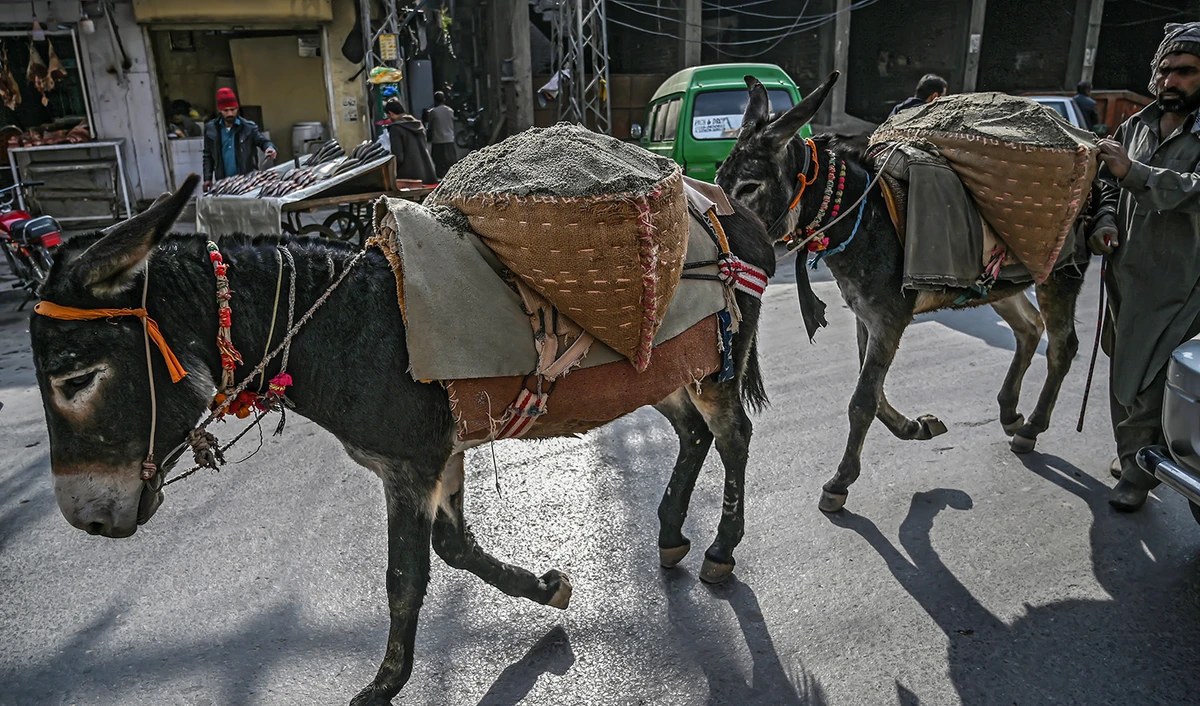
- As per estimated population of livestock, there were 5.5 million donkeys in Pakistan in 2019-20
- The number increased to 5.6 million in 2020-21 and by 100,000 to 5.7 million in 2021-22
ISLAMABAD: The population of donkeys in Pakistan increased by 100,000 during the outgoing fiscal year and has seen a steady rise since 2019, according to data published in the Economic Survey of Pakistan on Thursday.
The Survey is an annual document issued by the finance ministry each year, outlining the government’s performance in the outgoing fiscal year.
Pakistan will present its budget for the fiscal year 2022-23 today, Friday, as it grapples with a host of economic issues ranging from a widening current account deficit to low foreign reserves and soaring inflation.
According to this year’s Economic Survey, livestock contributed approximately 14 percent to GDP during fiscal year 2021-22.
The gross value addition of livestock has increased from Rs 5,269 billion (2020-21) to Rs 5,441 billion (2021-22), an increase of 3.26 percent. (Base Year 2015-16).
“Animal husbandry is the most significant economic activity of the dwellers of rural areas of Pakistan,” the survey said. “More than 8 million rural families are engaged in livestock production and are deriving around 35-40 percent of their income from this sector.”
As per the estimated population of livestock in Pakistan, there were 5.5 million donkeys in Pakistan in 2019-20, which increased to 5.6 million in 2020-21 and by 100,000 to 5.7 million in 2021-22.
The estimated population of cattle is 53.4 million, an increase of 1.9 million from the last fiscal year. The population of buffaloes increased from 42.4 in 2020-21 to 43.7 in 2021-22, an increase of 1.3 million over the fiscal year.
The population of sheep increased by 0.3 million from 31.6million to 31.9 million in 2021-22 while the estimated population of goats increased by 2.2 million to 82.5 million.
The estimated population of camels, horses and goats remained the same.
The gross value addition of livestock has increased from Rs 5,269 billion (2020-21) to Rs 5,441 billion (2021-22), an increase of 3.26 percent. (Base Year 2015-16), as per the latest survey.