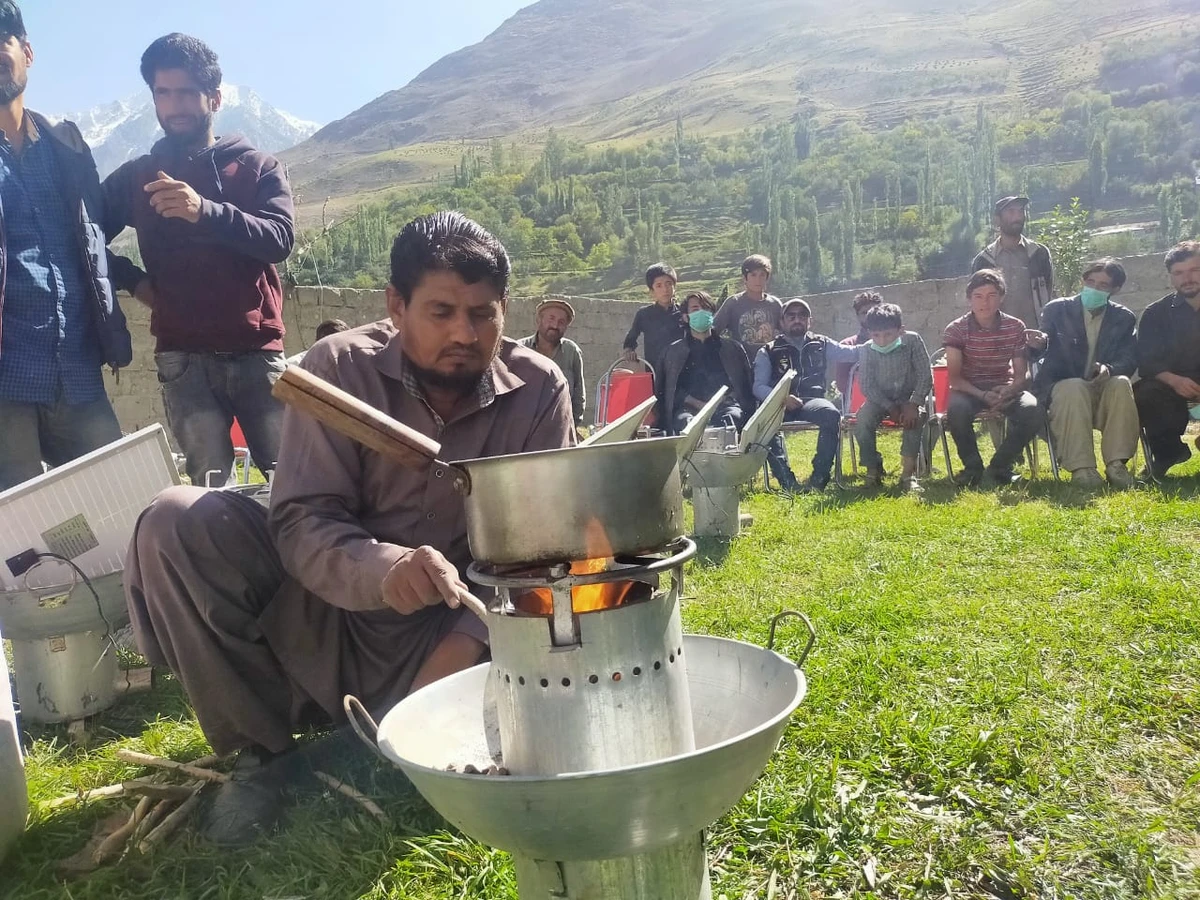
- The gasifiers use agro-waste and animal dung to produce energy for cooking and heating
- WWF says Pakistan’s deforestation rate is the second highest in Asia, after Afghanistan
ISLAMABAD: For years, Saima Khalil and her husband felled trees from the forests in Gulmit town to gather firewood for use for cooking and to heat their home, especially in the harsh winters of remote Gilgit-Baltistan, a beautiful, mountainous part of northern Pakistan.
Two weeks ago, the family switched over to using a low-cost renewable gasifier stove — that produces fuel from agro-waste and animal dung — provided by WWF-Pakistan. Since last month, the green group has distributed around a hundred gasifiers through a pilot project aimed at reversing forest destruction in the Gilgit-Baltistan region.
“This gasifier is a revolution,” Khalil told Arab News this week. “It has made cooking so easy for us ... it emits almost zero smoke.”
“The stove has reduced our dependence on forest wood,” the housewife added. “We now simply collect small pieces of wood and animal dung and turn them into pellets to use in the gasifier, instead of felling mature trees.”
Forests supply 32 percent of Pakistan’s total energy needs in the form of fuel-wood, according to the Food and Agriculture Organization of the United Nations. Around 90 percent of rural and 60 percent of urban households use fuel-wood together with other forms of biomass as their primary energy source.
Pakistan is a “forest poor” country, according to WWF, where trees cover less than six percent of total area.
In August, WWF said Pakistan’s deforestation rate was the second highest in Asia, after Afghanistan, with thousands of hectares of forest destroyed each year, mainly as a result of unsustainable logging and clearing land for small-scale farming.
Pakistan lost an average of 43,000 hectares of forests, or the equivalent of half the size of Islamabad, every year between 2000 and 2010, according to WWF-Pakistan.
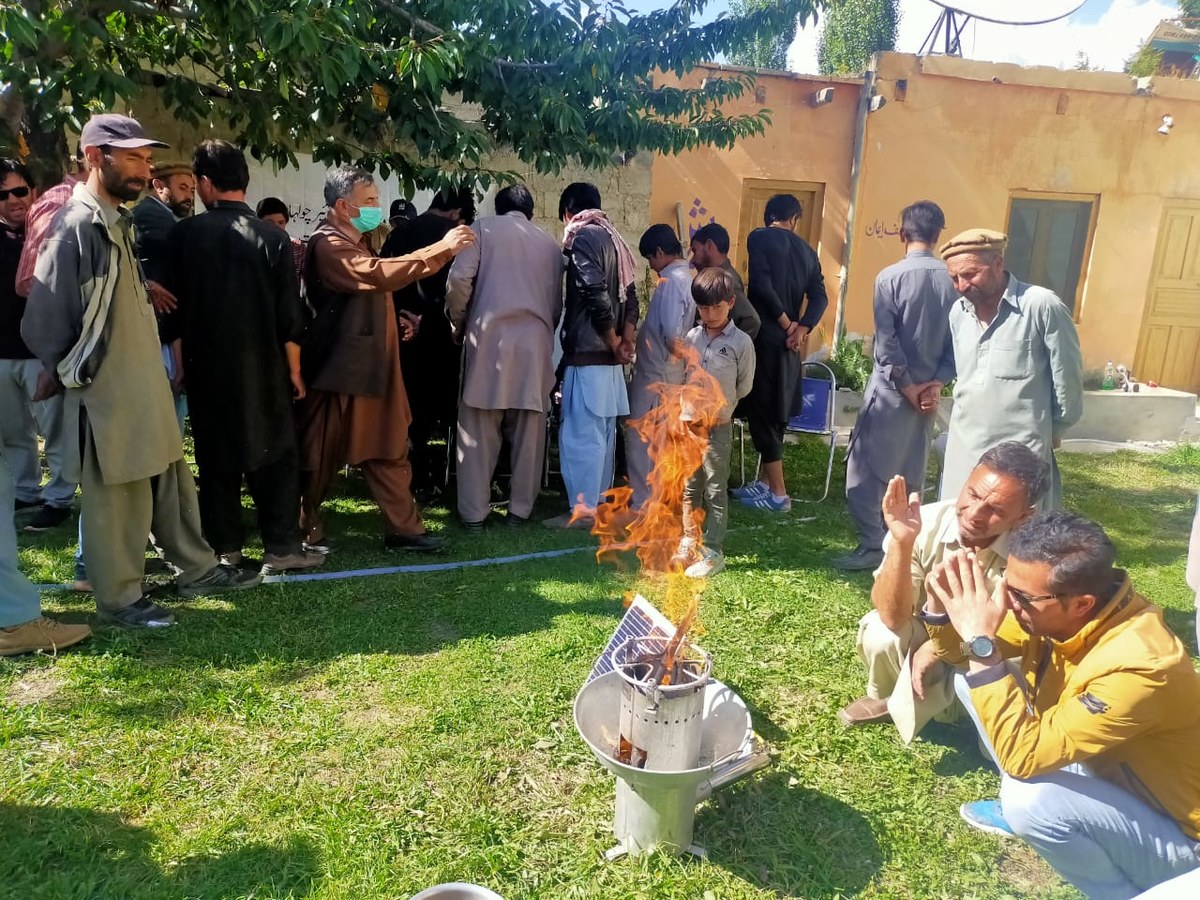
In this photo from September 2020, locals in Pakistan's Gilgit-Baltistan region use gasifier stoves that produces fuel from agro-waste, forest logging and animal dung. (Photos courtesy: WWF-Pakistan)
“People even cut fruit trees like apple and apricot during the winter to use their wood for heating in these areas, so we want to reverse it with these gasifiers,” Haider Raza, the head of WWF-Pakistan in Gilgit-Baltistan, told Arab News, explaining why the group decided to try out gasifier stoves in the region.
After receiving community feedback, he said, the pilot project would be expanded to every household in the northern areas.
“Besides curbing deforestation, these gasifiers will also help people deal with their breathing problems with almost zero smoke emission,” Raza said.
In 2018, Prime Minister Imran Khan launched an ambitious five-year tree-planting program to counter rising temperatures, flooding, droughts and other extreme weather conditions that scientists have linked to climate change.
The Global Climate Risk Index 2020, issued by think tank Germanwatch, ranked Pakistan fifth on a list of countries most affected by planetary heating over the last two decades — even though the South Asian nation contributes only a fraction of global greenhouse gases.
Environmentalists have long pushed reforestation as a way to help against climate change impacts, saying forests help prevent flooding, stabilize rainfall, provide cool spaces, absorb heat-trapping carbon dioxide emissions and protect biodiversity.
Experts say Pakistan would need both technical and financial assistance from international institutions to deal with the gravity of its deforestation problem.
“Many items are being tried and this [gasifier] is one of them and let’s see if it works,” Mahmood Nasir, former Inspector General Forests and chief executive officer of The Nature Click Institute in Islamabad, told Arab News. “As of now, after coronavirus, when the economies are on a downslide, we can only hope for the best.”