- Islamabad has urged a return to US-Iran interim agreement it helped broker in June as the hostilities escalate again
- The agreement sought to halt military operations and lead to a broader settlement, including Iran’s nuclear program
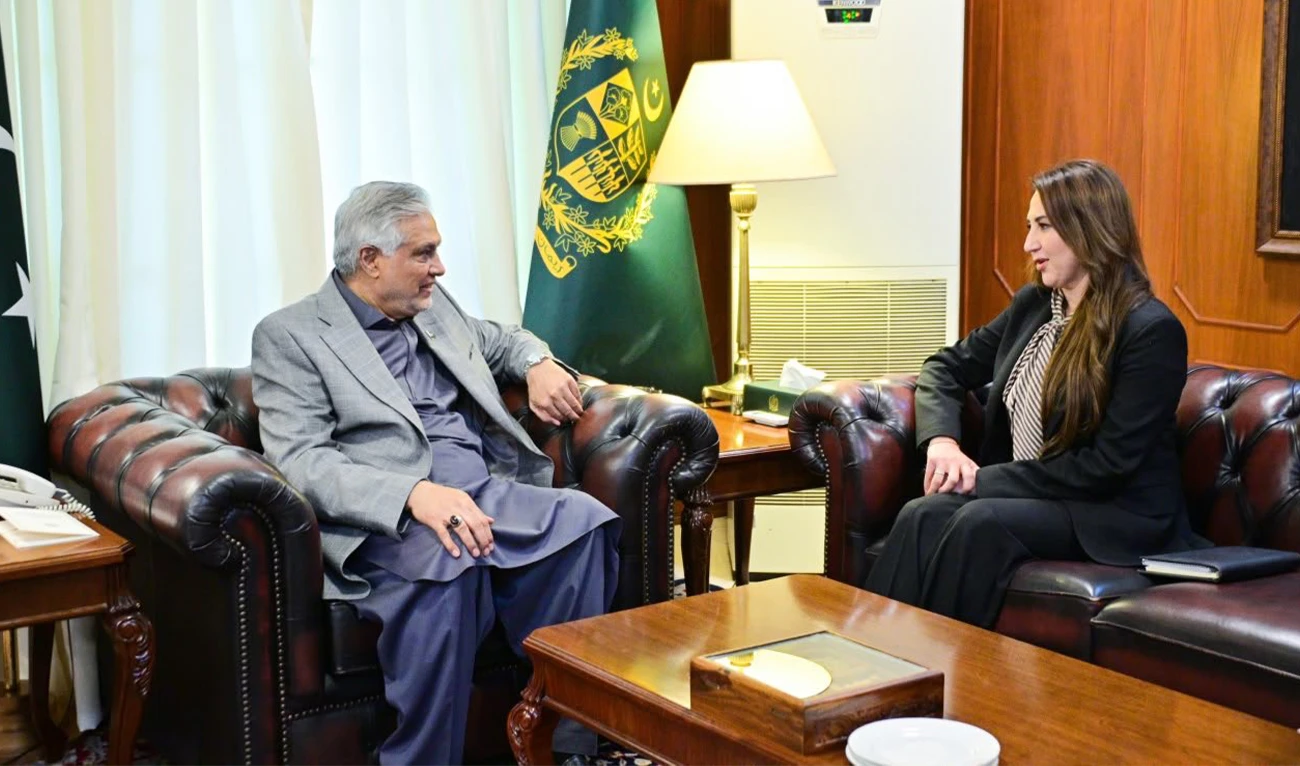
ISLAMABAD: Pakistan’s Foreign Minister Ishaq Dar on Tuesday called for dialogue to ensure lasting peace in the Middle East during a meeting with United States (US) Chargé d’Affaires Natalie A. Baker, the Pakistani foreign ministry said, amid renewed hostilities between the US and Iran.
Pakistan, a key mediator in US-Iran talks, led a diplomatic push together with Saudi Arabia, Qatar and Turkey to end the conflict which broke out on Feb. 28. The efforts led the parties to an interim peace deal in June, however, the understanding unraveled shortly afterwards.
Vessels in the vital Strait of Hormuz have come under repeated attack as Tehran seeks to maintain a stranglehold on the waterway in its conflict with the United States. Washington has also kept up a counterblockade of Iranian ports, disrupting global energy supplies and markets.
Pressure elsewhere in the region has also intensified, with Yemen’s Iran-backed Houthis targeting civilian areas in Saudi Arabia with ballistic missiles and drones, injuring several people, according to Saudi authorities.
"The U.S. Chargé d’Affaires Natalie A. Baker called on Deputy Prime Minister/Foreign Minister Senator Mohammad Ishaq Dar today," the Pakistani foreign ministry said on Tuesday.
"Discussions focused on Pakistan-U.S. bilateral cooperation and recent regional developments. He underscored the importance of dialogue and diplomacy for lasting peace."
Pakistan earlier urged a return to the US-Iran interim agreement it helped broker in June as hostilities between Washington and Tehran escalate again, while reaffirming its support for international law and a central United Nations (UN) role in promoting global peace and development.
The call came during a telephone conversation between Dar and Rafael Grossi, head of the UN nuclear watchdog and a candidate to become the next UN secretary-general, as the June agreement struggles to contain renewed attacks in the Middle East.
“They discussed the evolving regional situation and agreed that implementation of the Islamabad MoU remained the best course of action to defuse tensions,” Pakistan’s foreign ministry said in a statement after the two officials spoke late on Monday, adding that Grossi had offered technical support if needed.
The Islamabad Memorandum of Understanding was an interim agreement signed by the US and Iran in June following mediation by Pakistan after months of conflict. It sought to halt military operations and create a pathway toward a broader settlement, including negotiations over Iran’s nuclear program, sanctions and regional security.
The agreement also envisaged an end to military operations on other fronts, including Lebanon, and the restoration of commercial shipping through the Strait of Hormuz. The renewed hostilities have once again disrupted shipping through the Strait of Hormuz, a crucial route for global oil and liquefied natural gas supplies.
Pakistan has consistently argued that diplomacy and dialogue offer the only sustainable route out of the conflict and has urged both sides to return to the framework established under the June agreement.