- Noor-ul-Haq Qadri says he will offer Tarawih prayers at home with his family and observe social distancing over there as well
- The minister adds any outstanding issue related to Islamabad's Red Mosque will be resolved through negotiations
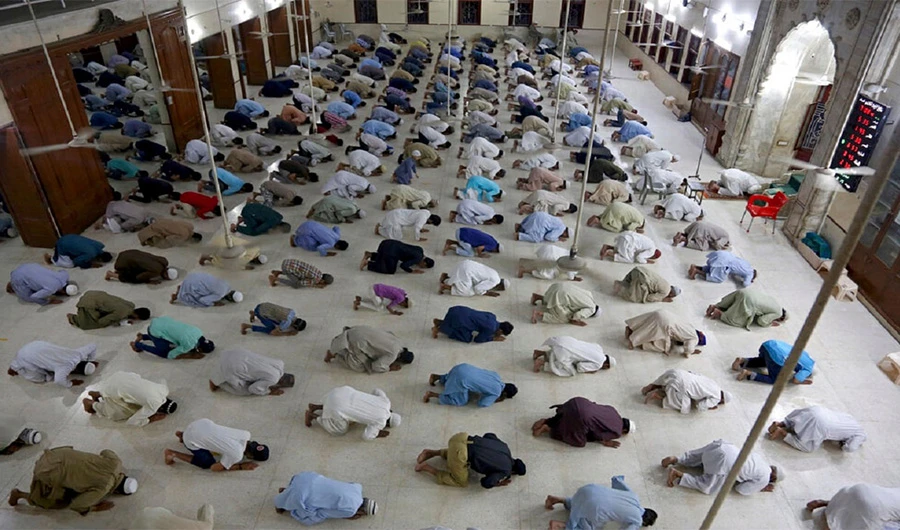
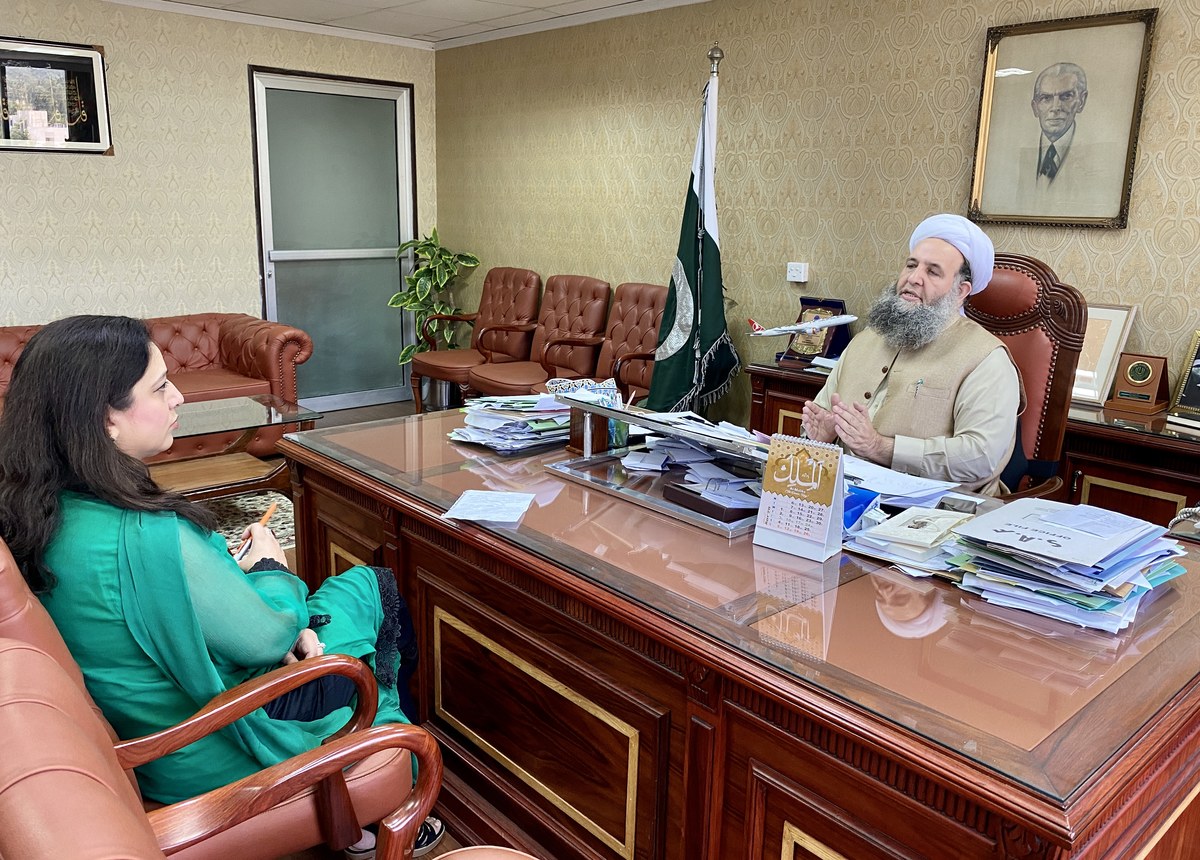
ISLAMABAD: Pakistan’s Minister for Religious Affairs Pir Noor-ul-Haq Qadri told Arab News on Thursday that the government would revoke permission for Taraweeh and other congregational prayers if the 20-point precautionary measures agreed during a meeting between President Arif Alvi and some of the leading clerics of the country were not properly implemented by mosque authorities.
“We will monitor the situation on a daily basis and may revoke the decision if the spread of the virus continues or the 20-point standard operating procedures (SOPs) are not implemented in letter and spirit,” he said.
“We unanimously agreed on those 20 points. Out of these, the first 17 relate to the health safety standards approved by the World Health Organization (WHO) and the National Institute of Health (NIH),” he continued.
Qadri noted that the 18th point in the list categorically stated that the permission was conditional and mosques should formulate committees for the implementation of the SOPs with the help of local administration.
“The government can also suspend the permission in neighborhoods where COVID-19 is spreading despite the implementation of these SOPs,” he added.
The minister said that the federal and provincial administrations had informed the government that it would be difficult to implement a complete ban on Taraweeh prayers in mosques since the authorities were lifting lockdown restrictions for many businesses which led to the conditional permission.
“The federal and provincial authorities will ensure that mosques are disinfected and carpets are removed. They will also render support to mosque committees in all possible ways. It is a difficult task due to the number of mosques but not impossible in these special circumstances,” he maintained.
Asked where he would offer his Taraweeh prayers, the minister replied he would do it at home with his family.
“Our religion has provided many relaxations for crisis situations like these. I have also asked my family to offer their prayers at home. I will lead the Taraweeh prayer myself and we will observe social distancing at home as well,” he noted.
On Hajj 2020, Qadri said the Saudi government was striving hard to proceed with Hajj this year, but the situation all over the world was difficult due to the COVID-19 pandemic.
“Airports are closed and pandemic is not under control,” he observed. “It will therefore be difficult to organize a large gathering of around 3 million people for Hajj.”
He continued that there were a lot of options under consideration that were also shared with Pakistan, adding that the Saudi authorities would be able to announce their decision by the end of Ramadan.
“One option is to allow 10 percent of the people to perform Hajj this year by observing social distancing and taking other safety measures,” the minister informed. “But even that seems difficult since 10 percent implies 300,000 people.”
He added that lesser number of people would mean a more expensive pilgrimage for everyone.
Responding a question about the controversial prayer leader of Islamabad’s Lal Masjid – or Red Mosque – and his propensity to challenge the state’s writ at every opportunity, Qadri said it was decided to resolve any outstanding issue with him through negotiations.
“I have talked to Prime Minister Imran Khan and we have decided to resolve the issue through negotiations,” he added. “There is no reason to use force since the previous military operation failed to achieve its desired results. The Lal Masjid issue is very old since its management was given another place for religious seminary after the 2007 operation but the allotment was canceled by the Supreme Court in one of its decisions.”
The mosque was stormed by military personnel in July 2007 on the instruction of General (r) Pervez Musharraf’s military administration after the religious clerics and seminary students affiliated with the Red Mosque started openly supporting militant groups resorting to suicide terrorism in the country and challenged the state through violent demonstrations and kidnappings of Chinese nationals.