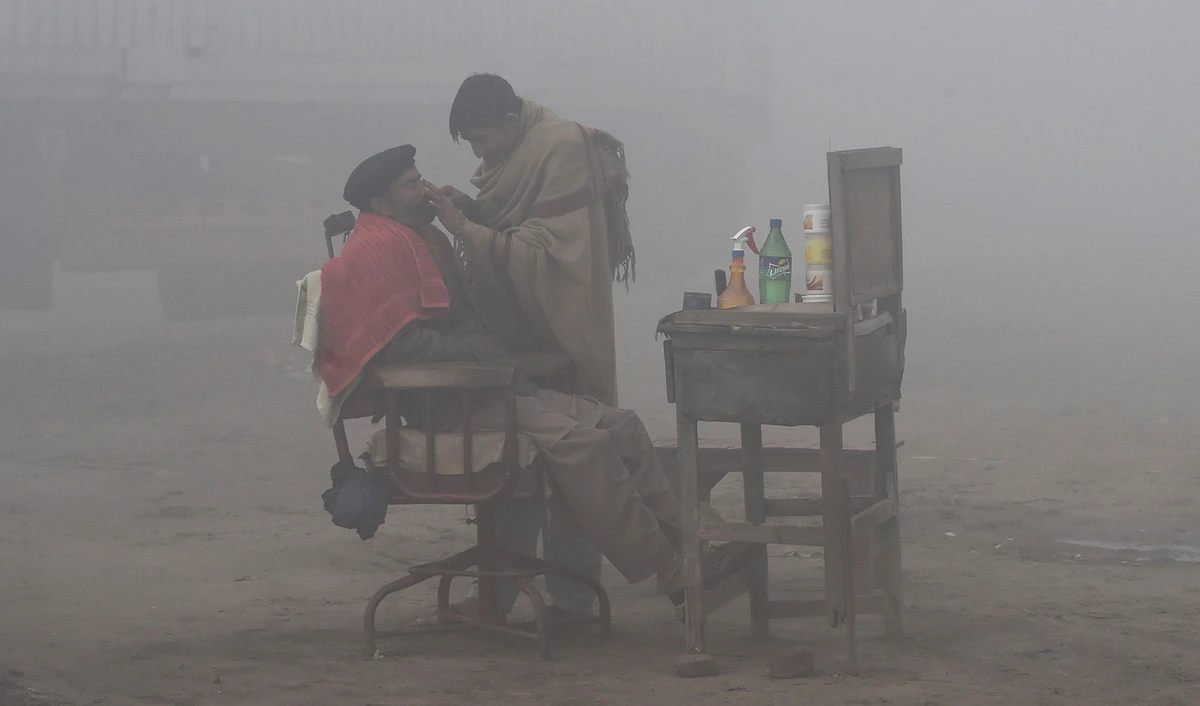
- Lahore had an air quality index of 216 on Monday afternoon, which is categorized as “very unhealthy”
- Air quality levels this high can cause cardiovascular and respiratory diseases and pose a risk for COVID-19 patients
ISLAMABAD: Swiss firm IQair on Monday declared the Pakistani city of Lahore as the second most polluted city in the world, after Delhi.
November is usually the worst month for pollution across north India and Pakistan as farmers burn off stubble in their fields and the cooler weather can trap pollution.
The Switzerland-based, real-time air quality information platform showed Lahore had an air quality index of 216 on Monday afternoon, which is categorized as “very unhealthy.”
The air quality index includes the concentration of PM2.5 particles as well as bigger pollutants. The tiny particles can cause cardiovascular and respiratory diseases including lung cancer, and pose a particular risk for people with COVID 19.
“As of November 2019, Pakistani authorities still don’t publish any real-time PM2.5 air quality data,” IQAir said on its website. “All data come from non-government sensors and the US State Department. The US Embassy in Islamabad, and the three US Consulates in Karachi, Lahore and Peshawar began monitoring and publishing real-time PM2.5 data online in the first half of 2019.”
In 2018, Lahore ranked 10 in IQAir AirVisual’s 2018 World Air Quality Report. Neighboring city Faisalabad’s air pollution ranked number three, while air pollution in Islamabad – Pakistan’s capital city – came in significantly lower at number 239. Karachi air pollution was the lowest among the four cities at number 318.
Overall, Pakistan air pollution has caused the country to be ranked as the second most polluted in the world with an annual PM2.5 average of 74.3 µg/m³.
According to IQAir, Delhi ranked as the most polluted city in the world on Monday, with an air quality index of 599.
An AQI between 0 and 50 is considered acceptable, while anything over 300 is “hazardous” and requires an emergency response, including avoiding outdoor activities and keeping windows and doors closed.
Air pollution in Lahore is caused by a combination of vehicle and industrial emissions, smoke from brick kilns, the burning of crop residue and general waste, and dust from construction sites. Other factors of air pollution include large scale losses of trees to the construction of new roads and buildings.
“Real-time air quality data must first be made available to everyone with greater granularity,” IQAir said, outlining ways to reduce pollution in Lahore. “When people know how much pollution they are breathing, they can better take measures to protect themselves and be enabled to mobilize efforts around tackling air pollution.”
Reducing industrial and vehicular emissions is also critical to improving the air quality, the Swiss firm said.
Prime Minister Imran Khan has told his cabinet that tackling air pollution is a priority, and authorities have taken measures to reduce pollution from brick kilns. Under the Punjab Green Development Program (PGDP) project, there are plans to do more, including establishing 10 air quality monitoring stations in Lahore.