- Gas-fired power output has declined in Bangladesh, Pakistan and India in the last five years
- Asian markets have accelerated plans for alternative sources since the start of US-Iran war
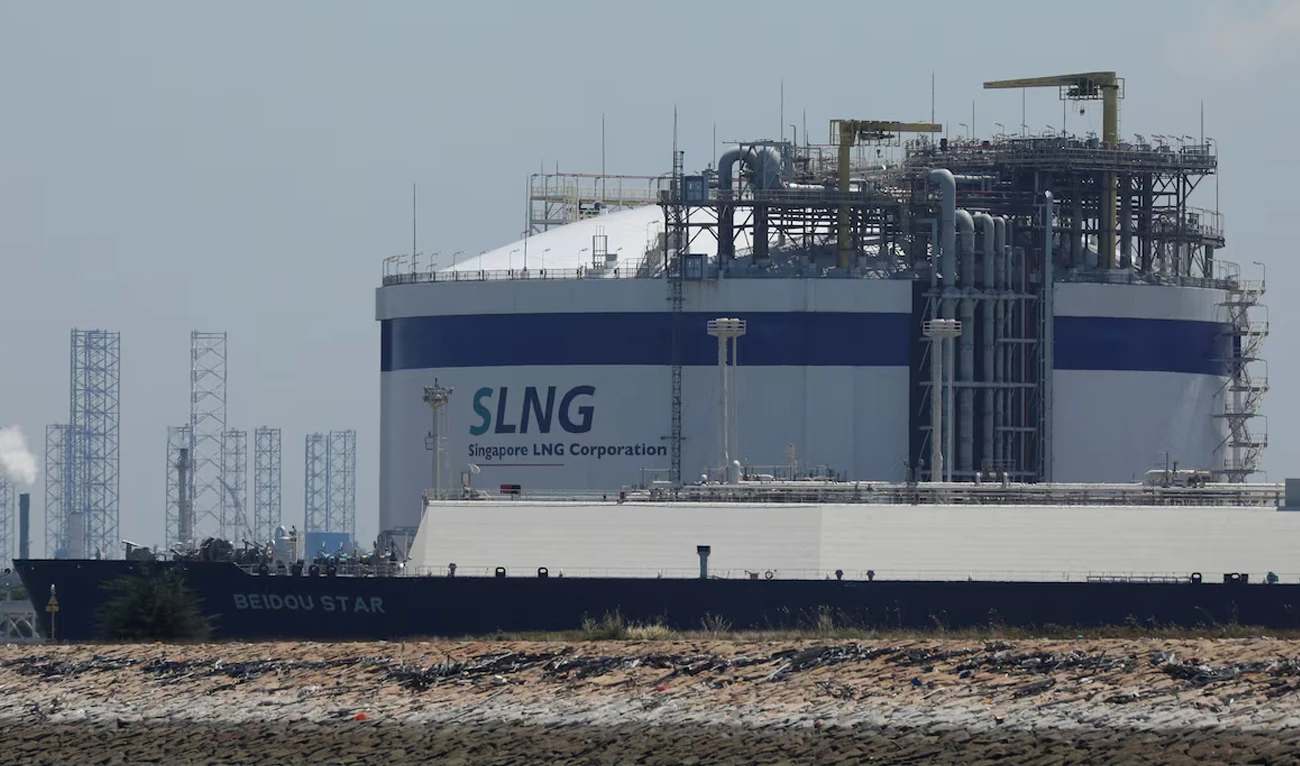
SINGAPORE: Emerging Asia is losing its appetite for liquefied natural gas to generate power as geopolitical shocks, equipment shortages and cheaper renewables derail projects, disappointing industry hopes the region would drive the next wave of demand.
Countries including Vietnam and the Philippines had planned new LNG import terminals and power plants to meet rising demand and transition from coal, but the market shocks of Russia’s 2022 Ukraine invasion and the ongoing US-Iran war sent prices soaring, exposing the risks of LNG reliance.
Since then, several projects in the region have stalled while buildout plans for others have fallen behind targets, with a global gas turbine shortage contributing to the slowdown.
With renewable generation costs falling, governments are accelerating their clean energy deployment to cut import fuel dependency. The International Energy Agency forecast in October that wind and solar energy will contribute 11 percent of Southeast Asia’s energy mix by 2030, up from 5 percent in 2025.
“As gas project delays mount and supply chains tighten, policymakers are being forced to rethink not only the role of gas in the near term, but also the long-term pathways to achieving their energy transition goals,” said Wei Han Tan, Southeast Asia power and renewables analyst at Wood Mackenzie.
“Countries will need to look elsewhere to meet rising demand,” he said, by adding to existing coal fleets and speeding up renewables deployment.
Wood Mackenzie estimates that only 14.9 gigawatts of Southeast Asia’s planned 53 GW of gas-fired power projects in the pipeline will come online by 2030, with Vietnam seeing the biggest shortfall in projects with 25.7 GW unlikely to start by then.
Even before the Iran war, gas-fired power generation was losing ground across some emerging Asian economies, data from energy think tank Ember shows. Gas-fired power output has declined in Bangladesh, Pakistan and India in the last five years as coal and renewables expand, while gas has struggled to expand its share of China’s power mix.
In Southeast Asia, gas generation volumes have been stable in the last decade, but have steadily lost share to expanding renewable capacity.
TRANSITION NOW
Since the US-Israeli war on Iran began on February 28, emerging Asian markets have accelerated plans for alternative power sources. Bangladesh and Thailand announced solar rollout plans, while Vietnam is considering increasing coal-fired generation.
Thailand, which imports a fifth of its LNG from Qatar, must secure alternative near-term supplies but speed its energy transition in the long run, its energy minister told Reuters last month.
In the Philippines, rooftop solar installations to offset high electricity prices are rising, while at least three LNG-related projects there have been halted in the last two years.
One project in the Philippines stalled after developer Energy World Corp. sold the gas turbine for its power plant for nearly four times what it paid a decade ago, saying rapid renewable energy growth was reducing the need for gas-fired generation. The company intends to build the site as an import terminal, according to its website.
Irtiza Sayyed, the chief executive of JERA Global Energy Solutions, said power infrastructure development in emerging economies has slowed as they compete globally with data centers for gas turbines. JERA is Japan’s top power generator and is looking to sell LNG in South and Southeast Asia.
REDUCE VOLATILITY
To be sure, overall LNG demand in emerging Asia is still likely to rise as economies grow and domestic gas production wanes, with Wood Mackenzie forecasting Southeast Asian consumption rising to 39 million metric tons by 2028, from 27 million in 2025.
LNG proponents also say gas is needed for grid reliability and flexible power generation, while planned data center capacity could boost power-sector demand.
But governments planning for the next decade will likely turn to additional renewable energy amid gas price uncertainty, said Rystad Energy analyst Lu Ming Pang.
The firm has cut its long-term Asia LNG demand forecasts by 3 percent for 2040, and 7 percent by 2045, as countries including Vietnam and the Philippines have not secured sufficient LNG supply deals and infrastructure, while China accelerates its renewable energy buildout.