- While the country reported 84 wild poliovirus cases in 2020, it has only recorded one such case since the beginning of the year
- Health officials hope to bring down the number of polio cases to zero by December next year, though vaccine refusal remains a challenge
ISLAMABAD: Pakistan has observed a sharp decline in polio cases this year, Pakistan's national polio coordinator said on Friday, attributing the low numbers to COVID-19 restrictions, back-to-back polio vaccination drives, improved security and the organized cross-border movement of children between Pakistan, Iran and Afghanistan.
The country reported 84 wild poliovirus cases in 2020 and 147 cases in 2019. But official data shows Pakistan only reported one wild poliovirus case since the beginning of this year.
Pakistan is one of the two polio-endemic countries in the world along with neighboring Afghanistan. Officials in Islamabad say they are optimistic about bringing the number of these cases to zero by December next year.
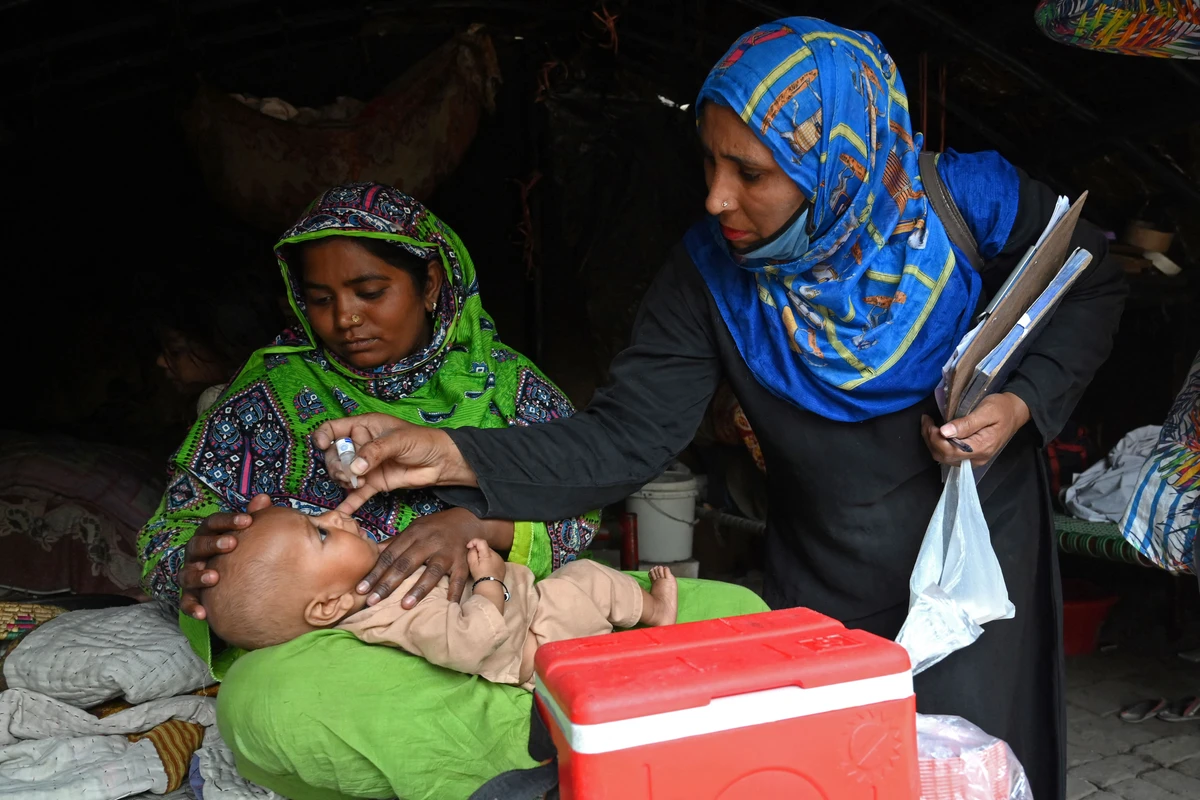
“The COVID-19 restrictions helped curtail movement of children and we decided to take the benefit by completing eight immunization drives,” Dr. Shahzad Baig, a national polio coordinator, told Arab News on Friday.
“Most children were easily accessible, making it possible for our teams to administer polio drops,” he said. “This also helped us overcome the virus.”
Baig informed that about 40 million children were covered in each national campaign, including four of them conducted this year.
Polio is a highly infectious disease caused by poliovirus that mainly affects children under the age of five. It invades the nervous system and can cause paralysis or even death.
While there is no cure for polio, vaccination is the most effective way to protect children from the crippling disease. Each time children under the age of five are vaccinated, their protection against the virus further strengthens.
However, Baig warned the health authorities should not lower their guard since that could result in a resurgence of virus in high-risk areas.
“We have made progress against the virus, but we don’t want to be complacent at this stage,” he said. “The virus is cornered and exhausted, which implies it is the most crucial time to administer polio drops to our children to get rid of the disease.”
Last week, the World Health Organization and UNICEF applauded Pakistan’s continued efforts to eradicate polio. The UN agencies particularly highlighted the fact that the country continued with its vaccination program amid the COVID-19 pandemic.
At the same time, the two agencies urged the government to sustain the momentum and reach every child with the lifesaving drops.
Talking about other factors behind the government’s success, the national polio coordinator said the improved security situation in the country and organized cross-border movement of children from Afghanistan also helped the polio teams reach maximum children during the immunization drives.
“Pakistan’s hundred percent area is now accessible to our teams due to the improved security situation,” he said. “Dozens of our law enforcement personnel have sacrificed their lives for the noble cause.”
He said polio vaccination teams had also been deployed at border crossings in Torkham and Chaman to administer drops to children up to the age of 10 who were leaving or entering Pakistan while traveling to or from Afghanistan and Iran.
“Vaccine refusals are now the only impediment to the complete eradication of the disease,” he said, adding that parents of about two to three percent children still refused vaccination during each immunization campaign.
“This is the major hurdle, and we are trying to overcome it with the help of religious clerics and notables of specific areas,” he continued.
According to a recent WHO report, the wild poliovirus transmission is still ongoing in traditional reservoir areas, namely the northern corridor (Peshawar/Khyber) and Karachi and the southern corridor (Quetta block, Balochistan).
The report claimed this had also led to an expansion of virus to previously polio-free areas (Punjab and Sindh) along with the detection of virus in other parts of the country.
To overcome the challenge, the government has designed one sub-national immunization campaign that will focus on high-risk areas in July and two national campaigns in September and the second week of December to eradicate the disease.
“We are aiming to bring down the number of polio cases in Pakistan to zero by December next year,” Baig added, “and we are hopeful for our success due to our progress so far.”