- Resolution seeks basic Arabic instruction to help children understand Quranic vocabulary and meanings
- Former chief minister calls for compulsory mother-tongue education as minister cites resource shortages
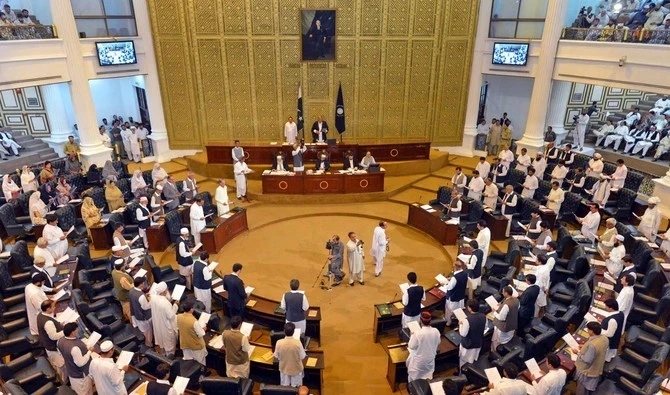
ISLAMABAD: Pakistan's southwestern Balochistan province on Friday passed a resolution calling for basic Arabic to be made compulsory in government primary schools to help children understand the Holy Quran, with lawmakers also urging authorities to promote education in local mother tongues.
The resolution, moved by provincial lawmaker Shahida Rauf, recommended introducing Arabic instruction across government primary schools, supported by a standardized curriculum, trained teachers and appropriate learning materials.
"Since Arabic is the language of the Holy Quran, basic Arabic language education can help children understand the words and meanings used in the Holy Quran," the resolution said.
It called for Arabic lessons to be tailored to children's ages and learning needs, with instruction covering basic vocabulary, grammar and commonly used Quranic words.
Balochistan, Pakistan's largest province by area, is home to several linguistic communities, with Balochi, Pashto and Brahui among its widely spoken languages.
The resolution said education should go beyond imparting academic knowledge to support children's intellectual, moral and cognitive development, including religious awareness, positive values and character building.
During the assembly debate, former Balochistan chief minister Dr. Abdul Malik Baloch called for local mother tongues to be made compulsory alongside Arabic.
"Receiving education in one's mother tongue is the fundamental right of every child," he said.
Baloch recalled that a resolution seeking compulsory instruction in mother tongues had also been introduced in 2013.
Provincial Education Minister Raheela Hameed Khan Durrani said Quran recitation classes had already been introduced at the primary level and the government was also seeking to expand education in local languages.
She also acknowledged that the province faced shortages of resources needed to introduce mother-tongue instruction.