- Provincial administrations authorized to seal virus hotspots to stem the spread of the disease
- Experts say the government failed to conduct massive screening to isolate COVID-19 patients during the previous lockdown
ISLAMABAD: The government on Tuesday authorized provincial authorities to seal the coronavirus hotspots in the country for at least two weeks, as it urged the public to take necessary precautionary measures to prevent the spread of the respiratory disease and help stave off an economic collapse.
“We are dealing with the pandemic keeping in view the ground realities and economic strength of the country,” Federal Minister for Information and Broadcasting Shibli Faraz said after the cabinet meeting during a media briefing.
He urged the people to stay cautious amid a major surge in COVID-19 cases in the country to “prevent an economic collapse.”
The statement came at a time when the government’s official portal carrying statistical information on the disease showed that the virus tally had reached 148,918 with 2,839 fatalities on Tuesday morning.
However, the government continues to claim it has strengthened health facilities to meet the challenge, including an increase in the number of testing laboratories from two to 126 and ventilators from 2,800 to 4,800 across Pakistan.
The country’s economy was already struggling, but the coronavirus pandemic made things worse, with the prime minister’s adviser on finance and revenue, Dr. Abdul Hafeez Shaikh, blaming COVID-19 for a loss of over Rs 3 trillion to the national income.
“If we fail to ensure the government SOPs [standard operating procedures] in public places, we can face the worst case scenario,” the information minister warned, adding that provincial governments had been authorized to impose fines and punishments on those who were found violating the officially prescribed precautionary measures.
The government has identified at least 20 cities across Pakistan as the coronavirus hotspots where selected areas would be sealed for at least 15 days to stem the spread of the virus.
“If the public follows all the precautions, we will definitely reduce our [economic] losses,” Faraz said.
He also informed that the cabinet had discussed ways to “bring vibrancy” to the country’s economy by focusing on the agriculture and construction sectors.
According to a statement issued by Federal Minister for Planning and Development Asad Umar on Sunday, Pakistan’s coronavirus cases were predicted to hit one million by the end of July if people failed to ensure social distancing or adopt other precautionary measures.
Public health practitioners on the other hand have warned that the country’s health system will collapse if the virus cases cross the million mark by the end of the next month.
“The government should have done massive screening to isolate COVID-19 cases during the lockdown, but unfortunately this was not done,” Dr. Khalid Mahmood, public health specialist at the Rawalpindi Institute of Urology, told Arab News.
He was referring to the government-imposed lockdown of cities from March 23 to May 9 when all public places and public transport were shut along with education institutes in the country.
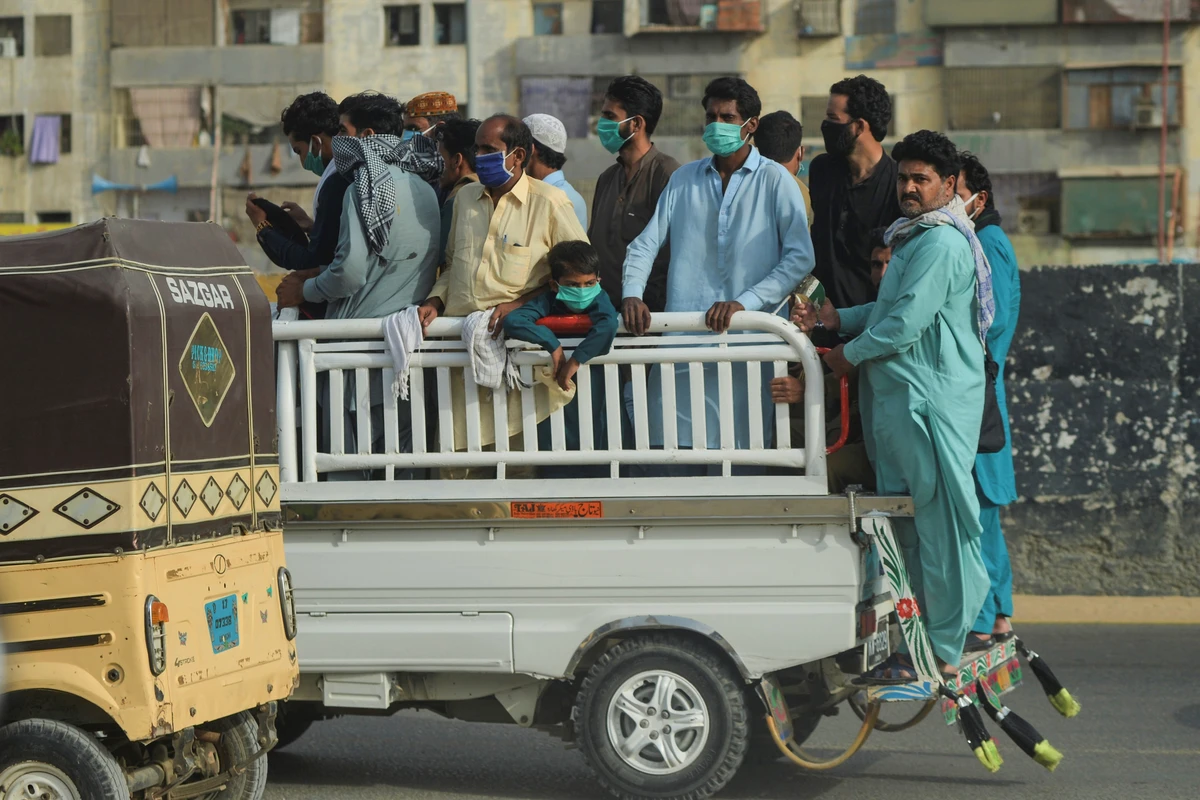
Mahmood lamented that people were not taking the disease seriously, though medical facilities were running short of space even for critical coronavirus patients.
“It will not be less than a disaster if people continue to take it [coronavirus] as a joke,” he warned while urging the government to adopt a “uniform and effective” national policy to deal with the challenge.