- Pakistan has over 1.3 million registered Afghan refugees according to UN but actual number considered much higher
- As US-Taliban peace deal inches toward closure, refugees are divided on possibility of a homecoming
KARACHI: Afghan refugees in a camp in Karachi’s outskirts said they faced a myriad of problems especially with regards to quality of life and getting identity cards, as secretary-general of the United Nations, Antonio Guterres, arrived in Pakistan on Sunday.
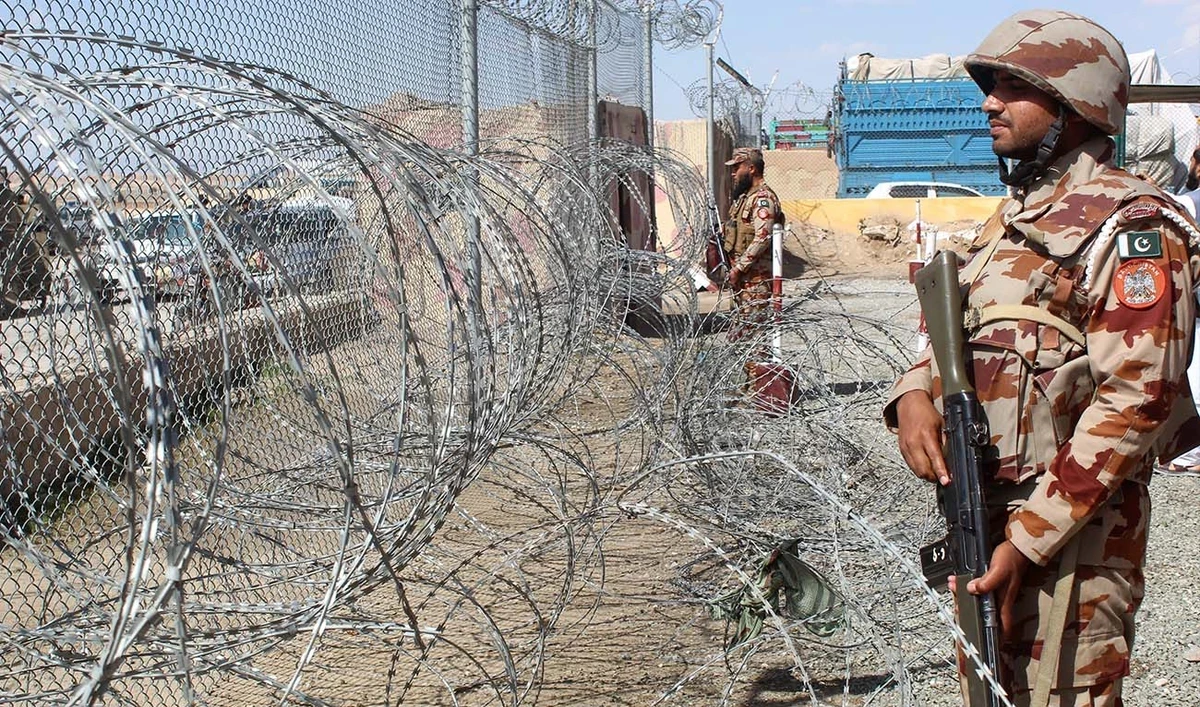
There are over 1.3 million Afghan refugees in Pakistan registered with the United Nations High Commissioner for Refugees (UNHCR), though the actual number is thought to be much higher. In the teeming southern metropolis of Karachi, over 60 percent of them have moved into low income neighborhoods due to a lack of facilities and dilapidated conditions in camps.
After assuming office in 2018, Prime Minister Imran Khan pledged that his government would grant citizenship to Afghan refugees born in Pakistan, who had been living on the margins of the country’s society for decades. His promise signalled the reversal of a prevalent hostility toward Afghan refugees in Pakistan-- a community often accused of being or shielding terrorists.
“Although Imran Khan still needs to fulfil his pledge of granting citizenship to refugees, his regime has proven good so far,” Rahimullah Afghan, an elder at a refugee camp told Arab News.
“We are lacking basic facilities, we don’t have a sewage system, and we don’t have water and facilities for health and education,” he continued, but conceded refugees could now open bank accounts, get driving licenses and were not bothered by law enforcement officials.
Last year marked 40 years of the Soviet invasion of Afghanistan which forced millions of Afghans to flee their homes in Dec. 1979. Of the many millions of displaced Afghans abroad, roughly half, around 2.7 million are registered as refugees according to the UN.
As the US and Taliban inch closer to a peace deal that could finally end the 19 year war in Afghanistan, refugees in Karachi’s camps are divided on the possibility of moving back to their homeland.
“If Afghanistan has peace, we will go back there,” said Khesrow Habibi, a 20-year-old English teacher at a school for refugees in a Karachi locality.
It was the war, he said, that had forced his parents to flee Afghanistan and now stops him from returning.
“If Taliban want to bring peace in Afghanistan...we can live peacefully and happily, under the shelter of reconciliation,” he said.
“We want peace. We don’t want anything else.”
But not all the refugees are anticipating a homecoming, even if peace returns to Afghanistan.
“We are 14 members of a family. I am the only Afghan. The rest, including my wife, are Pakistanis because they were all born here,” Rahimullah Afghan said.
He felt more loyalty toward Pakistan, he said, than the country where he was born.
Across the board, refugees urged the UN secretary general to address their problems, and pleaded with the Pakistan government to provide them with government issued identity cards- in the absence of which education and health care were largely inaccessible.
“When I took my mother, a patient of Hepatitis-C, to a government hospital, they denied her treatment [without ID card],” a young refugee at the camp, Muhammad Musa, told Arab News.
“I request him [Guterres] to please provide us with better opportunities, better skills and shelter. Provide us with education and open schools for Afghans deprived of an education,” Habibi said.
“We do not have an ID card here to buy property, a card to start our education with,” he continued. “Education is so important and we cannot continue it, especially in Karachi, because they always ask for ID.”