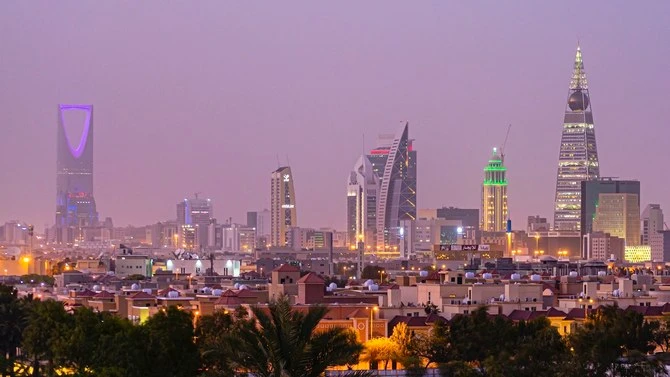
The scale and ambition of Saudi Arabia’s transformation is remarkable. Vision 2030 calls for a dramatic change in the Saudi economy and society in a short period.
This transformation is driven by the talent and hard work of Saudi people, and investing in human capital and leadership is at the heart of the Saudi modernization project.
This investment involves training new leaders and upskilling existing ones. Saudi Arabia is a young country. In Europe, only a third of the population is younger than 30 years old, but in Saudi Arabia it is almost two-thirds. This is an enormous opportunity but also a challenge. It is an opportunity as Saudi youth have incentives and the dynamism to modernize the country and diversify its economy. It is a challenge because to do so, they must be equipped with the right skills, and this human capital investment must happen at speed and at scale.
The investment in Saudi youth must happen in parallel to the development of current leaders. As the Kingdom’s youth is also its most promising pathway to the achievement of Vision 2030 and beyond, current public and private sector leaders have a responsibility for supporting its best deployment. Therefore, the quality of leadership in Saudi organizations is key to the success of the whole transformation project.
This is not an easy task: Today’s leaders face an uncertain, complex, and rapidly changing environment. Disruptions and crises are regular features: Multiple conflicts and geopolitical fragmentation, the rise of artificial intelligence, climate and nature crises.
To operate in this challenging environment, leaders need to master new technologies and understand the accelerating structural shifts in the global economy and geopolitics. But first and foremost, the complexity of the business environment implies a need for a cultural shift. However, talented and skilled, no single leader can solve their organization’s challenges alone.
A top-down management style that may have worked in the past is now doomed to fail. Today’s leaders can only succeed through inclusion, collaboration and bottom-up innovation, by inspiring their colleagues to work together and contribute to the common goal. Modern leadership is not only about managerial competence, but also about a vision that motivates the organization to use its collective talent and energy.
The cultural shift also requires agility. As the world moves faster than ever, future-ready organizations should be prepared to change course as new challenges and opportunities arise. Leaders need to make decisions through uncertainty, while building organizations that learn from results. Pilot projects, rigorous and evidence-based evaluation, and an appetite for course correction should be institutional norms rather than one-off exercises. This requires constant analysis, accountability and adaptability.
How then do you combine perpetual innovation and commitment to a long-term vision? How do you change without losing the common goal that inspires colleagues? The best leaders are the ones who articulate the balance between the core values and assets that define the organization and drive its success, and the processes and structures that should be constantly re-examined to make the organization more efficient and effective.
This balance depends on context and getting it right is as much art as it is science. Training today’s leaders therefore involves not just academic knowledge, but practical and experiential learning.
Global business education on Saudi soil
This is why world-class executive education is key to the success of Saudi transformation. Saudi leaders can and should learn from international best practice, from successes and failures across the world. But those lessons need to be adapted locally. The most successful partnerships focus on co-creation, with global expertise combined with Saudi context and local ownership. The best outcomes come from long-term collaboration, sustained faculty engagement, locally contextualized case work, and leadership programs designed around the realities of the Saudi economy and Vision 2030 priorities.
It is in this spirit that London Business School is opening its Executive Education Office in Riyadh. This is a significant step for LBS. LBS is a global business school with one of the most — if not the most — international student bodies among its top-ranked peers. LBS students and executive education participants hail from all over the world including China, India, and Middle East.
But in its 60-year history, LBS has established only one other campus outside of London’s Regent’s Park: In Dubai, where we have been teaching Executive MBAs since 2007. Opening a new office in Riyadh represents a long-term commitment to supporting the development of people and organizations driving change within the Kingdom.
By delivering programs locally, co-developing learning experiences with Saudi organizations, and creating more accessible pathways for women and emerging leaders, the goal is to ensure that leadership capability is built where it has the greatest potential for impact.
Saudi Arabia’s next chapter will be decided not just by ambitious goals, but by the people who translate a vision into institutions that learn, adapt and include. That translation requires sustained investment in human capability with rigorous training, mentoring, and institutional incentives that reward innovation and courage. By delivering its executive education programs on Saudi soil, London Business School is proud to support the Kingdom’s investment in its current and future leaders.
• Sergei Guriev is dean of London Business School.