Everyone has that desire at some point in his life to seek understanding of his place in the universe but very few of us actually go ahead and try to discover the answer to the age old question, “Who am I?”
Many visionaries, artists, writers, scientists are believed to have been inspired by some place which gives wings to all their inventions, creations, art pieces, books and ideas. Indeed, mankind is truly a remarkable creation.
One such visionary is Sarah Taibah. A dreamer, believer, an optimist and a charming young woman, Sarah is in a quest to seek the truth. Nomadic in her ways, she is not only an artist but also a writer and a blogger and has made her mark on the Saudi art scene by publishing her maiden collage based book, “Junk”. The book released in 2011 is made out of scraps of drawings, doodles and all such things which were essentially dug out from the garbage after her mother threw them out. For Sarah, these treasured pieces of art are her means of escape from reality. We had a brief chat with her about her passion and her work.
Who is Sarah Taibah?
I am an illustrator, an artist, a writer and blogger of everything: nonsense and sense. I can draw and write what comes to mind without the need of a filter anytime and anywhere.
You are an artist with many talents- you blog and you sketch pieces connected to your thoughts. Tell readers about that.
I started my blog “Lastika” back in 2010 when I was studying for my bachelor’s in graphic design in Dar Al Hekma College. I write as a method of expression but not in my normal state. During those moments I escape to an alternative reality where my comfort zone lies. I also illustrate but in the old school form with pencil, pen and paper. I only use computers in my work unless it is absolutely necessary.
Your blog is mostly written in Arabic. It’s a breath of fresh air since many Arabic speaking bloggers write in English nowadays. Why do you write in Arabic?
I don’t follow trends-I do what makes sense to me and the words in my head are Arabic so I let them flow as they are without any need for translating them. Why should I translate anyway? In order to be truthfully creative, one must find the method best suited for them whether they are words in a language they’re most comfortable with, music, photography, painting or drawing.
When it comes to writing it has to be deep, true and honest and I choose to write in Arabic. Why would I take five minutes to write in English when I can go right ahead and scribble in Arabic, plus there are things that can’t be written in English to express how I feel.
You’ve come a long way since publishing “Junk.” What have you been up to since then?
I’ve moved to San Francisco, California to pursue my MFA in Illustration and in the process of finding myself and my purpose in this life I am seeking to find the true ‘me’. I write a lot- everything that comes to mind and I endeavor to turn my words into visuals. I contacted one of my best friends, who was majoring in film making, and told him that I have all these thoughts and I want them out and in visuals. He was still in his second semester at the time but the result was exactly the way I wanted it. The video is a harmony of my visions, writings, drawings and realizations all in one.
Tell us about the video.
I named it “Let me grow naturally”. It’s really about the realization that I am still searching for who I am. I believed that leaving home for another location is the answer I was seeking because I did not fit in with the majority. Contrary to that belief, I found out later that I do not really belong anywhere but in a place that I like to call my 3rd space- a place where I am who I am, a place where nonsense makes sense and everything disorderly is perfect and everything is synced.
I express my freedom in the video profoundly. I am a woman with ideas and beliefs not constricted by religion, I’m an artist that draws as I please; a speaker of the truth and most of all, I am a free soul. I couldn’t have done this movie without the great talents of my friend Hashem Ainousa. It means so much to me.
Do you go to your 3rd space often?
Yes, it’s where I fit in. It’s my go-to place for inspiration when I’m stuck and what’s more, everyone must have one. It’s very helpful when one is searching for an interesting concept to write about or a drawing.
Your art is quirky, weird, cute and somewhat moody- you don’t stick to one style. Where do you find the inspiration when you create your art?
Almost everything inspires me. I could be walking in the street and see something interesting and base my concepts on that. Most of them are created in the streets of San Francisco, whether it was a blog post or a sketch. It’s a colorful city and full of life- it’s a great place to be. It’s expanded my horizons and I started drawing up a plan for what I want to do in life. I’m also very attached to the past, good or bad.
How does the past influence you?
I do my best to live with the ‘now’. I don’t have high expectations for the future though if something great happens, it would be a fantastic experience, but if it doesn’t go my way, I will accept it and move on. The past for me is always good. For example, I’m obsessed with classical old Egyptian movies because Egypt is a part of me. I go to Egypt almost every chance I get and I experience Egypt in all its aspects. I know the accent, I know the streets and I love everything about it.
Your drawings are very connected to your feelings yet somehow disconnected. How do you find the distinction?
When I’m up against a mental block, it is hard to do my art or writings but I always head back to a blue room in my brain that I’ve created to get that connection back. I’m an extremist when it comes to emotions. If I’m really happy or sad I am able to create something, whether it is a sketch or a post in my journal or blog. I feel that when my life is in a roller coaster, I get much more creative and inspired.
If I need inspiration, there are three things that help me: first is walking in the streets of San Francisco; there is art everywhere, always something new.
The second would be browsing the Internet, you always find something exciting there and the third would be going back to my old work, I always wonder who the girl who drew this picture is and what she was feeling at the time. I dig for old memories and experiences most of the time which really helps. Memories are a great help- I have a lot of polaroid pictures hung around my room, old writings, and old art work to get me going again.
What are your plans for the future?
I want to teach design because I love it. I want to also illustrate and write children’s books for Saudi publications, as well as teach kids the art of theater, comedy and drawing and so much more. I am definitely going to create my own freelance design and illustration studio InshaAllah. It’s something that I know I can be great at. I would also consider working for a design house that is specific to art and design more and lastly I plan on publishing a story book every now and then, for children or adults.
Sarah’s work has been exhibited in the Academy of Art University in San Francisco, the Flower Pepper Gallery in Los Angeles and the International Museum of Women. Sarah was the only Saudi ambassador who participated in Muslima Online Exhibition as well as the pancake and booze art show. Be sure to follow Sarah Taibah’s latest on her website www.sarahtaibah.com along with her Twitter account @SarahTaibah and on her Instagram page, Lastikaart.
— [email protected]


![]()
![]()
![]()
![]()
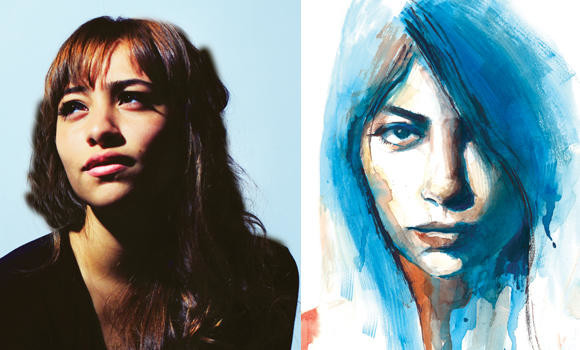
Sarah Taibah: A dreamer and an optimist


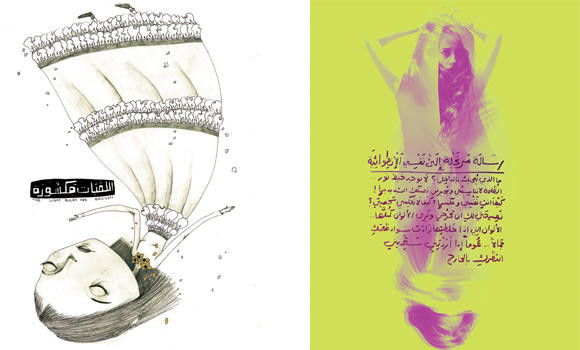
Sarah Taibah: A dreamer and an optimist
Latest updates


© 2026 SAUDI RESEARCH & PUBLISHING COMPANY, All Rights Reserved And subject to Terms of Use Agreement.