King Fahd University of Petroleum and Minerals’ (KFUPM) Rector Khaled S. Al-Sultan unveiled the university’s Innovation Ecosystem Plan toward achieving Saudi Vision 2030, during the recent SABIC Innovation Day event.
Riyadh Gov. Prince Faisal bin Bandar opened the event in the presence of SABIC’s Chairman Prince Saud bin Abdullah bin Thenayan Al-Saud, Vice Chairman and CEO Yousef Al-Benyan, senior government officials, business leaders, company executives and media representatives.
Al-Sultan’s speech included two main parts: Innovation Imperative for Saudi Vision 2030 and Technology Innovation Ecosystem for Kingdom’s conversional downstream industry.
Regarding Innovation Imperative, he indicated that a more innovative Saudi conversional downstream industry can contribute in enhancing and strengthening the entire national ecosystem.
Al-Sultan indicated that today’s innovation is totally different from that in the past, adding that individual entrepreneurial efforts — although vitally important for achieving innovation — are not comprehensive.
“Today’s innovation is simply a system of many constituents and individual entrepreneurial efforts represent only one dimension.”
For the Kingdom to build an effective innovation model, it entails developing more capacity to innovate by: Increasing the numbers of engineers and scientists and growing the national expenditures on R&D to match those of the developed countries by encouraging private sector to invest in R&D.
Also, he indicated that the Saudi institutions can play a major role in this regard. It means Saudi universities will have to focus their efforts on producing high quality, relevant basic and applied research, foster creative thinking in students, and undertake the responsibility of developing indigenous entrepreneurial models.
At finance level, he mentioned that whole financial system of the country needs to follow the venture capital-based approach to cope with the anticipated economic changes between now and 2030.
Moreover, he described the foundational concepts that KFUPM undertook for developing its Technology Innovation Ecosystem.


KFUPM launches ecosystem plan on SABIC Innovation Day

KFUPM launches ecosystem plan on SABIC Innovation Day
Ajdan cements role in major projects by signing MoU with King Salman International Airport in Riyadh
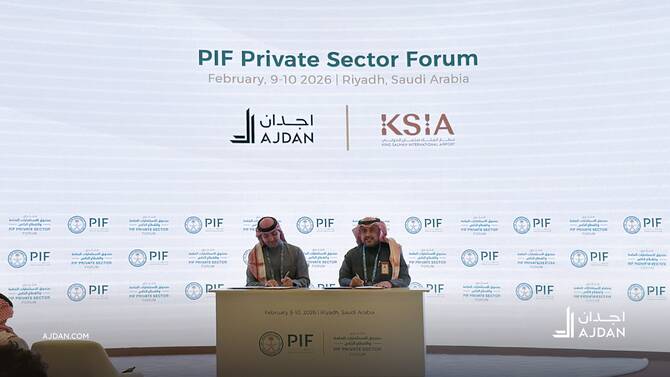
Ajdan cements role in major projects by signing MoU with King Salman International Airport in Riyadh
Ajdan Real Estate Development Company signed an MoU with King Salman International Airport during the Public Investment Fund & Private Sector Forum 2026.
The MoU aims to explore areas of cooperation and identify opportunities for mixed-use real estate and commercial development that will enhance project quality and meet the highest standards of efficiency and excellence. Representing Ajdan at the signing ceremony was its CEO, Eng. Mohammed bin Abdulmohsen Al-Otaibi, while Dr. Mohammed Al-Jarallah, deputy chief executive for real estate development, signed on behalf of King Salman International Airport. The MoU establishes a strategic framework for future cooperation and paves the way for a long-term partnership on a number of flagship projects.
Under this memorandum, Ajdan collaborates with King Salman International Airport on the development of mixed-use spaces and commercial facilities within the airport’s premises, building on its role as a national real estate developer delivering innovative projects that advance sustainable development. The company will leverage its expertise in the planning, design, and management of integrated commercial destinations to ensure project execution meets the highest standards of quality and sustainability.
King Salman International Airport is one of the Kingdom’s largest strategic development projects in terms of area and operational ambition. The airport spans approximately 57 sq. km, of which about 12 sq. km are allocated for mixed-use real estate development, in addition to fully integrated economic and logistics zones covering more than 3 million square meters.
These developments will enhance the integration of real estate, commercial, and service activities. The airport targets handling 100 million passengers annually by 2030, supported by comprehensive upgrades to facilities, infrastructure, and logistics services, positioning it as an advanced multi-sector investment platform and a driver of economic growth.
Eng. Mohammed bin Abdulmohsen Al-Otaibi, CEO of Ajdan, stated: “We take pride in our collaboration with King Salman International Airport, which reflects Ajdan’s commitment to developing integrated destinations in line with global standards. Through this partnership, we aim to leverage our expertise to deliver innovative solutions that create sustainable value for the airport and enhance the visitor experience.”
KSIA Acting CEO Marco Mejia said: “These seven partnerships reflect our ambitious vision to transform KSIA into a fully integrated urban and economic ecosystem that goes beyond the traditional concept of airports. We are proud to collaborate with a distinguished group of leading national real estate developers whose deep expertise and strong track records will help deliver high-quality projects, create sustainable economic value, and further position the airport as a leading investment hub.”
This step is part of Ajdan’s strategy to expand its strategic partnerships and develop sustainable urban and commercial destinations that help improve the quality of life and support economic growth across the Kingdom.




