RIYADH: Around 2.8 million owners of microbusinesses in rural areas have benefitted from projects of the Ebdaa Bank set up and promoted by the Riyadh-based Arab Gulf Program for Development (AGFUND) in nine countries: Jordan, Yemen, Bahrain, Syria, Sierra Leone, Lebanon, Sudan, Palestine and Mauritania.
This was announced by Prince Abdulaziz bin Talal bin Abdulaziz at 18th Microfinance Summit which concluded in Abu Dhabi on March 17.
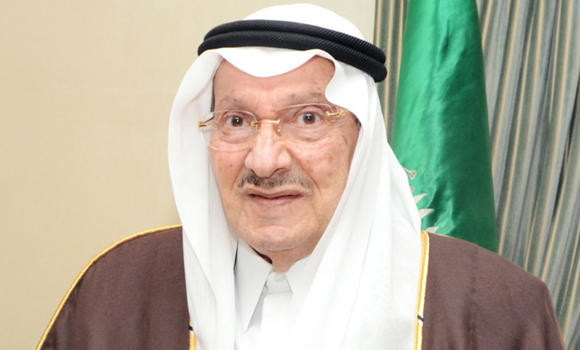
“Our broader strategy, values and policies, here at AGFUND, focus on equality between all communities, and providing the marginalized keys to financial independence. This is the reason why we believe that financial inclusion is a social and economic priority. Consequently, we ask all governments to apply this principle moving forward,” said the prince who represented his father, Prince Talal bin Abdulaziz, the founder and president of AGFUND, at the opening ceremony.
The summit, jointly organized by AGFUND, the Abu Dhabi-based Khalifa Fund for Enterprise Development, and the Microcredit Summit Campaign, was held to explore how new and effective financial policies can contribute to create linkages among key influencers in the Global Access 2020 goals, the World Bank 2030 goals, and the UN Global Goals.
Around 1,800 participants from top local and international finance, economic and charitable work, and experts from all over the world attended the three-day summit.
The summit recommended benefitting from digital technology to set up low-cost national payment systems, accessible by everyone, that allow specialized financial institutions to offer financial services to micro-, small- and medium-size businesses.
Also it recommended laws and offering incentives to encourage banks and financial institutions to adapt clear strategies, plans and policies to increase the share of these kinds of businesses in their lending portfolios, and expand financial awareness and education that enable people to use financial products in ways that can improve their lives and help them build their assets.
On behalf of Prince Talal, Prince Abdulaziz concluded the event by distributing the $500,000 AGFUND International Prize to four winners.
The first winner was the women’s housing project in Nepal commissioned by Habitat for Humanity International which received a $200,000 award. The three other winners were the heritage preservation project by Sunbola Association in Palestine; the Khatwa (Step) for Domestic Projects Initiative by the Ministry of Social Development in Bahrain and the marketing artisans and productive families project in Saudi Arabia by Princess Nora bint Muhammad.


![]()
2.8 million benefit from AGFUND’s Ebdaa Bank
2.8 million benefit from AGFUND’s Ebdaa Bank
Latest updates


© 2026 SAUDI RESEARCH & PUBLISHING COMPANY, All Rights Reserved And subject to Terms of Use Agreement.