NEW YORK: Gold is dusting off its credentials as the go-to commodity in troubled times and its producers are reaping the benefits.
Futures rallied above $1,100 an ounce to a two-month high, after a sell-off in Chinese shares forced the country’s stock exchanges to shut for a second time this week, spurring demand for a haven.
Global markets are facing a crisis and investors need to be very cautious, billionaire George Soros said.
Shares of bullion miners including Barrick Gold Corp. are climbing, even as the 80-member Bloomberg World Mining Index slides to the lowest in more than a decade.
“You are seeing a flight to safety which is causing the price of the metal to improve which is then flowing into the stocks,” Josh Wolfson, an analyst at Dundee Securities Ltd., said by telephone from Toronto.
“Certainly I would expect the price of the metal to outperform. However, outperform doesn’t necessarily imply a positive return.”
After posting three straight annual declines, bullion is topping other commodities this month amid weakness in China’s currency and stock market and geopolitical tensions in the Middle East and North Korea.
Soros told a forum in Colombo, Sri Lanka, that China is struggling to find a new growth model and its currency devaluation is transferring problems to the rest of the world.
The current environment “reminds me of the crisis we had in 2008,” Soros said.
Bullion futures rose 5.5 percent that year, at the start of the global financial crisis, then rallied 24 percent in 2009 and 30 percent the following year.
Gold futures for delivery in February gained 1.5 percent to settle at $1,107.80 at 1:48 p.m. on the Comex in New York, after reaching $1,109.30, the highest for a most-active contract since Nov. 6. Prices are up for a fifth session, the longest run since October.
Most of the 22 raw materials in the Bloomberg Commodity Index are down this year. A gauge of industrial metals fell to the lowest in more than a decade, while oil prices have dropped to the lowest in 12 years.
While the Bloomberg World Mining Index slumped to the lowest since 2004, gold miners are bucking the trend, with Gold Fields Ltd. climbing as much as 8.5 percent in Johannesburg, while Barrick rallied to the highest since July in Toronto.
“It’s really the producers that people are looking at,” Kerry Smith, an analyst at Haywood Securities Inc., said by telephone from Toronto.
“Given that the markets are so choppy and weak, I would have thought it would have been more of a safe haven trade.”
China’s CSI 300 Index tumbled 7.2 percent on Thursday before trading was halted, while the onshore yuan weakened against the dollar to a five-year low after the central bank cut its reference rate by the most since August. China’s regulator called an unscheduled meeting on the stock market, according to a person with direct knowledge of the matter. “It’s all about China and turmoil in the global markets,” said Robin Bhar, a London-based analyst at Societe Generale SA.
“China devaluing the yuan has stoked fear over the weakness of the global economy and that’s good for gold.”
Silver futures also gained on the Comex.
Platinum rose on the New York Mercantile Exchange, while palladium fell.


![]()
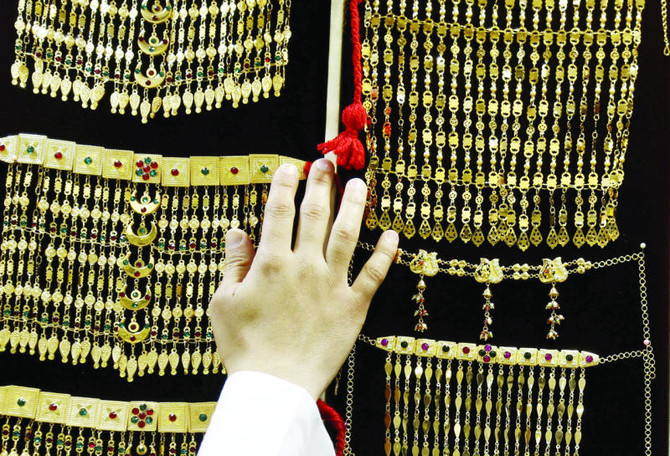
Gold is turmoil’s beneficiary as Soros recalls 2008 crisis
Gold is turmoil’s beneficiary as Soros recalls 2008 crisis
Latest updates



Recommended


© 2026 SAUDI RESEARCH & PUBLISHING COMPANY, All Rights Reserved And subject to Terms of Use Agreement.