SYDNEY: Chris Gayle was fined but avoided suspension for making inappropriate comments to a female reporter in a live TV interview during a Big Bash League Twenty20 match in Australia.
After scoring 41 from 15 deliveries for the Melbourne Renegades in a win over the Hobart Hurricanes on Monday night, the former West Indies captain suggested to television reporter Mel McLaughlin that the pair go out and made remarks about her appearance. He added, “Don’t blush, baby” during an awkward pause in the interview.
Cricket Australia chief executive James Sutherland on Tuesday joined the criticism of Gayle’s suggestive comments, saying it bordered on harassment and was inappropriate in the workplace.
Renegades chief executive Stuart Coventry reacted by fining Gayle $10,000 Australian dollars ($7,300).
“It was done in jest but it’s inappropriate,” Coventry said. “We had a look at some history and ... we think that this is a one-off scenario.”
Coventry said Gayle was “quite surprised” when informed of the fine, which will be donated to charity.


![]()
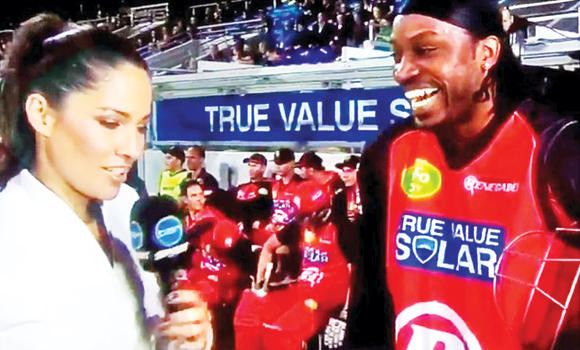
Chris Gayle fined for sexist comments to reporter
Chris Gayle fined for sexist comments to reporter
Latest updates


Recommended


© 2026 SAUDI RESEARCH & PUBLISHING COMPANY, All Rights Reserved And subject to Terms of Use Agreement.