ASTANA: Kazakh President Nursultan Nazarbayev has unveiled a road map for fuelling his country's economic growth by promoting technical skills, economic reforms, health care and social welfare amid the global slowdown.
In his annual State of the Nation address recently in the capital's Palace of Independence, the head of state focused on measures to overcome global crises and outlined changes in the financial system and fiscal and social policy. Accordingly, Kazakhs will have access to free vocational training starting in 2017. At the same time, he called on the people to live within their means as a matter of principle and in line with the budget policy.
"In just a quarter of a century, Kazakhstan managed to become a sovereign national economy included in the global economic ties and a state that has become a full participant in the global family of nations. We endured many trials together, steeled and strengthened. We have reached economic development never seen in our history before."
He added: "Now, the world is changing rapidly. There comes a different era. We see a new global reality with different opportunities and risks. Today, Kazakhstan's economy is affected by a number of external factors caused by the collapse in world markets. The origin of the global crisis does not depend on us. No one is immune wfrom the effects of global crises."
The highlights of the address — growth, reforms and development — outlined Kazakhstan's position in the new global reality. The president stressed the nation needs to restore a level of economic growth that will push it to the top 30 most developed countries in the world.
"We need to find new internal sources of growth via private initiative," he said, adding reforms provide the stability of the economy, society and the state. "We need a deeper reform of the state and corporate management and financial and fiscal sectors."
Nazarbayev noted the most significant factor of development is a continuous modernization of society. "We are working on a large-scale transformation of state, public and private institutions on the principles of Society of Universal Labor (a concept the president outlined in 2012), high social responsibility and targeted assistance to the most vulnerable segments of the population," he added.
Comprehensive anti-crisis and structural changes will be implemented in five areas — social policy, financial sector, budget policy, privatization and competency regulation, and investment policy.
The head of state stressed the importance of education and professional skills development, saying "technical and vocational education should be a major focus of investment policy." Social policy was also one of the themes of this year's speech.
"For many years, economic growth allowed us to pursue an active social policy to improve the quality of life of people by several times. Despite all the difficulties that our economy has suffered from the negative impact of all global crises, we have always improved the welfare of the Kazakh people. In ten years, government spending in the social sphere rose by almost three times in real terms. The number of people employed in the social sector and in public administration is more than 1.2 million. The state provides benefits and payments on a large scale, enabling over 1.5 million citizens to receive them," said Nazarbayev.
He announced salaries of health, education and social protection employees will be increased beginning next year by 28-30 percent and social benefits for those categories upped by 25 percent. The salaries of B corps state employees will also be raised.
A new employment road map program will be developed in the first quarter of 2016. Short-term retraining and skills development will be organized and the number of loans for business development will expand.
"Today, I set a new challenge to develop a new social policy.
State-targeted support will be provided only to needy citizens based on an assessment of their real incomes and living conditions. All others must earn by themselves by working. Taking into account the special needs of certain categories of our citizens, we need to set different amounts of living wages with the revision of its structure," said the president.
"State support for those who can work will be provided only on the basis of their participation in retraining and employment programs. I instruct the government to implement these types of social assistance starting in 2017. The priority of the state in social policy should be the massive investment in human capital. We must continue to modernize education and health in accordance with previously adopted programs. I declare that in 2017, we will start a new project of free vocational education for everyone," he added.
Nazarbayev stressed the need to streamline the functioning of the financial sector under a floating tenge exchange rate, as the national currency will no longer be supported by the interventions from the National Bank. The National Bank will need to reduce inflation to 4 percent in the medium term, which can be reached using a flexible interest rate.
The National Bank will also be required to conduct stress testing of the banks' non-performing loans. Those unable to solve the problem of capitalization must "leave the financial system," the president declared.
He pointed out that in 2016, pension assets will be transferred to management by private Kazakh and foreign companies. The pension fund, fund of non-performing loans, and other financial institutions will be withdrawn from the National Bank's control.
The president said tax rates will not be hiked, even after tax revenues fell by almost 20 percent, value-added tax (VAT) by one-quarter and revenues from corporate taxes by 13 percent.
"Raising taxes is not the way out of this situation. It will only mean additional pressure on business," said the head of state. Pointing out that it is a short-sighted policy to use the National Fund's reserves to cover the budget deficit, he said such an approach must be stopped, except for one annual guaranteed fixed transfer.
The country's tax system will face some changes in 2017 by introduction of a new sales tax instead of the existing VAT. All ineffective tax incentives will be canceled and the president instructed the government to conduct a full audit of all budgetary programs. "In a crisis, every tenge is important," he added.
"Samruk Kazyna and KazAgro control huge assets in the country's industry and agriculture ineffectively," said Nazarbayev, adding KazAgro and Baiterek have become inefficient intermediaries between the budget and banks. The government was instructed to develop a new privatization program to include all entities owned by the state, including those under Samruk Kazyna, Baiterek and KazAgro.
The president emphasized that anti-monopoly activities should be strengthened, artificial price control must be eliminated and processes of bankruptcy and rehabilitation of inefficient companies should be regulated. He also spoke to the country's entrepreneurs.
"I want to address the business class, all wealthy Kazakhs and all business people. The state provides unprecedented measures on privatization and economic liberalization. The country has already given many of you an opportunity to earn and be on the front pages of business magazines. I urge you to actively participate in the legalization of capital and privatization bids. You will help yourself and Kazakhstan, all our people," he said.
He also underscored that Kazakhstan will be looking to attract major multinational corporations to its privatization drive, bringing up the examples of Chevron and ExxonMobil who not only came to the country in its early years of independence but also brought with them new technologies and business practices.
Nazarbayev further noted the importance of focusing on export niches in the global and regional markets. "We should effectively use the economic potential of neighboring countries. First of all, it is China, Russia, Iran, Mongolia, India, Pakistan, Central Asia and the Caucasus. These countries annually import goods and services in the amount of more than $3.5 trillion. It is necessary to conclude free trade agreements of the Eurasian Economic Union with key regional markets," he said.
All projects included as part of the address are supported with funds totaling 7.2 trillion tenge ($23.4 billion), the president announced.
The head of state referred to his visits, cooperation and multibillion-dollar economic agreements reached with China, the UK and France, and meetings with Russian President Vladimir Putin and Japanese Prime Minister Shinzo Abe as evidence of Kazakhstan's continued integration in the global economic ties and its expanding cooperation with key players.
"I urge all political parties, public associations and all citizens to be imbued with a common concern for the welfare of our homeland. We will overcome a new global crisis. We have a single will and strong traditions of unity of the people. We will drive our Kazakhstan to a new level of development," said Nazarbayev.


President outlines new measures to overcome global economic slump
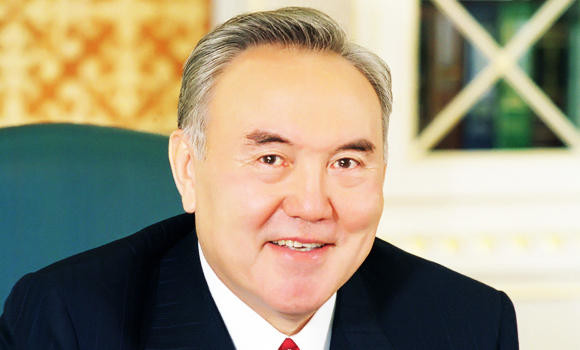
President outlines new measures to overcome global economic slump

$5.1bn deals signal Saudi push to reshape global supply chains
- Al-Jasser calls for new strategic partnerships as Kingdom cements role as global logistics hub
RIYADH: Saudi Arabia accelerated its transformation into a global logistics hub this week as 93 agreements and memorandums of understanding worth more than SR19.05 billion ($5.1 billion) were signed to launch major logistics projects across the Kingdom.
The deals, concluded during the two-day 7th Supply Chain and Logistics Services Conference in Riyadh, highlighted the scale of investment underpinning the Kingdom’s Vision 2030 ambitions and set the stage for renewed calls to rethink how global supply chains are structured.
Saudi Minister of Transport and Logistic Services Saleh bin Nasser Al-Jasser called for reshaping global supply chains through new strategic partnerships during the conference, which was held in Riyadh on Monday and Tuesday.
“The future of the transport and logistics sector in Saudi Arabia is no longer aspirational; it is a reality reflected in both national achievements and international indicators,” Al-Jasser said.
Bringing together local and international supply chain decision-makers, the two-day 7th Supply Chain and Logistics Conference focused on identifying growth opportunities crucial for bolstering the Saudi economy in direct alignment with Vision 2030.
He noted that this year’s conference was held at a time when the Kingdom was witnessing tangible progress, driven by the guidance of King Salman and the unwavering support of Crown Prince Mohammed bin Salman.
The minister underlined that the Kingdom has solidified its role as an “effective partner in securing global supply chains.”
“The matter is no longer confined to delivering goods and supplies from one point to another, but has extended beyond that to broad concepts of flexibility, digitalization, sustainability, and efficiency, among other concepts.”
“This necessitates a reformation of supply chains through new strategic partnerships,” he explained.
“The future of the transportation and logistics services sector in the Kingdom has become a tangible path on the ground, a reality that national and international indicators attest to,” Al-Jasser underlined.
In his remarks, the minister highlighted several key achievements, including local and international private sector investments exceeding SR280 billion, an increase in the direct contribution of transport and storage activities to gross domestic product to 6.2 percent, and 34 percent year-on-year growth in air cargo volumes, reaching 1.2 million tonnes.
“The job creation rate in transport and storage activities increased by 28 percent in the middle of this year compared to the middle of the previous year, with the addition of 144,000 jobs for workers in the sector, bringing the total to 651,000 jobs,” the minister said.
“The aviation and air transport sector has entered an unprecedented historical expansion phase, both in terms of airport development and the aircraft fleet,” he said.
“Significant achievements have also been made in the field of supply chains, as we have become effective partners in securing global supply chains.”
The minister also detailed infrastructure expansions in logistics facilities across the Kingdom, including the addition of 30 logistics centers aimed at supporting economic diversification.
Topics covered during the two-day conference included partnerships in digitalization, supply chain development, and sustainable growth.
The event was attended by senior government officials, CEOs of leading logistics and supply chain companies, representatives from public and private sector organizations, and regional investors.
On the global stage, Saudi Arabia advanced 17 positions in the World Bank’s 2023 Logistics Performance Index, aligning with the Kingdom’s commitment to ranking among the top ten logistics hubs worldwide.
The Kingdom also secured a position among the top four emerging markets in the 2025 Agility Emerging Markets Logistics Index, which evaluates 50 countries, driven by major investments and extensive digital transformation across trade and logistics operations.


