
RIYADH: Saudi Arabia accelerated its transformation into a global logistics hub this week as 93 agreements and memorandums of understanding worth more than SR19.05 billion ($5.1 billion) were signed to launch major logistics projects across the Kingdom.
The deals, concluded during the two-day 7th Supply Chain and Logistics Services Conference in Riyadh, highlighted the scale of investment underpinning the Kingdom’s Vision 2030 ambitions and set the stage for renewed calls to rethink how global supply chains are structured.
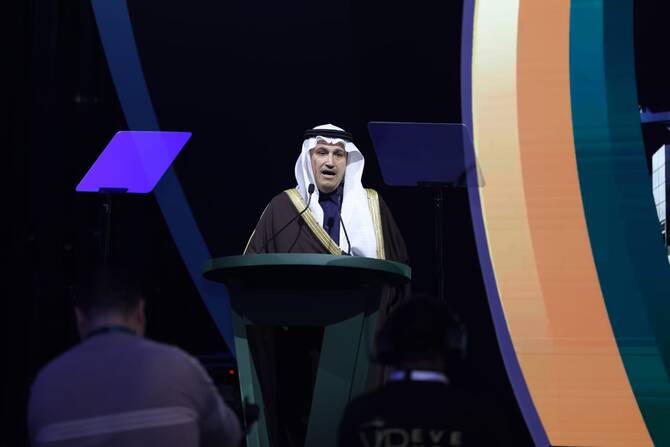
Saudi Minister of Transport and Logistic Services Saleh bin Nasser Al-Jasser called for reshaping global supply chains through new strategic partnerships during the conference, which was held in Riyadh on Monday and Tuesday.
“The future of the transport and logistics sector in Saudi Arabia is no longer aspirational; it is a reality reflected in both national achievements and international indicators,” Al-Jasser said.
Bringing together local and international supply chain decision-makers, the two-day 7th Supply Chain and Logistics Conference focused on identifying growth opportunities crucial for bolstering the Saudi economy in direct alignment with Vision 2030.
He noted that this year’s conference was held at a time when the Kingdom was witnessing tangible progress, driven by the guidance of King Salman and the unwavering support of Crown Prince Mohammed bin Salman.
The minister underlined that the Kingdom has solidified its role as an “effective partner in securing global supply chains.”
“The matter is no longer confined to delivering goods and supplies from one point to another, but has extended beyond that to broad concepts of flexibility, digitalization, sustainability, and efficiency, among other concepts.”
“This necessitates a reformation of supply chains through new strategic partnerships,” he explained.
“The future of the transportation and logistics services sector in the Kingdom has become a tangible path on the ground, a reality that national and international indicators attest to,” Al-Jasser underlined.
In his remarks, the minister highlighted several key achievements, including local and international private sector investments exceeding SR280 billion, an increase in the direct contribution of transport and storage activities to gross domestic product to 6.2 percent, and 34 percent year-on-year growth in air cargo volumes, reaching 1.2 million tonnes.
“The job creation rate in transport and storage activities increased by 28 percent in the middle of this year compared to the middle of the previous year, with the addition of 144,000 jobs for workers in the sector, bringing the total to 651,000 jobs,” the minister said.
“The aviation and air transport sector has entered an unprecedented historical expansion phase, both in terms of airport development and the aircraft fleet,” he said.
“Significant achievements have also been made in the field of supply chains, as we have become effective partners in securing global supply chains.”
The minister also detailed infrastructure expansions in logistics facilities across the Kingdom, including the addition of 30 logistics centers aimed at supporting economic diversification.
Topics covered during the two-day conference included partnerships in digitalization, supply chain development, and sustainable growth.
The event was attended by senior government officials, CEOs of leading logistics and supply chain companies, representatives from public and private sector organizations, and regional investors.
On the global stage, Saudi Arabia advanced 17 positions in the World Bank’s 2023 Logistics Performance Index, aligning with the Kingdom’s commitment to ranking among the top ten logistics hubs worldwide.
The Kingdom also secured a position among the top four emerging markets in the 2025 Agility Emerging Markets Logistics Index, which evaluates 50 countries, driven by major investments and extensive digital transformation across trade and logistics operations.