NEW DELHI/MUMBAI: Nestle SA, battling a reputational crisis in India, pulled its Maggi instant noodles from stores across the country on Friday after regulators reported some packets contained excess lead.
After coming under fire for failing to react swiftly and decisively, Nestle bowed to pressure in the early hours of Friday and announced an India-wide recall.
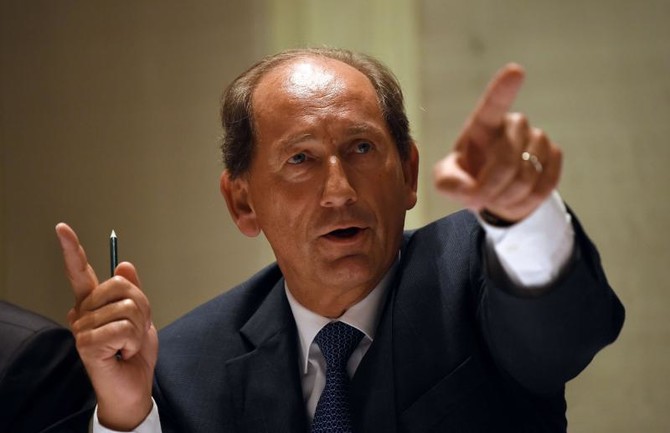
In an effort to quell India’s most significant food scare in nearly a decade, the Swiss food giant fielded group CEO Paul Bulcke to calm consumers at a televised press conference.
Instead, he faced a rowdy gathering where he was frequently shouted down by Indian reporters.
Adding to Nestle’s troubles, India’s food safety regulator issued a statement just as that meeting ended, accusing the food giant of violating labelling and other rules in India.
It ordered a recall of the instant noodles it said were “unsafe and hazardous” for human consumption.
“We are a company that lives on the trust of our consumers,” Bulcke told a packed news conference in New Delhi, repeating that it had protectively recalled the noodles to ease the minds of “shaken” consumers, but that there was no safety concern.
Sales of Maggi in India represent roughly 0.005 percent of Nestle’s global revenue of almost 92 billion Swiss francs ($98.6 billion), but the brand damage could extend further, and Bulcke acknowledged the company had fallen short.
“If you have confusion there is something wrong with communications. That’s why we are sitting here,” he said.
Since inspectors in the northern state of Uttar Pradesh made their first report two weeks ago, at least six states, several major retailers and the Indian army have banned Maggi noodles.
On Thursday, Tamil Nadu became the first state to ban several instant noodle brands, including Nestle’s.
MAGGI POINTS
Maggi two-minute noodles, which sell for a dozen rupees ($0.20) per single-serving packet, are hugely popular in India.
The snack is frequently served to children and eaten at roadside shacks and “Maggi points” across the country.
With Bollywood superstars in its advertising campaigns, Maggi has been a market leader for three decades, though it now competes with rival brands like Hindustan Unilever Ltd’s Knorr and GlaxoSmithKline PLC’s Horlicks.
Analysts and industry advisers welcomed the recall but questioned the firm’s strategy of clashing with the regulator and denying the problem for weeks as headlines proliferated.
“If you ask me everything that Nestle has done is wrong,” said Arvind Singhal, chairman of retail consultancy Technopak.
“In this day and age of social media, you cannot question the government and consumers.”
Bulcke said publicly Nestle would not challenge the Indian food testing methods, but the regulator’s report indicated Nestle had contested elements including the fact condiments were tested separately to the noodles.
The regulator itself, though, when questioned on the matter by Reuters on Thursday, highlighted failings in a country where there is a chronic shortage of state laboratories for both food and drugs.
Despite poor public hygiene, to date India has not experienced food scares on the same scale as China. But analysts say increasingly affluent, health-conscious consumers and easy access to social media are likely to mean more incidents capture public attention, and global brands need to be better prepared.
Employees contacted by Reuters at several multinational food companies in India reported what one described as a “state of alert.”
“You have to understand multinationals are soft targets,” said one top executive.
“If they checked street food, who knows how much lead and other things are to be found?“
The noodle scare is India’s biggest involving packaged foods since 2006, when an environmental group raised questions over pesticide traces in Coca Cola Co. and PepsiCo. Inc. fizzy drinks.


![]()
Nestle pulls Maggi noodles off Indian shelves as food scare spreads
Nestle pulls Maggi noodles off Indian shelves as food scare spreads
Latest updates


Recommended


© 2026 SAUDI RESEARCH & PUBLISHING COMPANY, All Rights Reserved And subject to Terms of Use Agreement.