The awakening of Europe from the Dark Ages and the subsequent intellectual enlightenment of the 1600s-1800s was one of the most powerful movements in modern history.
It brought to Europe a dedication to empirical science, critical thinking, and intellectual discourse. Much of this was imported from the Muslim world’s intellectual history, through Muslim entry points into Europe such as Spain, Sicily, and Southeast Europe.
This rise in intellectual work coincided with a period of European imperialism and colonialism over the Muslim world. European nations such as England, France, and Russia slowly conquered portions of the Muslim world, dividing it among themselves. Thus the intellectual enlightenment, coupled with imperialism over the Muslim world, led to what the Europeans saw as a critical study of Islam, its history, beliefs, and teachings. This movement is known as Orientalism. One of the greatest shortcomings of Orientalism, however, is the analysis of Islamic history on European terms, discarding the centuries of academic work put in by great Muslim minds since the time of the Prophet Muhammad (peace be upon him).
One of the most dangerous aspects of Orientalism was the European study of the origins of the Qur’an. Since it is well accepted in academic circles that both the Torah of the Jews and the New Testament of the Christians have changed over the centuries, European academics erroneously believed the same must be true about the Qur’an. Their efforts to prove their belief that the Qur’an has been changed and is not authentic led to studies and works of questionable intention and low scholarly merit. This article will critically analyze the origins of the Qur’an, its transmission, and its compilation, to understand why Muslims accept the copies of the Qur’an they have in their homes to be the exact same words that were revealed to Prophet Muhammad (peace be upon him) in the early 600s AD. Allah has promised to protect the Qur’an from the change and error that happened to earlier holy texts. Allah says: “Indeed, it is We who sent down the Qur’an and indeed, We will be its guardian.” (Qur’an, 15:9)
For Muslims, this verse of promise from Allah is enough to know that He will indeed protect the Qur’an from any errors and changes over time. For people who do not accept the authenticity of the Qur’an in the first place, however, clearly this verse cannot serve as proof of its authenticity, since it is in the Qur’an itself. It is from here that the academic discussion begins.
The revelation of the Qur’an was not an isolated event in time. It was a constant stream of verses descending to Muhammad (peace be upon him) throughout the 23 years of his prophethood in Makkah and Madinah. The Prophet (peace be upon him) appointed numerous companions of his to serve as scribes, writing down the latest verses as soon as they were revealed. Mu’awiya ibn Abu Sufyan and Zaid bin Thabit were among the scribes who had this duty. For the most part, new verses would be written on scraps of bone, hide, or parchment. It is important to note that the Prophet (peace be upon him) would have the scribes read back the verses to him after writing them down so he can proofread and make sure there were no errors.1
To further ensure that there were no errors, the Prophet (peace be upon him) ordered that no one records anything else, not even his words, Hadith, on the same sheet as Qur’an. Regarding the sheets that the Qur’an was being written down on, he stated “and whoever has written anything from me other than the Qur’an should erase it.”2 This was done to ensure that no other words were accidentally thought to be part of the text of the Qur’an.
It is important to understand, however, that physical writing down of the Qur’an was not the main way that the Qur’an was recorded. Arabia in the 600s was an oral society. Very few people could read and write, thus huge emphasis was placed on ability to memorize long poems, letters, and other messages. Before Islam, Makkah was a center of Arabic poetry. Annual festivals were held every year that brought together the best poets from all over the Arabian Peninsula. Exuberant attendees would memorize the exact words that their favorite poets recited and quote them years and decades later.
Thus, in this type of oral society, the vast majority of the companions learned and recorded the Qur’an by memorization. In addition to their natural ability to memorize, the rhythmic nature of the Qur’an made its memorization much easier.
The Qur’an was not narrated to just a few select companions. It was heard and memorized by hundreds and thousands of people, many of them travelers to Madinah. Thus, chapters and verses of the Qur’an quickly spread during the life of the Prophet (peace be upon him) to all corners of the Arabian Peninsula. Those who had heard verses from the Prophet (peace be upon him) would go and spread them to tribes far away, who would also memorize them. In this way, the Qur’an achieved a literary status known among the Arabs as mutawatir. Mutawatir means that it was so vastly disseminated to so many different groups of people, who all had the same exact wording, that it is inconceivable that that any one person or group could have falsified it. Some sayings of the Prophet (peace be upon him) are known to be authentic through it being mutawatir, but the entire Qur’an itself is accepted as being mutawatir, because of its wide spread during the life of the Prophet (peace be upon him) through oral means.
We have thus far seen that the way the Qur’an was taught to the numerous Companions of the Prophet (peace be upon him) prevented it from being subject to the protection of a few people. As verses became widespread across the Islamic world, it was impossible for those verses to be changed without Muslims in other parts of the world noticing and correcting them. Furthermore, during the life of Prophet Muhammad (peace be upon him), the angel Jibreel would recite the entire Qur’an with him once a year, during Ramadan. When the Qur’an was finished being revealed near the end of the Prophet’s (peace be upon him) life, he made sure that numerous companions knew the entire Qur’an by heart.
During the reigns of the first caliphs, however, a need to compile all the verses into a central book arose. Taking preemptive action, the caliphs who ruled the Muslim world after the death of the Prophet (peace be upon him) feared that if the number of people who had the Qur’an memorized dipped too low, the community would be in danger of losing the Qur’an forever. As a result, the first caliph, Abu Bakr, who ruled from 632 to 634, ordered a committee be organized, under the leadership of Zaid bin Thabit, to collect all the written pieces of Qur’an that were spread throughout the Muslim community. The plan was to collect them all into one central book that could be preserved in case the people who had the Qur’an memorized died out.
Zaid was very meticulous about who he accepted verses from. Because of the enormous responsibility of not accidentally altering the words of the Qur’an, he only accepted pieces of parchment with Qur’an on them had to have been written down in the presence of the Prophet (peace be upon him) and there had to be two witnesses who can attest to that fact.3
Footnotes:
1. Al-Suli, Adab Al-Kuttab
2. Sahih Muslim, Al-Zuhd:72
3. Ibn Hajar, Fath Al-Bari
To be continued next week
Courtesy: islamicity.com


![]()
![]()
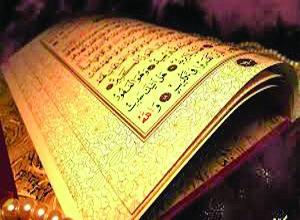
How the Qur’an is protected from any change, corruption
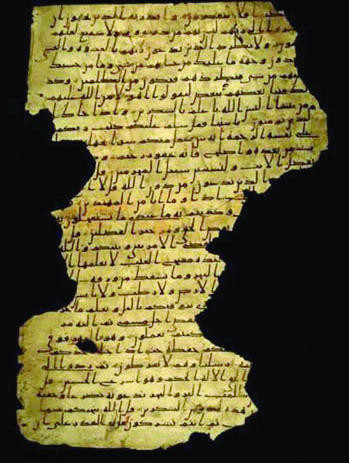
How the Qur’an is protected from any change, corruption
Latest updates


Recommended


© 2026 SAUDI RESEARCH & PUBLISHING COMPANY, All Rights Reserved And subject to Terms of Use Agreement.