The Indian community living in the Kingdom observed the 22nd annual “Black Day” on Saturday, Dec. 6, which marks the anniversary of the demolition of the Babri Mosque in 1992 by a group of Hindu extremists.
The India Fraternity Forum (IFF) organized a public program entitled, “Lest We Forget Babri Masjid” to mark the anniversary of the tragic event.
Speaking at the event, Anwar Khan, secretary of the IFF Andhra Pradesh chapter in Riyadh said: “It was not an assault on a mosque but Indian democracy. The crime was committed by a fanatic mob led by some political leaders. The day reminds us of the gross injustice committed against the minority community of India.”
Syed Ali, IFF president for northern states, said: “The matter has remained difficult for a long time and this is an example of denied justice in the secular republic of India,” adding that the then Premier Narshimha Rao described Dec. 6, 1992, as “a shameful day for India” and promised that his government would rebuild the Babri Mosque on the same site where it was located, but this has never happened.
Meanwhile, Mohammed Quaiser, president of “Tanzeem Hum Hindustani” said: “The demolition of Babri Mosque is largely responsible for dividing India on religious grounds for the purpose of voting politics by the Bharatiya Janata Party (BJP), as the event was followed by communal violence that involved the killing of hundreds of Muslims across India.”
Akhtaru Islam, president of the Middle East NRI association, termed the demolition of Babri Mosque as “an assault on the secular democracy of India by a fundamentalist mob, which were allowed by the government of the time to go on a rampage.”
“The communal riots that erupted after the demolition of the historic mosque was an assault on the secular fabric of modern India that was thrown into jeopardy by fundamentalists,” he said.
Mohammad Javid, central region secretary of the Indian Social Forum (ISF) said: “Only the rebuilding of the mosque on the same site would serve justice and restore faith of millions of Indians, including both Muslims and non-Muslims.”


![]()
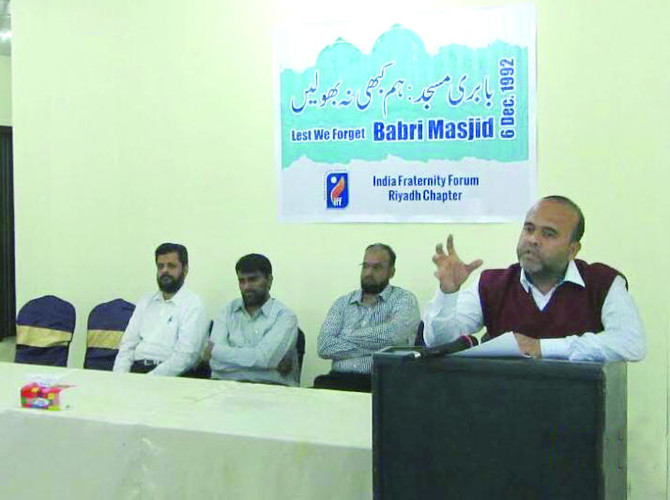
Indian expats remember Babri Mosque tragedy
Indian expats remember Babri Mosque tragedy
Latest updates





Recommended


© 2026 SAUDI RESEARCH & PUBLISHING COMPANY, All Rights Reserved And subject to Terms of Use Agreement.