Honda Motor Co. Ltd. has unveiled a new fuel-cell concept vehicle, the Honda FCV Concept (FCV). The all-new FCV production model that will be based on this concept is scheduled to go on sale in Japan by the end of March 2016 and subsequently in the US and Europe.
In addition to the FCV, Honda will further promote the application of the Smart Hydrogen Station (SHS) — a packaged hydrogen station unit that adopts Honda’s original high-differential-pressure electrolyzer.
In this way, Honda will work toward the forthcoming hydrogen society under three key concepts — ‘generate’, ‘use’ and ‘get connected’ — and continues to pursue a CO2 -free transport.
Honda views hydrogen as a high-potential, next-generation energy carrier due to the fact that hydrogen can be generated from various energy sources and is easily transportable and storable.
Based on this view, Honda has been positioning the FCV— which uses electricity generated through the chemical reaction of hydrogen and oxygen as a power source for the motor — as the ultimate environmentally friendly vehicle and taking a proactive approach to the research and development of FCVs since the late 1980s.
In 2002, the Honda FCX became the first fuel cell vehicle in the world to be certified by the US Environmental Protection Agency (EPA) and the California Air Resources Board (CARB).
With these certifications, Honda began lease sales of the Honda FCX in Japan and the US.
In 2003, Honda developed the Honda FC STACK, the world’s first fuel-cell stack able to start at below-freezing temperatures.
Then in 2005, Honda became the world’s first to begin lease sales of FCVs to individual customers in the US.


![]()
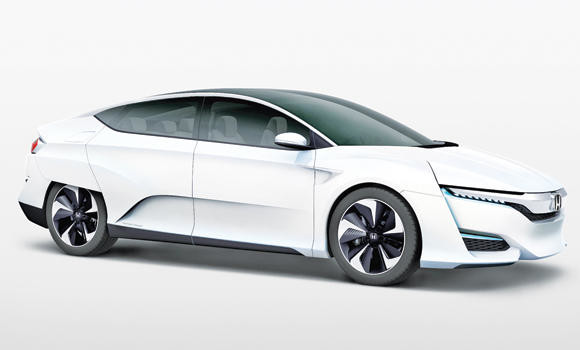
Honda reveals world premier of fuel-cell concept
Honda reveals world premier of fuel-cell concept
Latest updates


© 2026 SAUDI RESEARCH & PUBLISHING COMPANY, All Rights Reserved And subject to Terms of Use Agreement.