As peace returns on the borders of the two rival countries — India and Pakistan — here are key dates in the troubled history of the two nations.
1947: End of British rule and partition of the sub-continent into mainly Hindu India and the Muslim-majority state of Pakistan. Partition triggers widespread religious bloodshed in which hundreds of thousands are killed and millions displaced.
1947-49: The two new states go to war over the Muslim-majority state of Kashmir, which is also partitioned, along a de facto border that neither accepts to this day.
1965: A new war over Kashmir ends inconclusively.
1971: The two countries go to war over East Pakistan, which secedes to form the new nation of Bangladesh.
1974: India explodes first nuclear device in an underground test.
1987: Pakistan’s Ziaul Haq launches “cricket diplomacy” by watching a cricket Test match between India and Pakistan with then Indian Premier Rajiv Gandhi.
— Muslim separatist groups begin anti-India campaign in Indian Kashmir.
1992: Destruction of a mosque in India strains relations further.
1993: Serial blasts in Mumbai kill around 250. India blames Pakistan for harboring the key suspect.
1998: Both countries carry out tit-for-tat nuclear weapons tests, raising tension across the world.
1999: Indian Prime Minister Atal Behari Vajpayee holds summit with his Pakistani counterpart Nawaz Sharif in Lahore.
— Indian troops fight a brief but bloody conflict with Pakistan-backed forces in the mountains of Kargil in Indian-held Kashmir.
2001: Vajpayee holds a summit with Pakistani President Pervez Musharraf in Agra, which ends in failure because of differences over Kashmir.
— India blames Pakistan-based militants for an attack on the Parliament in New Delhi that leaves 15 people dead.
2003: Both countries agree a cease-fire on the Line of Control in Kashmir, improving relations.
2004: The two countries launch a formal peace process to address a broad range of bilateral issues.
— India tour Pakistan for a full Test series for the first time since 1989.
2005: Pakistan tour India.
2006: India tour Pakistan.
— Serial blasts in Mumbai suburban trains kill 174. India blames Pakistan-based militants.
2008: Gunmen attack the Indian city of Mumbai, killing 166 people. India blames Pakistan-based militants for the assault and suspends the peace dialogue.
2011: India and Pakistan agree to restart their peace talks to resolve all outstanding issues, including the vexed subject of Kashmir.
June 2012: India’s says a key suspect in the 2008 Mumbai attacks provided information confirming Pakistani “state support” for the deadly assault.
November 2012: India executes sole surviving gunman from the Mumbai attacks, Pakistani-born Mohammed Ajmal Kasab.
May 2014: India’s new Prime Minister Narendra Modi invites his Pakistani counterpart Nawaz Sharif to his inauguration.


![]()
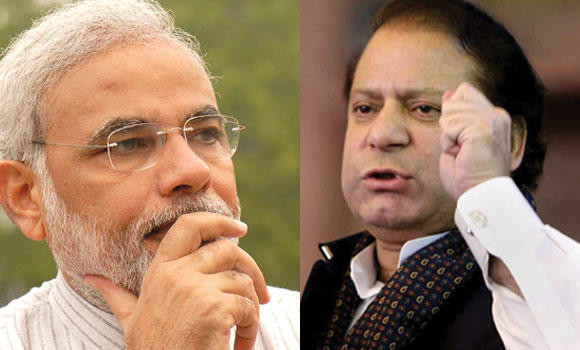
India and Pakistan diplomacy timeline
India and Pakistan diplomacy timeline
Latest updates


© 2026 SAUDI RESEARCH & PUBLISHING COMPANY, All Rights Reserved And subject to Terms of Use Agreement.