SEATTLE: The US Army staff sergeant charged with killing 16 villagers in one of the worst atrocities of the Afghanistan war will plead guilty to avoid the death penalty in a deal that requires him to recount the horrific attack for the first time, his attorney told The Associated Press.
Robert Bales was “crazed” and “broken” when he slipped away from his southern Afghanistan outpost in March 2012 and attacked mud-walled compounds in two sleeping villages nearby, lawyer John Henry Browne said Wednesday. But his client’s mental state didn’t rise to the level of a legal insanity defense, Browne said.
The Army had been trying to have Bales executed, and Afghan villagers have demanded it. In interviews with the AP last month, relatives of the victims became outraged at the notion Bales might escape the death penalty.
“For this one thing, we would kill 100 American soldiers,” vowed Mohammed Wazir, who had 11 family members killed that night, including his mother and 2-year-old daughter. Most of the victims were women and children, and some of the bodies were piled and burned.
The killings drew such angry protests that the US temporarily halted combat operations in Afghanistan. It was three weeks before US investigators could reach the crime scenes.
In Afghanistan yesterday, a family member of a victim reacted angrily to the news that Bales might escape the death penalty.
“This is a shameful act by the Americans. They promised us the death penalty, and now they are going back on their word,” said Baraan Noorzia, whose brother was killed in the massacre.
Any plea deal must be approved by the judge as well as the commanding general at the US base where Bales is being held. A plea hearing is set for June 5, said Lt. Col. Gary Dangerfield, an Army spokesman. He said he could not immediately provide other details.
“The judge will be asking questions of Sgt. Bales about what he did, what he remembers and his state of mind,” said Browne, who told the AP the commanding general has already approved the deal. A sentencing-phase trial is set for September.


![]()
![]()
![]()
![]()
![]()
![]()
![]()


US soldier to admit Afghan massacre




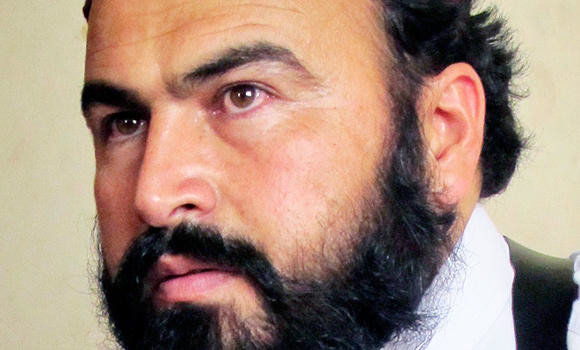
US soldier to admit Afghan massacre


ASEAN will not certify Myanmar election or send observers, Malaysia says
KUALA LUMPUR: The 11-member Association of Southeast Asian Nations will not send observers to army-ruled Myanmar’s ongoing three-stage election and will therefore not endorse the poll, Malaysia’s foreign minister said on Tuesday.
Myanmar has been ravaged by conflict since the military staged a coup against a civilian government in 2021.
The election, which began in December last year, has been criticized by the United Nations, many Western countries and rights groups as a ploy to legitimize military rule through political proxies — a charge the junta has denied.
In a low turnout, voters cast their ballots in the second stage of the poll earlier this month, with the military-allied Union Solidarity and Development Party leading after securing 88 percent of the lower house seats contested over the first phase.
Speaking in parliament, Minister Mohamad Hasan said ASEAN had rejected a request from Myanmar to send election observers during the annual leaders’ summit in Kuala Lumpur last year, though some individual member states had decided to do so on their own.
“We have said that ASEAN will not send observers, and by virtue of that, we will not certify the poll,” Mohamad said in response to a question from another lawmaker about Malaysia and ASEAN’s position on the election.
Separately, Mohamad also said ASEAN was in the final stages of concluding a long-proposed code of conduct with Beijing this year concerning activities in the South China Sea.
“We hope we are able to do it by this year,” he said.
ASEAN and China pledged in 2002 to create a code of conduct but took 15 years to start discussions, and progress has been slow.
Beijing claims sovereignty over most of the South China Sea, including parts of the 200-nautical mile exclusive economic zones of the Philippines, Brunei, Malaysia, Taiwan and Vietnam, complicating fishing and energy exploration activities by those countries.
Myanmar has been ravaged by conflict since the military staged a coup against a civilian government in 2021.
The election, which began in December last year, has been criticized by the United Nations, many Western countries and rights groups as a ploy to legitimize military rule through political proxies — a charge the junta has denied.
In a low turnout, voters cast their ballots in the second stage of the poll earlier this month, with the military-allied Union Solidarity and Development Party leading after securing 88 percent of the lower house seats contested over the first phase.
Speaking in parliament, Minister Mohamad Hasan said ASEAN had rejected a request from Myanmar to send election observers during the annual leaders’ summit in Kuala Lumpur last year, though some individual member states had decided to do so on their own.
“We have said that ASEAN will not send observers, and by virtue of that, we will not certify the poll,” Mohamad said in response to a question from another lawmaker about Malaysia and ASEAN’s position on the election.
Separately, Mohamad also said ASEAN was in the final stages of concluding a long-proposed code of conduct with Beijing this year concerning activities in the South China Sea.
“We hope we are able to do it by this year,” he said.
ASEAN and China pledged in 2002 to create a code of conduct but took 15 years to start discussions, and progress has been slow.
Beijing claims sovereignty over most of the South China Sea, including parts of the 200-nautical mile exclusive economic zones of the Philippines, Brunei, Malaysia, Taiwan and Vietnam, complicating fishing and energy exploration activities by those countries.
Latest updates


© 2026 SAUDI RESEARCH & PUBLISHING COMPANY, All Rights Reserved And subject to Terms of Use Agreement.