ROME: Silvio Berlusconi yesterday began gearing up for elections a day after the three-time prime minister and playboy tycoon announced he would run again, even though observers say his chances are slim.
The 76-year-old billionaire, best known internationally for his buffoonish antics remains a formidable campaigner, however, and has signaled he will campaign against unpopular austerity measures and taxes.
“Berlusconi’s latest crusade is highly destabilizing for the political scene,” said Stefano Folli, columnist for business daily Il Sole 24 Oregon
“His opponents are not so much afraid of Berlusconi himself but of a campaign built against Europe, Germany and economic austerity,” Folli said.
Following Berlusconi’s announced comeback, another dramatic political move caught many off guard Saturday as Prime Minister Mario Monti revealed he would resign once the budget is approved as expected in the next few days.
That move will plunge Italy into early elections, most likely in February or March.
As Berlusconi prepares for his sixth bid to become prime minister in a tumultuous political career spanning two decades, he plans to hold talks with leaders of his newly invigorated People of Freedom party later on Sunday.
The party has been riven by infighting ever since Berlusconi stepped down in November 2011 following a parliamentary revolt and a wave of panic on the financial markets that pushed Italy to the brink of bankruptcy.
The party’s announcement last week that it was withdrawing its support for Berlusconi’s successor, Monti, a former high-flying European commissioner, and his technocratic cabinet appears to have given it some new energy.
Still, several party members have broken with Berlusconi after he kept the center-right waiting for weeks over whether he would run and canceled primaries that had been scheduled.
Giorgia Meloni, a leader of the party’s youth wing, called Berlusconi’s candidacy a “mistake.”
Mario Mauro, head of the PDL deputies in the European Parliament, said the Berlusconi campaign “will take us back 20 years.”
Polls indicate the PDL is running a distant second to the main center-left Democratic Party, or even third after the Internet-based grassroots Five Star Movement of former comedian and populist blogger Beppe Grillo.
“Berlusconi is a formidable salesman,” said Eugenio Scalfari, a columnist for La Repubblica daily and a long-time opponent of the flamboyant magnate.
“He is unrivalled at this and that is why millions of Italians have voted for him in five elections, believing in him even when the country was plunging.
“Is it possible that they will believe him again?” he asked, adding, “The people will give their answer. The prediction is that this time they will choose responsibly in favor of the parties of democracy, of change, of realism.”
A successful media and construction tycoon, Berlusconi first entered politics in 1994 with his “Forza Italia” (“Go Italy“) party after a series of corruption scandals wiped out much of the country’s former ruling class.
His control of Italy’s three main private television stations, his image as an entrepreneur fighting the establishment and his knack for connecting with ordinary people first propelled him to power in elections later that year.
But many Italians have become weary of Berlusconi’s election promises. He once signed a “contract with Italians” on live television only to go back on his vows — and his private life has been a constant source of embarrassment.
“The polls show that Silvio Berlusconi’s return will not change the outcome of the match,” Renato Mannheimer, director of the ISPO polling institute, was quoted as saying by Il Mattino daily.
“But with elections, I’ve learnt that you can expect anything,” he added.
Berlusconi was convicted of tax fraud for his business dealings in October and handed a one-year prison sentence as well as a five-year ban from holding public office, although both measures are suspended pending an appeal.
On the other hand, Monti has retained a high degree of public support despite rising opposition to some of his policies. His popularity ratings reached a peak of 62 percent after he took office and in a poll in September they were still at 52 percent.
Many Italians are aware of the image that Berlusconi has given Italy abroad and say they want to maintain the country’s newfound credibility.


![]()
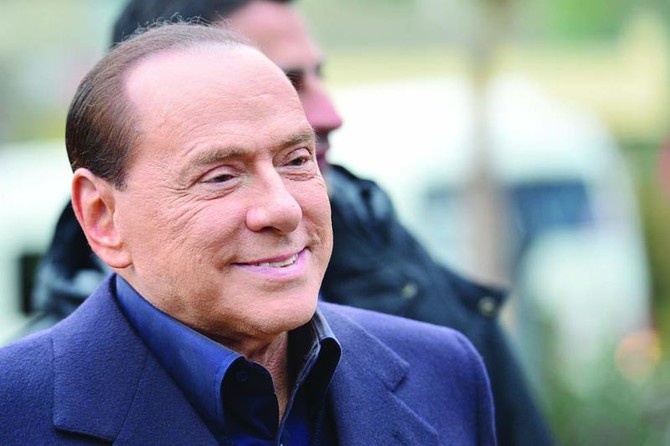
Aging Berlusconi launches improbable comeback
Aging Berlusconi launches improbable comeback
Latest updates


Recommended


© 2026 SAUDI RESEARCH & PUBLISHING COMPANY, All Rights Reserved And subject to Terms of Use Agreement.