JEDDAH: The Ministry of Higher Education’s Saudi Digital Library (SDL) is participating in the world’s biggest book fair, the Frankfurt Book Fair, which opened on Tuesday. The event runs for five days and features the participation of several publication experts from around the world, with a spotlight on children’s literature, traditionally an “under-recognized” sector but now seen as a driving force in publishing.
Ministry of Higher Education Consultant and Supervisor General of the SDL Musaed bin Saleh Al-Taiyar said the event is one of the world’s most important book fairs and is attended by a wide range of international publishing houses. The SDL takes part in the event every year, aiming to strengthen its relations with the largest academic agencies and be up to date with the latest books and encyclopedias and electronic publishing technologies.
SDL is the largest academic information source in the Arab world with more than 114,000 constantly updated academic references covering all academic majors. It has contracts with more than 300 international publishers and acts as an umbrella covering Saudi universities and negotiating legal and financial issues with publishers on behalf of them, which saves money and efforts.
The event is aimed at exchanging expertise between the world’s major publishers and those specialized in electronic publication. It is annually attended by more than 7,272 exhibitors from 113 countries.
“Children’s books have been doing very well around the world,” Richard Robinson, president and chief executive of the publisher and distributor of children’s books, Scholastic told a news conference.
“In the last 12 months, children’s publishing has been the top category in general trade publishing, leading families, readers into the bookstores,” he told reporters ahead of the fair’s inauguration.
Around 1,500 publishers who deal exclusively with the children’s and youth market are expected at the showcase, according to fair director Juergen Boos, who has described the sector as “a prototype” for the industry.
He pointed not only to the availability of playful apps for smartphones and tablet computers as well as interactive games, but also to changes in style and content of children’s books reflecting today’s society.
“Children’s publishing, always an important but somewhat under-recognized part of the book industry, may likely become the leader in pioneering new forms of reading because as we all know from watching babies with iPads, children are intuitively digital readers,” Robinson said.
However he predicted that print books would “survive and prevail as core children’s literature” adding that many schools or families would likely not be able to afford or have access to digital ebook readers.
While electronic books have been all the talk of the Frankfurt fair in recent years, ebook sales in Germany still only account for two percent of the market share, Gottfried Honnefelder, president of the German Booksellers’ and Publishers’ Association, told reporters.
That compared to about 20 percent in the United States, he said.
This year the book fair puts the literary traditions, arts and culture of New Zealand in the spotlight as its guest of honor.
German Foreign Minister Guido Westerwelle, at the opening ceremony, described New Zealand as a “neighbor” despite its great geographical distance from Germany because, he said, the two nations shared “common values.”
“These include democracy and rule of law, the need for international cooperation and the primacy of international law. We share the belief in the value of individual freedom,” he said.
For Germany, New Zealand embodies both the familiar and the exotic, he added pointing to the culture brought by European immigrants with that of the indigenous Maori population and influences from Asia.
“We New Zealanders regard ourselves as practical people, pragmatic, sports loving, but we are also dreamers, writers and prolific readers,” New Zealand’s Deputy Prime Minister Bill English told the ceremony.
“We have the space to contemplate, our nearest neighbors are 2,200 kilometers away,” he said adding however that although isolated, the country of 4.4 million people was not “insular.”


![]()
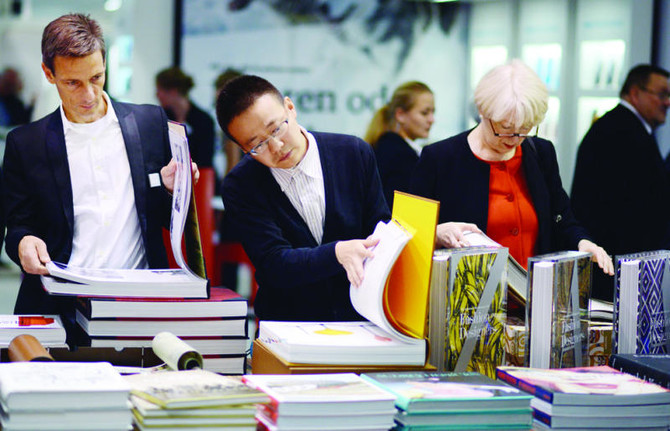
Saudi Digital Library at Frankfurt Book Fair
Saudi Digital Library at Frankfurt Book Fair
Latest updates




© 2026 SAUDI RESEARCH & PUBLISHING COMPANY, All Rights Reserved And subject to Terms of Use Agreement.