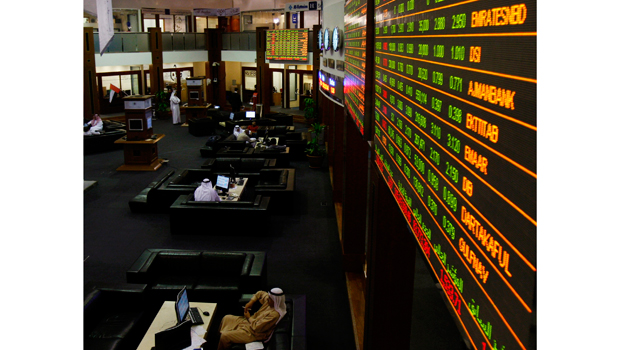
One of the seven United Arab Emirates, the OPEC producer’s trade and business hub was hit last year by the $25 billion debt restructuring of Dubai World.
The emirate, which accounts for 28 percent of the UAE’s economy, previously estimated its gross domestic product rose 2.4 percent in 2010, according to a prospectus for the government’s updated bond issuance program in June.
Dubai’s economic output shrank by 2.4 percent in 2009 after the global financial crisis burst its property bubble, freezing projects worth tens of billions of dollars.
In 2010 Dubai’s real GDP rose to AED293.6 billion ($79.9 billion) after a downwardly revised 285.7 billion in the previous year, data from the Dubai Statistics Center showed. It previously reported output of AED286.6 billion for 2009.
“We definitely see GDP growth going up (this year),” said Philippe Dauba-Pantanacce, senior MENA economist at Standard Chartered.
“Dubai has benefited from the safe haven effect and from a diversion of investments and growing tourism from neighboring countries affected by the crisis (unrest),” he said.
The UAE, which enjoys the world’s sixth highest per capita income of $47,400, has avoided the civil revolts which challenged governments in nearby Bahrain and Oman in February and March.
Hotel occupancies in Dubai stood at 75.5 percent in the first half, up from 70 percent in 2010.
“Unfortunately we don’t have enough data, but if you look at retail, tourism, it feels that 2011 up until now will be as good as 2010 or maybe slightly better,” said Mahdi Mattar, chief economist at CAPM Investment.
“However, we are at a critical point right now when it comes to global forecasts.”
Despite the recovery, banks remain hesitant to lend across the UAE, the world’s fourth-biggest oil exporter, and the once-booming property sector is still weak in Dubai, known for ambitious projects such as the world’s tallest tower.
The emirate’s housing market still has nearly a third too much supply and prices are expected to fall by another 10 percent, deepening a three-year drop of nearly 60 percent from its peak, a Reuters poll showed in July.
Dubai’s wholesale and retail trade sector, which accounts for a third of its GDP, rose by 4.5 percent last year, while construction tumbled by 14.7 percent, the data showed.
However, the UAE’s private sector was already feeling the impact of the global slowdown last month as growth in business activity plunged to a 15-month low in August, a survey showed.
In August, passenger traffic at Dubai International Airport grew by 0.8 percent to 4 million from a year ago, much slower than July’s 9.7 percent jump, as the number of travelers fell due to the holy fasting month of Ramadan and regional political instability, Dubai Airports said on Sunday.
Air freight volumes dropped 7.9 percent to 182,781 tons, hit by economic uncertainty in the US and Europe, the airport operator said, although flagship carrier Emirates Airline is not yet seeing a downturn in business.
“Dubai is a regional hub. Impact of a global slowdown would filter through multiple channels,” said Giyas Gokkent, chief economist at the National Bank of Abu Dhabi.
“However, Dubai’s economy would be more resilient now compared to 2008 given that real estate prices have already come down significantly and debt workouts have been undertaken.”
The emirate, which lacks the oil wealth of Abu Dhabi, is facing having to make around $30 billion in debt repayments over the next two years. Its debt pile including state firms is estimated at $113 billion or 141 percent of GDP.
Analysts polled by Reuters in June expect the UAE economy to grow by 3.7 percent in 2011 after a 1.4 percent expansion last year on robust oil prices and trade flows.