In the first attack, a roadside bomb tore through a vehicle carrying paramilitary soldiers in the Orakzai tribal region, where the army recently declared victory over the Taleban.
The blast killed six soldiers, including a lieutenant colonel, and wounded three others, security officials said, speaking on condition of anonymity because they were not authorized to speak on the record to media.
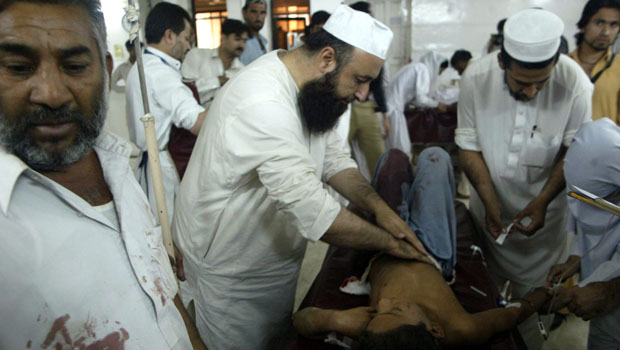
Hours later, a bomb hit a mosque on the outskirts of Peshawar, the capital of the northwestern province. Besides the three killed, 22 people were injured, said senior police official Liaquat Ali.
The attacks showed the fragility of the military’s gains in its offensives against Al-Qaeda and Taleban insurgents along the border with Afghanistan. The United States is hoping to bolster Pakistan’s fight against extremists with a surge in military funding expected to be announced Friday.
It was unclear whether the mosque was Sunni or Shiite affiliated. Pakistan is majority Sunni, and there have long been tensions between the two Muslim sects. The blast occurred during Friday prayers, which are typically the most attended prayer sessions of the week.
On Oct. 8, a massive bomb blast inside the Shirkat mosque in Takhar province n northern Afghanistan killed a governor and 19 other people. Thirty-five others were wounded in the explosion.
Karachi, Pakistan’s largest city, is still reeling under a wave of ethnic violence that officials have blamed members of the Muttahida Quami Movement and the Awami National Party.
At least 51 people, including several political activists, have been killed and dozens more wounded since Saturday in sprawling port city of more than 16 million residents.
In Orakzai tribal region, Frontier Corps paramilitary troops were traveling through the Yakh Kandao area when a bomb exploded on their vehicle.
The Pakistani army has carried out a series of offensives against insurgent groups in its tribal belt bordering Afghanistan. Friday’s bombing was a sign that militants have been able to regroup despite the sustained military campaigns.
The US has praised Pakistan’s operations against militant groups, largely because many of the insurgent movements are believed to also be involved in attacking American and NATO troops across the border in Afghanistan.
The Obama administration is laying out a new multiyear, multibillion-dollar military aid package for Pakistan, which was set to be unveiled later Friday at the end of the latest round of high-level US-Pakistani strategic talks in Washington, US officials said.
The money will be provided over the next five years under the State Department’s Foreign Military Financing program that funds other countries’ purchases of US-made arms, ammunition and accessories, the officials said. Precize details of what Pakistan will receive were being determined, they said.
The officials would speak only on condition of anonymity ahead of the announcement, which the administration hoped would reassure Pakistan of the long-term US commitment to Pakistan’s military needs and help it bolster its efforts to go after Taleban and Al-Qaeda affiliates on its territory.
The fight has had setbacks.
The offensive in Orakzai, for instance, has had mixed results. It came on the heels of an operation against the Pakistani Taleban in the South Waziristan tribal area. Many of the South Waziristan insurgents were believed to have fled north to Orakzai.
For months, the military pounded Orakzai with airstrikes, eventually staging a ground operation as well. The offensive intensified in March, with the reported daily death tolls of suspected militants sometimes in the dozens.
In June, the Pakistani army declared victory over the Taleban in Orakzai, saying the tens of thousands of civilians forced to flee could expect to return home soon.
But that declaration appeared premature — fighting was reported in the days afterward, and civilian returns have been limited.