- Authorities blame banned protest group JAAC for firing that killed soldier, seriously wounded another
- Incident comes after deadly election clashes, prolonged road closures, dispute over political representation
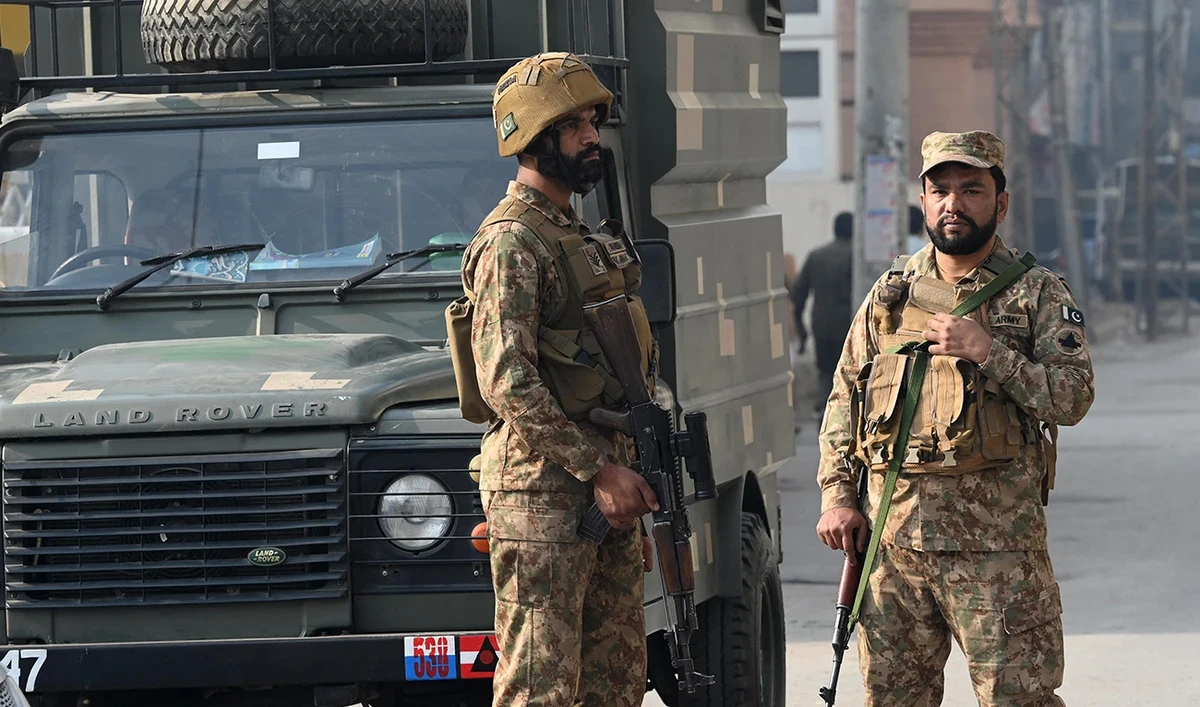
ISLAMABAD: A paramilitary soldier was killed and another seriously wounded on Wednesday when gunmen opened fire during an operation to reopen blocked roads in Azad Kashmir, police said, blaming members of a banned protest movement at the center of months of unrest in the region.
The violence comes after weeks of disruption and deadly clashes between security forces and protesters in Azad Kashmir, including during regional elections that began in July. The Jammu Kashmir Joint Awami Action Committee (JAAC), a grassroots movement that has campaigned over economic grievances, governance and political representation, was banned by the regional government under anti-terrorism legislation in June.
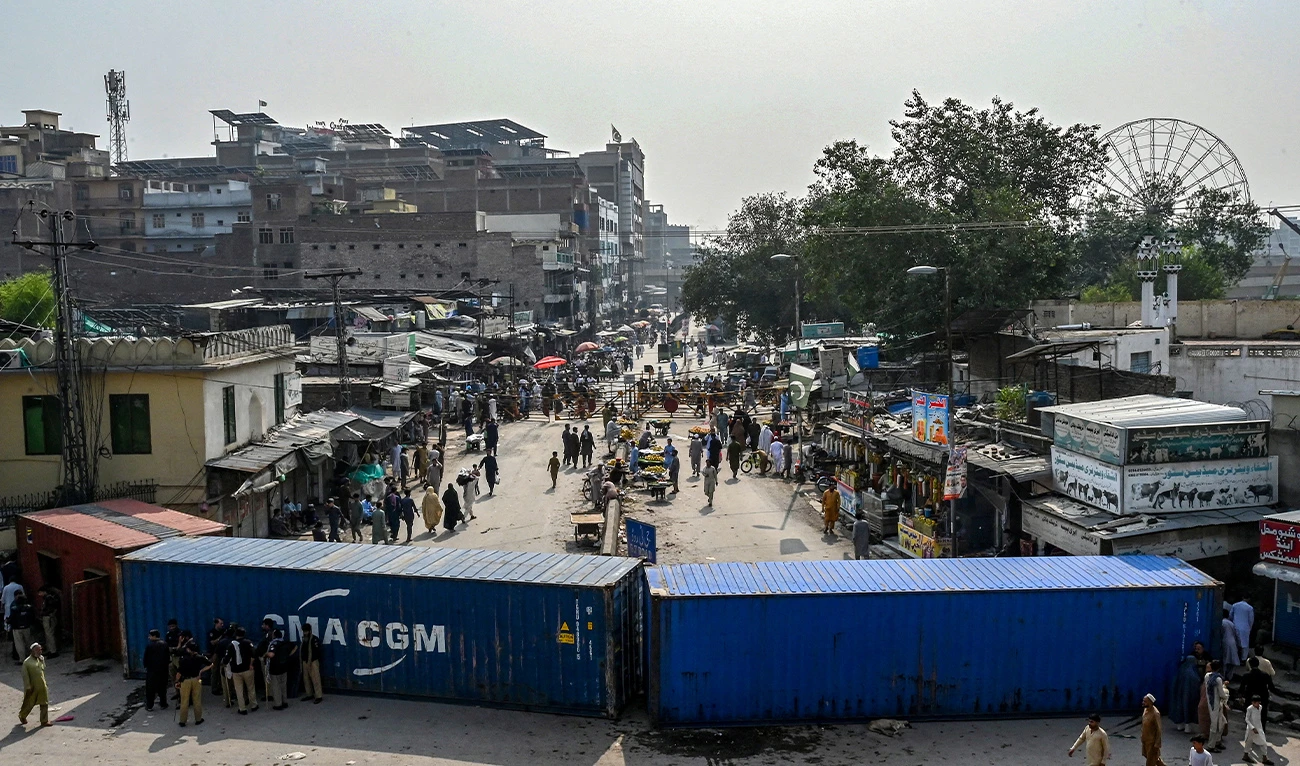
The latest confrontation took place as authorities attempted to clear roads around the Sarsawa-Thorar-Thal area, where prolonged blockades have disrupted transport and raised concerns about food supplies, according to an official statement. Police said the operation was launched following demands from local residents for roads to be reopened.
“During the clearance operation in the Sarsawa–Thorar–Thal Circle, armed elements of the proscribed Awami Action Committee made indiscriminate use of automatic weapons,” authorities said in a statement.
“The armed miscreants opened fire on personnel of the law-enforcement agencies.”
The statement said Rangers soldier Shahnawaz was shot in the chest and died of his wounds, while another member of the force, identified as Ishaq Iqbal, was seriously injured after being shot in the head.
Police separately said firing took place during the road-clearing operation and that law-enforcement personnel had come under attack.
Arab News could not independently verify the circumstances surrounding the shooting. There was no immediate statement from JAAC responding to the authorities’ allegations about Wednesday’s incident.
Authorities said road closures had severely disrupted daily life and made movement difficult for residents, with concerns growing about possible shortages of food and other supplies.
The operation would continue to reopen blocked routes and restore normal movement, police said.
MONTHS OF UNREST
The confrontation is the latest episode in a prolonged standoff between authorities and JAAC that has increasingly turned violent.
The movement rose to prominence through campaigns over electricity prices, subsidized flour and other economic grievances before broadening its demands to include governance and political representation.
A central dispute has involved 12 seats in Azad Kashmir’s 53-member Legislative Assembly reserved for refugees from Indian-administered Kashmir living elsewhere in Pakistan. JAAC has opposed the arrangement, arguing that it gives people living outside Azad Kashmir disproportionate influence over its legislature.
The Azad Kashmir government banned JAAC on June 5 under the region’s Anti-Terrorism Act, accusing the group of involvement in terrorism and activities prejudicial to peace and security.
JAAC and rights campaigners have rejected the authorities’ characterization of the movement. Rights groups have raised concerns about the use of anti-terrorism laws against protesters and allegations of excessive force, arbitrary arrests and restrictions on communications during the unrest. Authorities deny the charges.
The confrontation intensified during elections for the regional legislature, which were divided into several rounds because of security concerns.
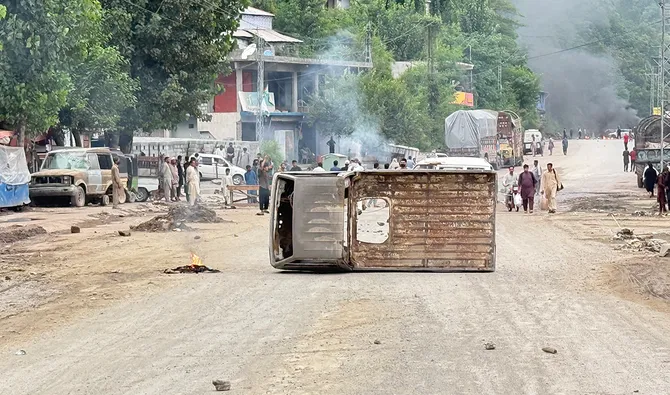
JAAC said more than 30 people were killed around Rawalakot during clashes between protesters and security forces during the first phase of voting in July, a toll difficult to independently verify because road, banking and Internet disruptions had restricted the flow of information from the region. Authorities acknowledged at least three protester deaths in Mirpur and said a member of the security forces was killed and five others wounded in clashes.
Authorities have accused armed elements associated with JAAC of attacking law-enforcement personnel, while protesters and activists have accused security forces of using excessive force.
Earlier this month, Azad Kashmir police also accused JAAC of abducting eight highway police personnel who had been deployed for election duty.
The regional government has maintained that it is seeking to restore public order, while the new Azad Kashmir Prime Minister Faisal Mumtaz Rathore said last week that dialogue was the only way to resolve the crisis and warned the situation could otherwise become “alarming.”
DISPUTED REGION
Azad Kashmir is part of the larger Kashmir region, which has been disputed between Pakistan and India since the two countries gained independence from British rule in 1947.
Both countries claim Kashmir in full but administer separate parts of the Himalayan territory. The part administered by Pakistan is known as Azad Jammu and Kashmir, or Azad Kashmir, and has its own elected legislature and government, while India administers the larger portion.
The dispute has been at the heart of decades of hostility between the nuclear-armed neighbors, which have fought at least three wars over Kashmir.