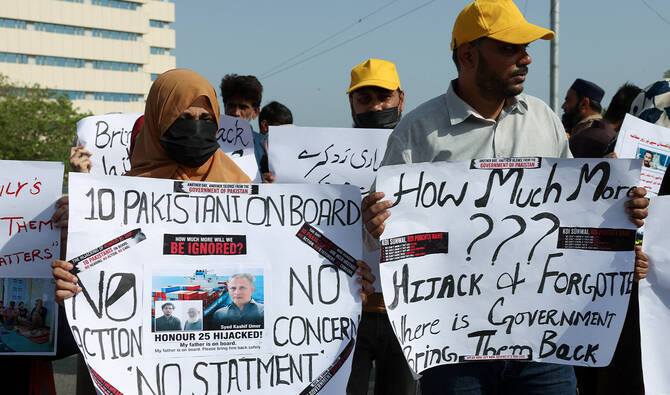
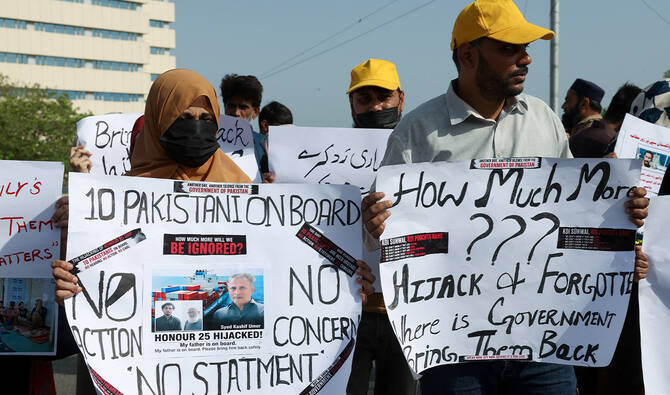
KARACHI: Aisha Ameen’s seven-month-old son has never seen his father. Her daughter turned four this week without him by her side, another family occasion missed as Pakistani sailor Ameen Bin Shams remains captive aboard a tanker seized by Somali pirates nearly four months ago.
Bin Shams, a fitter aboard the Palau-flagged MT Honour 25, is among 10 Pakistanis held since pirates seized the oil tanker with 17 crew members off Somalia’s Puntland region on April 21, leaving families in Karachi waiting for news of their loved ones as weeks of captivity stretch into months.
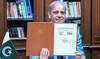
The families’ appeals have gained renewed urgency after Deputy Prime Minister and Foreign Minister Ishaq Dar chaired a high-level meeting on Thursday and ordered officials to intensify diplomatic engagement with Somali authorities, international organizations and other partners to secure the sailors’ release.
For Aisha, the passing months have been measured in moments her husband has missed.
“My daughter turned four this year, and it was the first time her father was not with her,” she told Arab News.
She said her husband had left for work on Dec. 9, two weeks before their son was born on Dec. 24.
“He has not even seen his face since birth,” Aisha said.
The prolonged captivity has upended the lives of other families as well.
Syed Izhan Kashif, whose father Syed Kashif Umer is among the captive sailors, was due to sit his A-level examinations this year but said the uncertainty surrounding his father’s fate left him unable to take them.
Izhan said his family learned of the hijacking through a voice message from his father on April 23. They then had no contact with him for around 10 to 15 days before the pirates allowed a brief call, during which his father spoke of problems with food and deteriorating health among the crew.
“I have no idea about my studies anymore,” Izhan said. “I don’t know when I will take my exams now, or what the future holds.”
Families have previously said the crew ran out of clean drinking water and were surviving on limited food supplies, while Pakistani officials have acknowledged that the nature of the vessel’s cargo has complicated efforts to secure their release.
Foreign Office spokesperson Tahir Andrabi said in June that the tanker was carrying “very highly explosive cargo,” making any law enforcement operation to free the hostages difficult because of the danger to those aboard.
Pakistan says its embassy in Djibouti, which is accredited to Somalia, has remained in contact with Somali authorities and the ship owner, with Pakistani diplomats also traveling to Mogadishu to seek information about the case.
The Foreign Office has previously said the ship owner and Somali authorities were in contact with the pirates and negotiating for the crew’s release, while Islamabad had asked them to ensure food, drinking water and other necessities continued to reach the sailors.
At Thursday’s meeting, Dar directed officials to maintain close coordination and step up engagement with Somali authorities, international organizations and other partners, while expressing solidarity with the hostages’ families and saying the government remained “fully seized” of the situation.
For relatives who have spent months waiting, however, uncertainty over how and when the sailors might return has taken an increasing toll.
Mahwish Yasir, whose husband Yasir Khan is among the Pakistani crew, said families had initially been told that a meeting involving stakeholders had been fruitful but later struggled to obtain information about what had happened since.
“Families are having panic attacks,” she said, adding that some of the sailors’ children had stopped attending school and become increasingly withdrawn.
Pakistani officials cautioned in June that piracy hostage cases in the region have historically taken months to resolve, while assuring families that securing the sailors’ release remained a priority.
But as the captivity stretches toward four months, Aisha said families were struggling to understand where else they could turn.
“The Pakistani government says it is an international issue. Then which international forum should we reach?” she asked.
“We really want our government to get our loved ones back.”