

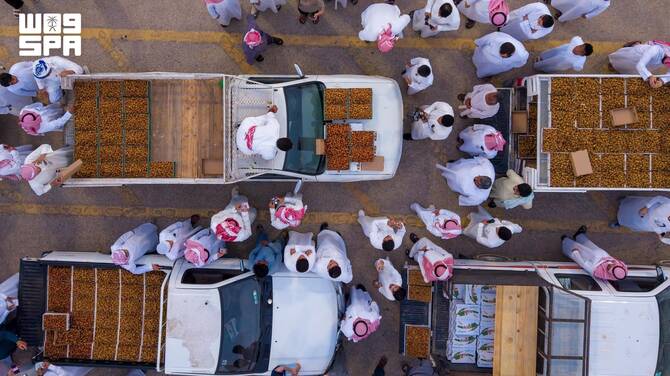

BURAIDAH: The Buraidah International Dates Carnival has more than 100 date varieties on display, reflecting the richness and quality of Qassim region’s agricultural production while attracting farmers, traders and shoppers and driving strong commercial activity.
The carnival also promotes rare date varieties and highlights their agricultural and cultural value, allowing farmers and enthusiasts to learn about their characteristics and exchange expertise in cultivation, care, preservation and marketing.
Held annually for 75 days from Aug. 1, the carnival has become a major agricultural and economic event. It supports the goals of Saudi Vision 2030 to develop the agricultural sector and enhance food security.
The event provides an integrated marketing journey from farms to shoppers, receiving farmers’ produce and facilitating sales throughout the season.
The Qassim region is home to around 11 million date palms, which produce more than 580,000 tonnes of dates annually.
The Culinary Arts Commission is participating in the carnival by showcasing some of its publications, including “Buraidah,” a book highlighting Saudi Arabia’s culinary heritage and its connection to local products.
The book follows a traveler who spent five days in the city exploring its people, landmarks, dining traditions and customs. It examines Buraidah’s history and cultural and economic heritage through visits to palm farms, the dates carnival, Al-Oqilat Heritage Museum and other heritage sites.
It also explores family-run and culinary businesses and documents local dishes and recipes, including Saudi coffee, kleija and maamoul.
The commission’s participation highlights its efforts to document Saudi Arabia’s culinary heritage and also stresses Buraidah’s status as the first Gulf city to join the UNESCO Creative Cities Network in gastronomy, reflecting the growing international presence of Saudi food culture.


