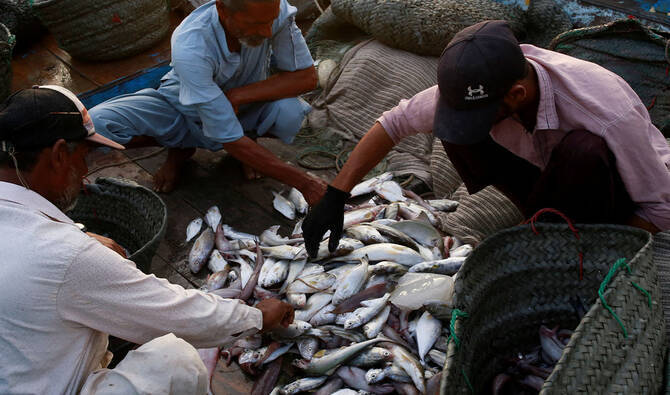

KARACHI: Federal Minister for Maritime Affairs Muhammad Junaid Anwar Chaudhry on Sunday called for traditional knowledge of coastal communities to be incorporated into climate adaptation, marine conservation and fisheries policies as Pakistan confronts growing environmental pressures along its coastline.
Communities stretching from Karachi and the Indus Delta to Gwadar and Jiwani have accumulated generations of knowledge about tides, fishing grounds, marine species, weather patterns and coastal ecosystems, which the minister said could complement scientific research and strengthen responses to climate change.
“Traditional knowledge is not merely a legacy of the past,” he said, according to a statement circulated by his ministry. “It is a living resource that can contribute to climate resilience, sustainable fisheries and the protection of our marine ecosystems.”
Chaudhry made the remarks on the International Day of the World’s Indigenous Peoples, observed annually on Aug. 9 to raise awareness of the rights and needs of Indigenous communities around the world.
The minister said fishing communities in Karachi faced increasing pressure from urbanization, pollution and habitat degradation, while those in the Indus Delta were confronting freshwater shortages, saline intrusion, erosion and changes in fisheries.
Similar challenges were affecting traditional fishing communities along the Balochistan coast, including Sonmiani, Ormara, Pasni, Gwadar and Jiwani, he added.
“Modern science and traditional ecological knowledge should complement each other,” he said. “Communities that have lived with the sea for generations understand changes in their environment in ways that can strengthen formal climate and marine policies.”
Pakistan’s coastal areas are particularly vulnerable to climate change and sea-level rise, with the Indus Delta facing significant risks from saline intrusion, coastal flooding and reduced freshwater flows.
The minister called for community-based adaptation measures, stronger early-warning systems, climate-resilient infrastructure and sustainable fisheries management, while urging greater participation of coastal communities in decisions affecting natural resources.
“Pakistan’s blue economy cannot be separated from ecological security,” he said. “Healthy seas, resilient coastal ecosystems and empowered communities are essential for sustainable maritime development.”