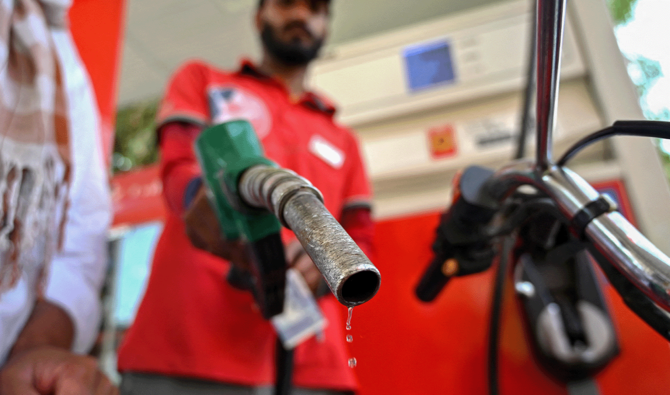

ISLAMABAD: Nearly 40 percent of Pakistanis believe the government handled fuel prices “ineffectively” in light of the regional tensions between the United States (US) and Iran, international market research and opinion firm Ipsos said this week in its latest survey.
Pakistan frequently hiked fuel prices after the US attacked Iran with Israel in February this year. Iran retaliated, attacking US forces in the Middle East, targeting the energy infrastructure in the Gulf region and closing the Strait of Hormuz maritime trade route. Tensions in the Middle East restricted oil supply worldwide, forcing countries such as Pakistan that rely on the Middle East for their fuel supply, to raise prices of petroleum products frequently.
The Ipsos survey was conducted using Computer-Assisted Telephone Interviews from Jul. 31 to Aug. 4, with more than 1,000 respondents from Islamabad, Punjab, Khyber Pakhtunkhwa, Sindh, Balochistan, Gilgit-Baltistan and Azad Jammu and Kashmir participating. The survey said 39 percent of Pakistanis believe the government managed fuel prices ineffectively, compared with 30 percent who viewed its handling as effective. Ten percent said they had no opinion on the matter.
“Negative opinion outweigh positive ones, with 2 in 5 Pakistanis believe the government has managed fuel prices ineffectively, compared with 3 in 10 who believe it has been effective,” Ipsos said in its survey released on Wednesday. “Public opinion is sharply divided across regions and demographics.”
The survey found that only one in three Pakistanis believe the government managed fuel supplies effectively, while 31 percent described its handling as ineffective.
Ipsos said 41 percent of Pakistanis supported the government’s monthly fuel price adjustments, with the strongest backing among adults, the lower middle class, and residents of Sindh and Khyber Pakhtunkhwa provinces.
Pakistan began revising petrol prices on a daily basis from July, following renewed hostilities between the US and Iran, which has increased volatility in global oil markets. On Wednesday, Pakistan increased the price of petrol by Rs4.45 per liter while reducing the price of high-speed diesel (HSD) by Rs2 per liter.