

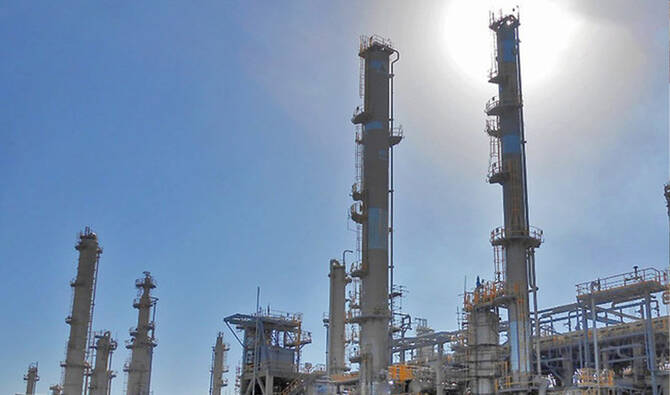

ISLAMABAD: Prime Minister Shehbaz Sharif has directed authorities to hold investment roadshows in Saudi Arabia, Qatar and other Gulf countries to promote Pakistan’s refinery upgrade plan, his office said on Tuesday, as Pakistan aims to upgrade its domestic refining sector and produce fuels that meet international environmental standards.
Most of the country’s refineries are decades old and relatively simple facilities that produce large volumes of low-value furnace oil but insufficient quantities of higher-quality transport fuels such as petrol and diesel.
Policymakers increasingly view a stronger domestic refining base as a strategic component of national resilience. Pakistan has been seeking to upgrade its refining sector to reduce its reliance on imported refined fuels, improve fuel security and lower its import bill.
“The production of Euro-IV and Euro-V standard fuel is essential for fulfilling Pakistan’s international environmental commitments, reducing air pollution and providing better quality fuel to the public,” the PM Office said in a statement after Sharif chaired a meeting of the Cabinet Committee on Energy.
The meeting approved amendments to the Pakistan Oil Refining Policy 2023 for brownfield refineries to accelerate the production of cleaner Euro-V-compliant petrol and diesel while reducing furnace oil and other low-value petroleum products.
“The Prime Minister directed that road shows be organized in Qatar, Saudi Arabia and other Gulf countries to promote the amended Pakistan Oil Refining Policy 2023 regarding brownfield refineries.”
Euro-IV and Euro-V are vehicle emission standards, which set limits on the pollutants a vehicle can emit and require cleaner, low-sulfur fuels to ensure modern emission-control systems operate effectively.
The participants were briefed that the upgrading of existing refineries was necessary to increase their production capacity, it added.
The statement quoted Sharif as saying that the government would press ahead with energy reforms, technology adoption and measures to attract investment in the petroleum sector.
Sharif said the upgrading of oil refineries was an important pillar of Pakistan’s energy security system that would help reduce dependence on imported fuel and provide environment-friendly fuel, it added.
The development comes after Pakistan’s finance minister last week discussed plans with US-based industrial technology company Honeywell to upgrade and strengthen the country’s refinery sector. In May, Pakistani officials said the country was accelerating a long-delayed $6 billion refinery upgrade project.
Pakistan’s refining capacity currently stands at 450,000-500,000 barrels per day, or 21-23 million tons annually, according to officials and industry insiders. Subject to upgrades, it may reach around 33 million tons per year by 2035.
Pakistan spent Rs 4.4 trillion ($16 billion) on fuel imports last year, mainly from the United Arab Emirates, Saudi Arabia, Kuwait and Qatar, according to official data.


