


NEW YORK CITY: A group of UN human rights experts on Wednesday condemned what they described as systematic and widespread breaches of international humanitarian and human rights law by Israel in its ongoing war in Lebanon, and cautioned that ordinary Lebanese citizens were paying an outsized and devastating price.
The experts drew a direct comparison with Israeli action in Gaza, saying: “Israel’s issuance of immediate ‘displacement orders’ is reminiscent of those used by Israel in Gaza against the civilian population.”
The joint statement was signed by six UN-appointed independent experts: Reem Alsalem, special rapporteur on violence against women and girls, its causes and consequences; Morris Tidball-Binz, special rapporteur on extrajudicial, summary or arbitrary executions; Koldo Casla, special rapporteur on adequate housing; Paula Gaviria Betancur, special rapporteur on the human rights of internally displaced persons; George Katrougalos, independent expert on the promotion of a democratic and equitable international order; and Ben Saul, special rapporteur on the promotion and protection of human rights and fundamental freedoms while countering terrorism.
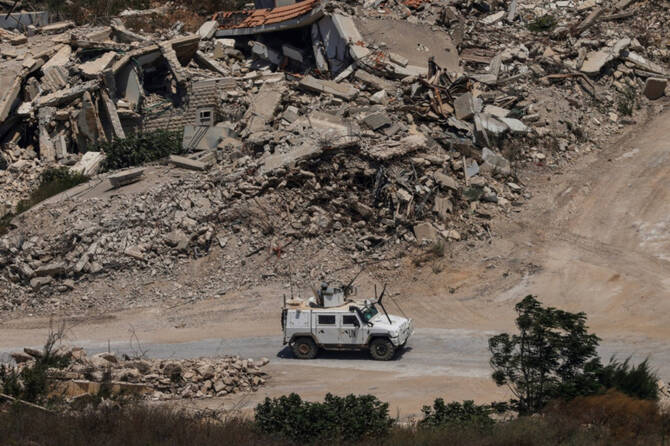
They highlighted reports of residents in southern Lebanon who had been forced from their homes en masse, with tens of thousands of people barred from returning even as houses are razed, and said numerous towns and villages remain cut off while Israel expands its hold over additional Lebanese territory.
“Evacuation is an exceptional and strictly temporary measure,” the experts stressed. “It may only be used to protect the safety of civilians or for imperative military reasons, not to depopulate and occupy areas.
“Civilians have the right to return voluntarily and safely to their homes once the circumstances justifying their displacement have ceased.”
Women and girls have been especially badly affected by the crisis, the experts found. About 620,000 have been forced from their homes since March 2026, including almost 16,000 pregnant women, many of whom had to give birth in crowded, unsanitary conditions with no proper maternal care available.
Damaged hospitals, attacks on medical personnel, shuttered maternity wards and broken supply chains have left women and girls, especially expectant and nursing mothers and newborns, cut off from healthcare and protection.
“Forced displacement has exposed women and girls to heightened risks of violence and abuse, while the destruction of healthcare services has deprived many of essential reproductive and maternal health care,” the experts said, adding: “International human rights law requires these rights to be protected, including during armed conflict.”
The wider human cost of the conflict has continued to climb. Between the escalation of hostilities on March 2 and July 17, Israeli strikes have reportedly killed more than 4,300 people in Lebanon, including at least 392 women and 253 children. Some strikes on residential buildings wiped out entire families and killed health workers. During the same period, more than 12,000 people were wounded, including 1,450 women and 1,036 children.
The experts also raised concern over witness accounts that Israeli forces had used white phosphorus munitions, which are banned in populated areas, in residential neighborhoods. This left civilians vulnerable to severe burns, respiratory damage and lasting health complications, they said, with pregnant women and children at particular risk.
They reminded warring parties of their obligations under humanitarian law, saying: “Parties to a conflict are required to take all feasible precautions in the choice of means and methods of warfare and in the conduct of attacks to avoid, and in any event minimize, incidental civilian harm.”
The experts added that they were troubled by what they characterized as Israel’s willful indifference to the protections owed to civilians, women and girls in particular, during conflict.
“The protection of civilians, including women and girls, in times of war is not optional for any warring party — including Israel,” they said. “It is a legal obligation that must be urgently upheld.”
Israel’s conduct amounts to a breach of core principles of humanitarian law, they concluded.
“Taken together, Israel’s military actions constitute a violation of international humanitarian law and its principles of distinction, proportionality and precautions in attack, as well as the prohibition on indiscriminate attacks, and may also amount to war crimes and crimes against humanity,” they said.
The experts voiced further alarm over public comments attributed to senior Israeli officials that they said singled out Lebanese women, particularly mothers, and warned of the dangers such language poses.
“Rhetoric that dehumanizes women on the basis of being Lebanese and female, legitimizes collective punishment or incites violence is particularly dangerous, illegal and unacceptable,” they said.
The experts urged Israel and all other parties to the conflict to fully abide by the principles of international law, fully implement Security Council Resolution 1701 and the 2024 cessation of hostilities agreement, and uphold Lebanon’s sovereignty.
Special rapporteurs are part of what is known as the special procedures of the UN Human Rights Council. They are independent experts who work on a voluntary basis, are not members of UN staff and are not paid for their work.


