

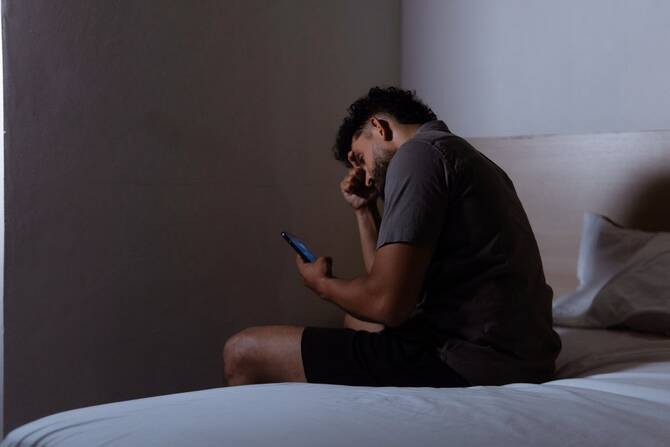

DUBAI: It can feel increasingly difficult to catch a breath these days.
With consequential headlines that update every few minutes, work that becomes increasingly unpredictable, and conversations around future plans that shift from five-year timelines to five-week ones, it is clear that increased uncertainty takes its toll on our lives, personal and professional.
But what happens when that uncertainty becomes sustained, when there is no relief from the constant strain we feel from simply not knowing? Here, research tells us that prolonged uncertainty has marked impacts on our health and well-being.
The human mind views uncertainty as a threat, as it disrupts our trusted ways of being in the world. With threat comes stress, which can directly impact our ability to process our thoughts, emotions and the ways we manage our daily tasks.

Shrav Shankar. (Supplied)
It can show up as getting upset more easily or making unexpected mistakes in simple situations. In our bodies, there is exhaustion that never seems to fully go away with rest, dull body aches or unsettled stomachs. The longer the constant hum of uncertainty plays, the worse the anxiety gets.
This is amplified when checking any source of news, regional or otherwise, where decisions made many hundreds or thousands of kilometers away can instantaneously cause worry, irrespective of the time of day.
It is here that monitoring the situation or constantly checking news notifications can become counterproductive. Even though it feels logical to seek out information when uncertainty implies a lack of knowing, it can instead worsen the situation because what we find rarely resolves the uncertainty satisfactorily.
While managing digital habits can help control some of the external sources of uncertainty, internal ones can be trickier. Uncertainty and anxiety can sabotage us in two ways: convincing us that we need to manage everything on our own, thereby isolating us, and suggesting that emotions need to be turned off so we can work rationally on our concerns.
Often, just naming some of those feelings — fear, sadness, anger, confusion — can help make them feel more manageable, while also helping better distinguish what remains in our control and what does not.
Anxiety stemming from uncertainty can also narrow our ways of seeing the world and solving problems, focusing only on one outcome when other choices may exist.Here social connection — speaking with a trusted other — can help expand that narrow tunnel by offering different perspectives, reassurance or just an understanding that this daunting feeling is invariably a shared one.
Shrav Shankar is a Community Development Authority-licensed psychologist at Peninsula Psychology in Dubai.


