

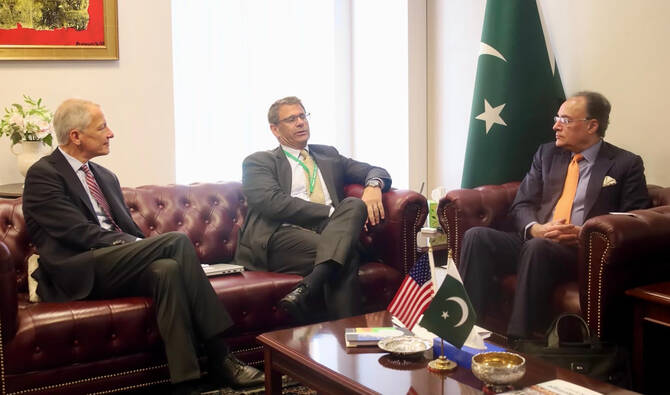

KARACHI: Pakistan’s Finance Minister Muhammad Aurangzeb on Monday discussed plans with a US-based industrial technology company to upgrade and strengthen the country’s refinery sector, according to an official statement, as renewed conflict in the Gulf sharpens concerns over energy security and supply disruptions.
The meeting with Honeywell Technologies comes as fighting between the United States and Iran has resumed after first erupting at the end of February, raising fresh concerns over shipping through the Strait of Hormuz. Tehran’s Yemeni allies, the Houthis, have also threatened to broaden the conflict by imposing a blockade on Saudi ports, reinforcing concerns that Pakistan is overly dependent on imported refined fuels and exposed to disruptions in global supply chains.
Honeywell Technologies, part of the US industrial conglomerate Honeywell International, is a major supplier of refining process technologies, engineering solutions and equipment used by oil refineries worldwide to produce cleaner, higher-value fuels and improve operational efficiency.
“During the meeting, the Finance Minister welcomed Honeywell’s proposed modernization and expansion of Pakistan’s refinery sector, noting its potential to enhance the country’s domestic refining capacity and reduce reliance on imported petroleum products,” the finance ministry said in a statement after Aurangzeb met a Honeywell delegation led by Vice President and General Manager Barry Glickman in Washington.
“The meeting included discussions on Honeywell’s technology and equipment solutions, as well as potential financing through the US EXIM Bank, the US International Development Finance Corporation (DFC), export credit agencies, and leading international banks,” it said.
Aurangzeb said the proposed initiative would support Pakistan’s energy security, industrial development and sustainable economic growth, according to the statement.
Most of the country’s refineries are decades old and relatively simple facilities that produce large volumes of low-value furnace oil but insufficient quantities of higher-quality transport fuels such as petrol and diesel. Policymakers increasingly view a stronger domestic refining base as a strategic component of national resilience.
Pakistan has been seeking to upgrade its refining sector to reduce its reliance on imported refined fuels, improve fuel security and lower its import bill.


