

 Saudi Arabia climbs to seventh in global power ranking amid regional turmoil
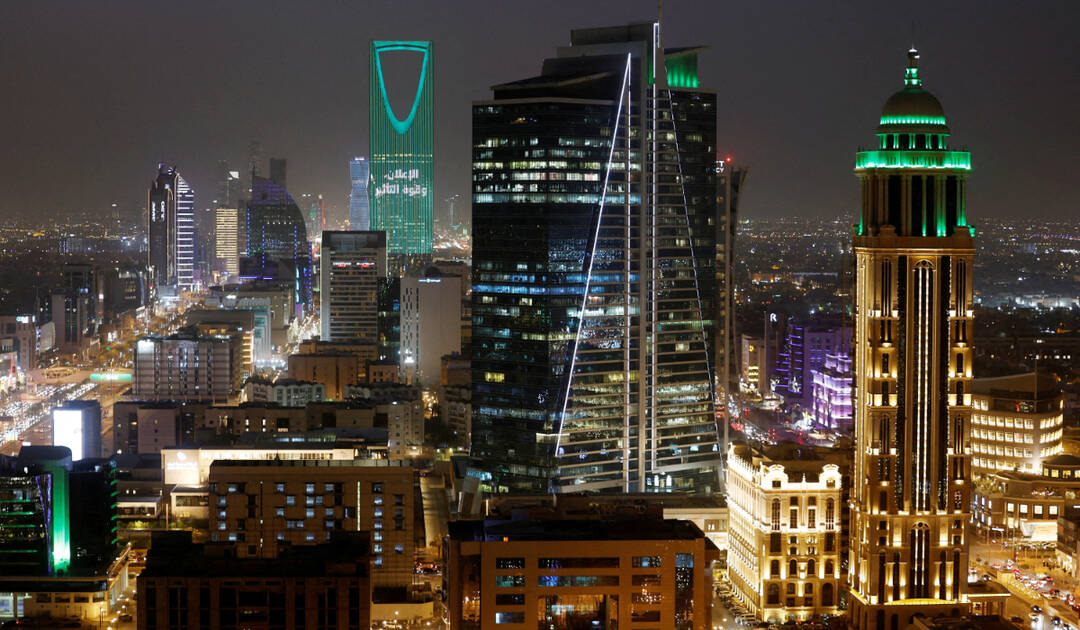

More than a year ago, writing in the pages of Arab News, I examined a Forbes ranking of the world’s most powerful countries that placed Saudi Arabia ninth globally. At the time, I argued that the result was more than a statistical milestone. It was welcome news for the Middle East, reflecting the emergence of a power committed to stability, moderation and the pursuit of long-term regional peace.
The Kingdom’s ascent was already visible in its economic expansion, diplomatic engagement and ambitious national transformation. Today, amid heightened tensions and renewed uncertainty across the Middle East, that assessment appears not only relevant but reinforced.
The 2026 Best Countries Index places Saudi Arabia seventh globally in its Power subranking. Based on a survey of 15,131 respondents across 33 countries, the index was developed in collaboration with the Wharton School at the University of Pennsylvania and WPP/BAV. The result provides measurable evidence of Saudi Arabia’s strengthening international profile and its emergence not only as a regional heavyweight, but also as an increasingly influential global actor.
Such rankings should, of course, be understood in context. The index measures international perceptions of power rather than military or economic strength alone. Yet perceptions matter. They influence diplomatic credibility, investment decisions and a country’s capacity to shape international agendas. Saudi Arabia’s rise from ninth to seventh therefore reflects a broader recognition of the Kingdom’s expanding influence.That influence has been neither accidental nor driven solely by military capability.
Although defense and national security remain central to Saudi policy, the Kingdom has steadily broadened the foundations of its power. Its influence now extends across infrastructure, technology, tourism, renewable energy, culture, sports and entertainment. Together, these sectors support a multidimensional model of national power that goes well beyond conventional measures of strength.
Vision 2030 has been the main force reshaping the Saudi development model. By placing economic diversification, institutional modernization and global integration at the center of national policy, it has helped redefine both the Kingdom’s domestic priorities and its international identity.
The 2026 Best Countries Index places Saudi Arabia seventh globally in its Power subranking.
Major projects and destinations such as NEOM, The Red Sea, Qiddiya and AlUla are central to this transformation. They are not simply large-scale domestic investments. They also represent declarations of long-term economic ambition and signal the type of country Saudi Arabia intends to become. Alongside these developments, regulatory reforms, infrastructure improvements and quality-of-life initiatives are helping Saudi cities compete more effectively for international investment, entrepreneurial talent and skilled professionals.
Admittedly, debate continues over the timelines and financial requirements of some megaprojects. Certain initiatives have been rescheduled, redesigned or recalibrated to reflect changing priorities and ensure long-term financial sustainability. These adjustments should be examined seriously, but they should not automatically be interpreted as a retreat from the objectives of Vision 2030.
Large national transformation programs are rarely implemented in a straight line. Strategies evolve, economic conditions change and priorities must sometimes be reconsidered. The ability to recalibrate projects may therefore reflect pragmatic governance rather than declining ambition. What matters is whether the central direction of reform remains intact.
In Saudi Arabia’s case, that direction is clear; reducing dependence on oil while building a more diversified, resilient and innovation-driven economy. Recent evidence supports this trajectory. The Kingdom’s 2026 Voluntary National Review highlights priorities that include sustained growth in the non-oil economy, the attraction of sustainable foreign investment, more balanced development across the country’s regions and stronger environmental practices in sectors such as industry and mining. These priorities suggest that economic diversification is increasingly being linked to sustainability, regional development and private-sector expansion.
Taken together, these developments show that Riyadh’s vision is not a static blueprint. It is an evolving national strategy capable of adapting to changing economic and geopolitical realities while remaining focused on a central objective; establishing Saudi Arabia as a diversified global economic actor and a force for stability in the region.
The latest ranking places the Kingdom among countries traditionally associated with substantial international influence, including the US, China, Russia, the UK, Germany and South Korea. Its circulation through international platforms such as Visual Capitalist has also drawn greater attention to Saudi Arabia’s changing global position.This recognition is not merely symbolic. It reflects the Kingdom’s growing relevance to the economic and geopolitical discussions that will shape the coming decade. From energy security and international investment to technology, tourism and regional diplomacy, Saudi Arabia is increasingly involved in issues that extend far beyond its immediate neighborhood.
Greater influence, however, brings greater responsibility. A higher position in a global power ranking should not be treated only as a source of national pride. It also raises expectations regarding diplomatic leadership, economic resilience and the Kingdom’s ability to contribute to stability at a time of deep regional uncertainty. For the Middle East, Saudi Arabia is ranking carries significance beyond the number itself. It indicates that one of the region’s leading states is becoming present in the partnerships, negotiations and international forums that shape global decision-making. That presence could have important consequences for regional stability, economic integration and long-term development.
Saudi Arabia’s rise to seventh place should therefore be understood neither as an isolated achievement nor as the conclusion of its transformation. It is better viewed as evidence of progress and as a reminder of the responsibilities that accompany growing power.
• Nasser bin Hamed Al-Ahmad is a political researcher and writer with more than eight years’ experience in political media. He specializes in analyzing political trends in the MENA region and the US. X: @nasseralahmad3


