




ABHA: The annual appearance of the Sirius star marked the beginning of the traditional autumn season in Saudi Arabia’s Asir region on Thursday, heralding a crucial period for the area’s agricultural calendar, the Saudi Press Agency reported.
Known locally as “Alb,” the July 16 emergence of Sirius has guided farming activities for generations. According to researcher Dr. Abdullah Al-Mousa, the star’s arrival coincides with the deepening of the Indian seasonal low-pressure system over the southwestern highlands. This atmospheric shift creates ideal conditions for cumulonimbus clouds and essential summer rainfall.
Al-Mousa said that the period was frequently accompanied by “Ghusmat Alb,” a local phenomenon where dust blows from the Tihama lowlands. The season is also steeped in local folklore, marked by the fledging of young crows and the emergence of specific insects and reptiles.
This seasonal transition is vital for Asir, whose diverse topography — ranging from the Sarawat Mountains to the Tihama plains — provides a cooler climate than the rest of the Kingdom. This environment supports year-round cultivation and rain-fed crops that are challenging to grow elsewhere.
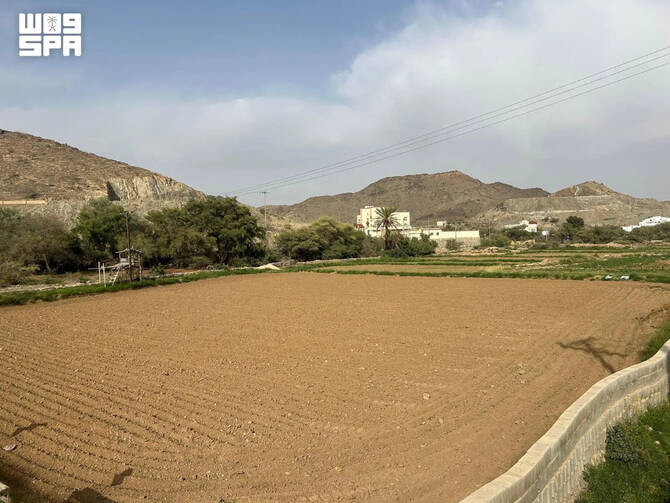
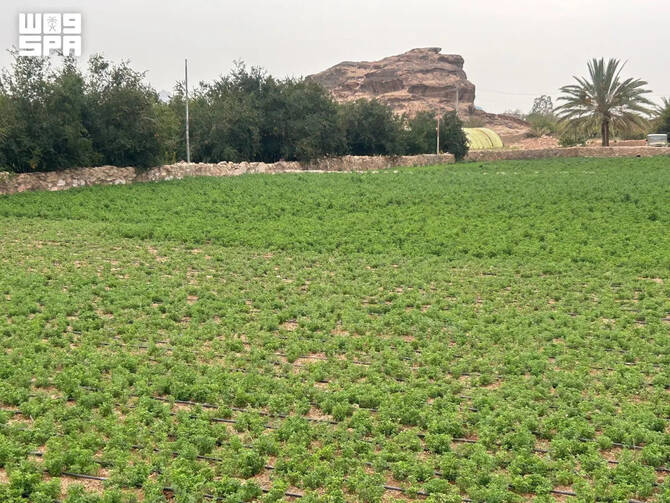
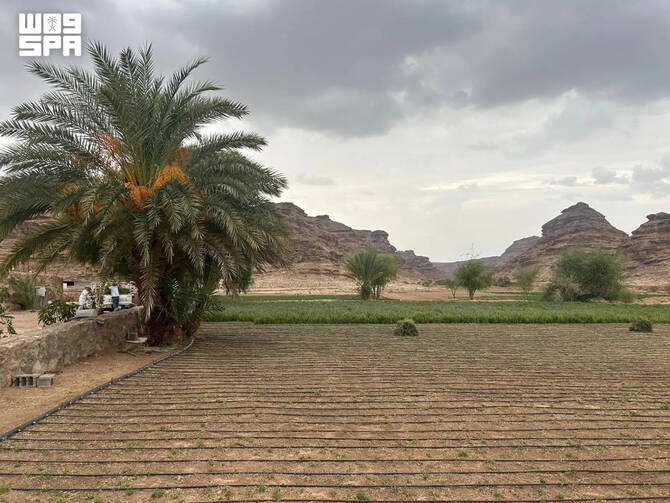
The autumn rainfall builds on the region’s spring planting efforts, where farmers maintain ancient terraced hillsides to conserve soil and rainwater. Today, local agriculture blends tradition with modern technology, using advanced irrigation and greenhouses to maximize water efficiency.
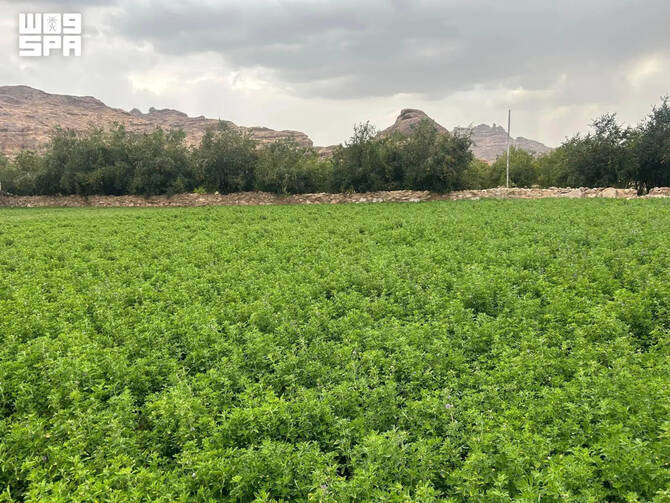
Asir’s highlands and plains yield a rich variety of crops supported by government agricultural initiatives. Traditional rain-fed grains, such as sorghum, pearl millet and sesame, occupy more than 50 percent of the cultivated land in the Kingdom’s southwest.
Farmers also produce wheat, corn and barley, alongside temperate fruits that benefit from the cooler altitudes, including apples, pears, strawberries, grapes and pomegranates.
Beyond staple crops, the region is experiencing a major resurgence in cultivating high-value specialty coffee in its mountainous highlands, while Bisha governorate remains a key producer of dates.
While Asir accounts for roughly 2 percent of Saudi Arabia’s overall raw crop volume, its true value lies in specialized farming.
The region is the Kingdom’s undisputed leader in beekeeping, producing 20 percent of the national honey output in 2024, and hosts 70 percent of Saudi Arabia’s vegetation diversity across a million hectares of forested land.


