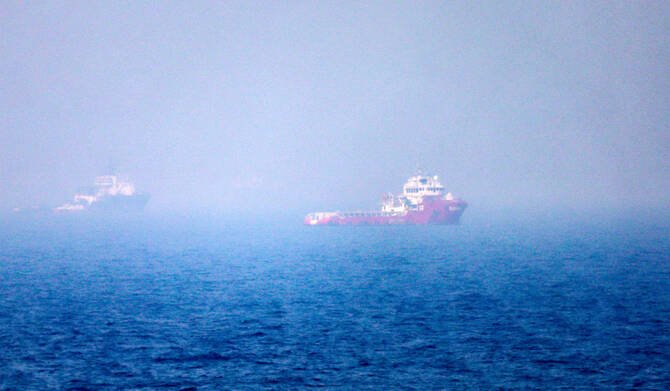

WASHINGTON: President Donald Trump has been trying to force Iran to fully reopen the Strait of Hormuz for months, turning to everything from airstrikes and naval blockades to negotiations and threats to destroy a “whole civilization.”
But restoring oil tanker traffic in the vital Middle East shipping corridor to prewar flows likely will require a much bigger armada of US warships if not tens of thousands of American troops on Iranian soil, experts say.
Despite on-and-off fighting, Iran can still target vessels in the narrow Arabian Gulf waterway with drones and missiles that have been hidden in a country a third of the size of the continental US.
“Iran has been preparing for this type of asymmetric conflict for decades now,” said Jason H. Campbell, a senior fellow at the Middle East Institute and a former Pentagon official. “I think they’re starting to demonstrate why no other US president since Reagan has elected to engage at this level of conflict with Iran, because they have that ability to completely disrupt the Strait of Hormuz.”
Iran’s threats alone can be enough to halt commerce in the strait, said Noam Raydan, a senior fellow at the Washington Institute for Near East Policy focused on energy and maritime risks in the Middle East.
“They don’t need to launch drones and missiles — they can just use the marine radio channel to make some threats,” Raydan said. “And this in itself is enough to scare off a lot of seafarers.”