


ISLAMABAD: Pakistan’s Deputy Prime Minister Ishaq Dar on Sunday urged all parties to exercise restraint, the foreign office said, as Tehran launched fresh attacks against Gulf countries in response to a third round of airstrikes by the US against Iranian targets.
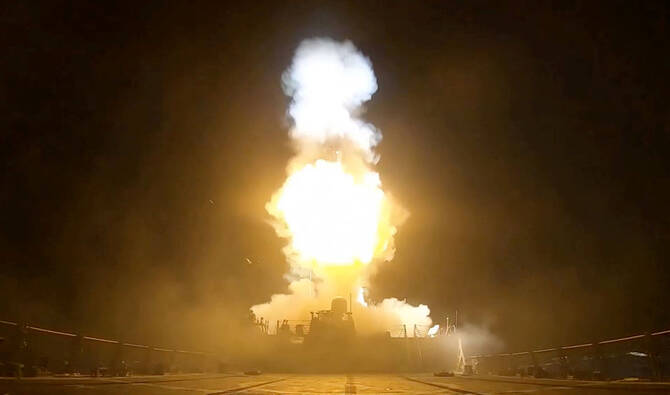
Iran launched fresh missile and drone attacks against Bahrain, Qatar and the UAE on Sunday, widening its military campaign across the Gulf. The attack came hours after the US Central Command said it had launched the third wave of strikes after it said a Cyprus-flagged container ship, transiting the Strait of Hormuz, was attacked by the Islamic Revolutionary Guard Corps forces.
Dar, who also serves as Pakistan’s foreign minister, spoke to Iranian FM Seyed Abbas Araghchi over the phone, the Pakistani foreign office said in a statement. Both leaders exchanged views on the regional situation.
“DPM/FM stressed upon the parties to follow the path of de-escalation and show restraint, as agreed in the Islamabad MOU in June 2026,” the foreign office said.
“He further underscored that dialogue and diplomacy remain the only viable path to resolving disputes and achieving lasting peace and stability in the region.”
Dar reiterated Pakistan’s readiness to continue playing a “constructive role” in promoting and maintaining regional peace and stability, the foreign office added.
The statement concluded by saying that the two representatives agreed to remain in close contact.
Iran has declared that the Strait of Hormuz would remain closed “until further notice” and warned it could target additional US military facilities in the region if further attacks were launched against it.
The US has rejected Iran’s claim to exclusive control over the strait, demanding that Tehran publicly guarantee freedom of navigation and halt attacks on commercial shipping before broader negotiations can advance.
The Strait of Hormuz carries roughly one-fifth of the world’s traded oil and natural gas under normal conditions, making it one of the world’s most strategically important maritime chokepoints. Iran’s restrictions on shipping during the conflict earlier this year triggered a global energy shock before oil prices retreated from wartime highs.
Pakistan has acted as a key mediator between the US and Iran ever since their conflict began in February. Islamabad hosted the first round of peace talks between both sides in April and helped broker a fragile ceasefire between them the same month.
Both the US and Iran signed an interim peace agreement titled the “Islamabad MoU” in June, which established a 60-day roadmap to end the US-Iran war on all fronts.
Recent tensions in the Middle East threaten to unravel the peace process and drive up prices of oil, gas and result in inflationary pressures worldwide.


