


RIYADH: Construction developers in Riyadh have a “social responsibility” to protect the environment, a government official has told Arab News.
The National Center for Environmental Compliance recently issued more than SAR16 million ($4.3 million) in fines for 557 violations of dust control regulations, the Saudi Press Agency reported on Wednesday.
The director of the organization’s Riyadh branch, Eng. Fawaz Al-Mujathil, talked to Arab News about the efforts being made to crack down on environmental polluters.
“Every project has an environmental and social responsibility to comply with the requirements needed to protect the environment and public health,” he said. “Regulatory action is taken against those who fail to comply.”
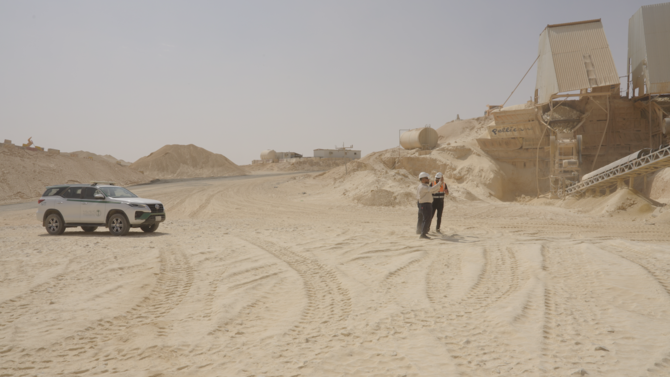
Al-Mujathil added that field inspections have proven highly effective in detecting violations, enabling teams to identify breaches directly and take immediate regulatory action.

Eng. Fawaz Al-Mujathil, director of the NCEC’s Riyadh branch. (Supplied)
Inspection teams have received complaints from several neighborhoods with high construction levels, including Al-Rimal, areas surrounding Al-Fursan and Khuzam, Al-Narjis, Al-Qirawan, Irqah, Diriyah and Al-Raed.
“These locations had been designated as enforcement priorities, with intensified monitoring and field inspections to ensure swift responses to complaints and minimize environmental impacts,” he explained.
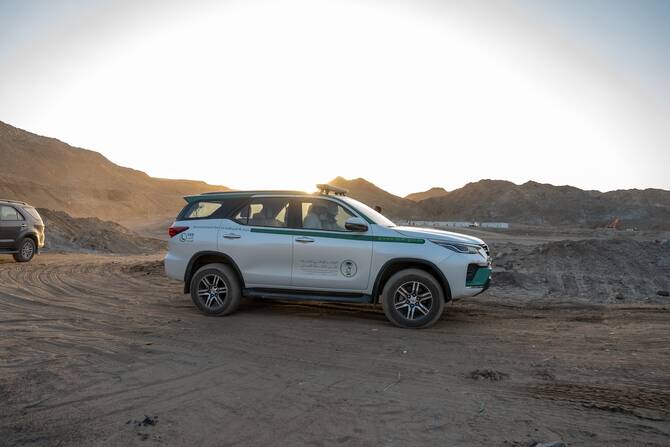
Launched in February in coordination with the Royal Commission for Riyadh City and the Riyadh Municipality, the campaign has carried out more than 3,000 inspections of construction sites across the capital. The enforcement approach focuses on achieving environmental compliance without disrupting construction activity.
“Construction work is not suspended. The focus is on achieving environmental compliance while allowing projects to continue,” said Al-Mujathil. “When environmental violations are identified, developers are given an appropriate period to correct their practices. If they fail to comply, regulatory action is taken,”
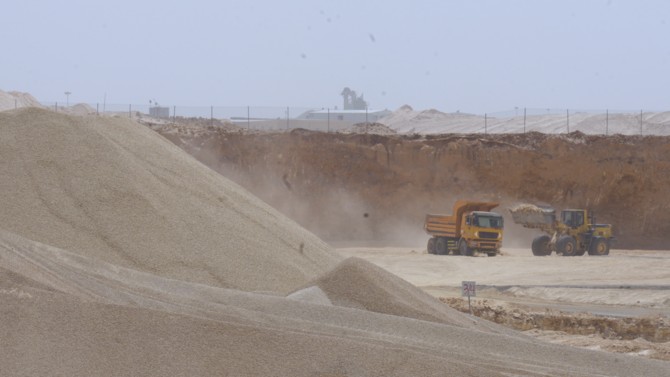
Contractors were informed of the Royal Commission’s dust control guidelines, and environmental permits granted to developers include stipulations for air quality requirements.
Al-Mujathil said breaches had taken place due to insufficient field supervision at some projects, with inspections revealing an absence of evening shift supervisors.
He urged smaller contractors to view dust control measures as a public health responsibility rather than merely a regulatory obligation: “Meeting the technical requirements is first and foremost a responsibility toward protecting air quality and safeguarding the health of workers on site and the surrounding community.
“These measures do not represent a significant financial burden and include applying dust suppressants, installing air quality monitoring devices at project sites, covering transport trucks, and complying with approved transportation procedures.”
The current dust control guidelines were developed in cooperation with the Royal Commission for Riyadh City for projects in the capital.
Similar requirements are being prepared for implementation across other Saudi cities in coordination with relevant authorities, with each city’s construction activity, dust sources and local conditions taken into account.
Al-Mujathil said the Kingdom’s air quality regulations are currently applied nationwide through a network of 240 air quality monitoring stations, while environmental complaints are received around the clock via the 988 hotline.
Since the campaign began in early February, inspection teams have conducted an average of 20 field visits per day, with the number increasing depending on complaint volumes. The teams operate around the clock in coordination with the Riyadh Municipality to monitor construction sites and respond to reports promptly.
Al-Mujathil said inspections of construction projects across Riyadh would continue, urging developers and contractors to comply fully with dust prevention, mitigation and control requirements.
“Adherence to these measures plays a key role in reducing the environmental impact of construction activities, improving air quality, protecting public health and supporting Riyadh’s sustainability and quality-of-life objectives,” he said.


