


RIYADH: As Saudi Arabia welcomes a growing number of international visitors, locals are opening their homes to tourists, offering firsthand glimpses of daily life, traditions and hospitality beyond the Kingdom’s national museums and historic sites.
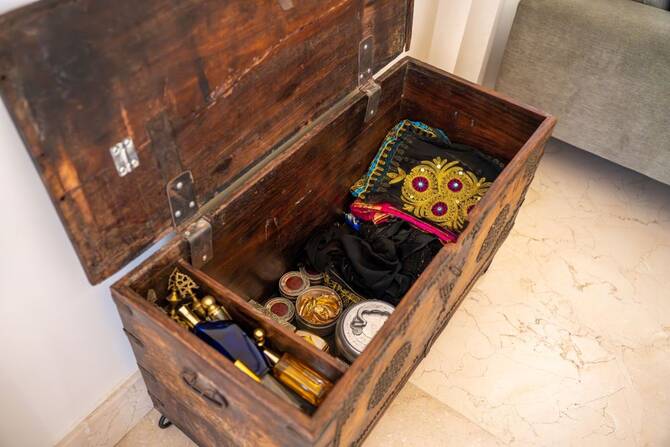
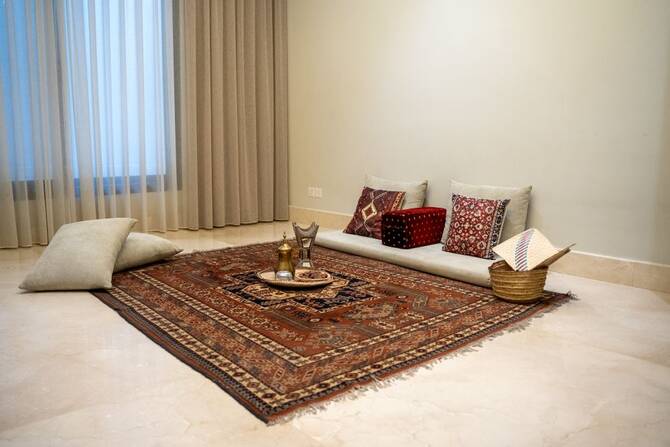
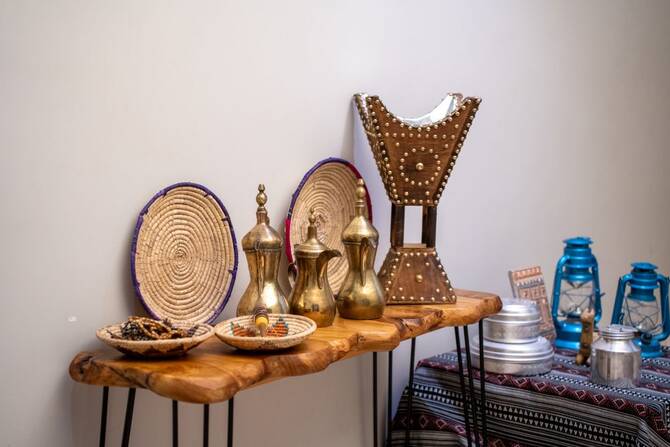
Among them is Norah Al-Baloud who welcomes guests at her home in Riyadh with Saudi coffee, traditional dishes and a collection of historical artifacts from the Najd region.
“A tourist who lives the experience remembers it completely differently from visiting a museum or reading a book,” Al-Baloud told Arab News.
“Once they experience it themselves, it becomes engraved in their memory.”
Al-Baloud uses the online platform Hihome to advertise the tours and since 2024 has welcomed guests from the UK and France among other countries.
The idea of welcoming visitors into her home grew out of a lifelong appreciation for Saudi heritage, Al-Baloud said.
“My interest in heritage and cultural tradition goes back a long way,” she said. “We inherited it from our grandparents and our families, and thankfully it was passed down to us.”
Years before becoming a host, Al-Baloud lived with her husband in the US, where she found herself introducing Saudi Arabia to the people around her.
“I always wanted to present our country in the best possible way,” she said. “I loved introducing foreigners to our traditions and teaching them about everything related to Saudi Arabia.”
She carried pieces of home with her wherever she went. Traditional Najdi artifacts, including a dallah, incense burners and other heritage items, became conversation starters that helped visitors understand Saudi culture.
After retiring and moving to Riyadh, Al-Baloud began searching for a way to continue sharing that passion.
At the same time, Saudi Arabia was undergoing a cultural transformation under Vision 2030, with tourism and heritage becoming central to the Kingdom’s future.
“When I saw this transformation and this growing interest, I felt I had finally found what I had been looking for,” she said.
“I wanted to be part of this national movement ... I felt it was my duty to showcase our culture and heritage, especially Najdi heritage.”
Although Saudi Arabia is home to a rich variety of regional traditions, Al-Baloud chose to focus on the customs of Najd, where she is from.
“Our Kingdom is rich in different cultures,” she said. “Every region has a very rich heritage of its own. While there are similarities across the Kingdom, every region also has something unique.”
Inside her home, guests are immersed in traditions that many Saudis grow up with. The experience begins with a traditional welcome of Saudi coffee and dates before visitors are introduced to customs surrounding hospitality, including the role of incense and the etiquette of serving coffee.
“We teach them how to hold the coffee cup, how to hold the dallah in the left hand while pouring (into a cup held in the) right, and how we begin serving guests from the right side of the gathering,” she said.
“These are all part of the beautiful etiquette within our heritage. We’ve inherited these traditions and they continue to this day.”
Many visitors arrive with specific experiences in mind. Some ask to learn how Saudi coffee is prepared, while others want to cook kabsa from beginning to end.
“It is like a shared language,” Al-Baloud said. “Some guests come and say, ‘Today I want to learn how to make Saudi coffee.’ Others want to learn how to cook kabsa from the very beginning until it is finished.”
Al-Baloud said her own appreciation for cultural exchange was shaped during her years in the US.
She still remembers arriving at university and attending orientation sessions where international students were introduced to American customs and traditions.
“They introduced us to everything about their culture,” she said. “We have something even deeper, richer and more beautiful, so we should also introduce foreigners to our culture.”
The exchange, she added, goes both ways. One visitor from Kosovo remains in contact with her years after their first meeting, sending videos of her mother cooking and sharing glimpses of everyday life back home.
“She started sharing with me the same kind of experiences that I had shared with her,” Al-Baloud said. “It became a shared language.”
Those conversations often reveal unexpected similarities between cultures. “Sometimes we discover that our traditions are similar to those found in other countries,” she said.
As Saudi Arabia welcomes growing numbers of international visitors, Al-Baloud believes those personal encounters are helping to reshape perceptions of the Kingdom.
“Visitors are always surprised by the way they’re welcomed,” she said. “They’re surprised by the generosity they experience in Saudi Arabia.”
She believes tourism has allowed visitors to move beyond preconceived ideas and connect with Saudis on a personal level.
“I think tourism has changed how people see Saudi Arabia and Saudis,” she said. “Through these personal visits, they’ve come to know our people and our heritage.”
Al-Baloud added that Vision 2030 has encouraged Saudis themselves to reconnect with their traditions.
“It encouraged everyone to pay more attention to our culture,” she said. “It made many Saudis feel that presenting our heritage is almost a responsibility.”


