- Planned agreement would institutionalize cooperation between the two countries’ interior ministries
- Interior ministers discuss counterterrorism, cybercrime and Afghanistan security as ties deepen
ISLAMABAD: Pakistan and Russia have agreed to pursue a memorandum of understanding (MoU) between their interior ministries, marking a step toward institutionalizing cooperation on security issues as both countries seek closer coordination against militancy, transnational crime and regional instability, Pakistan’s Interior Ministry said on Wednesday.
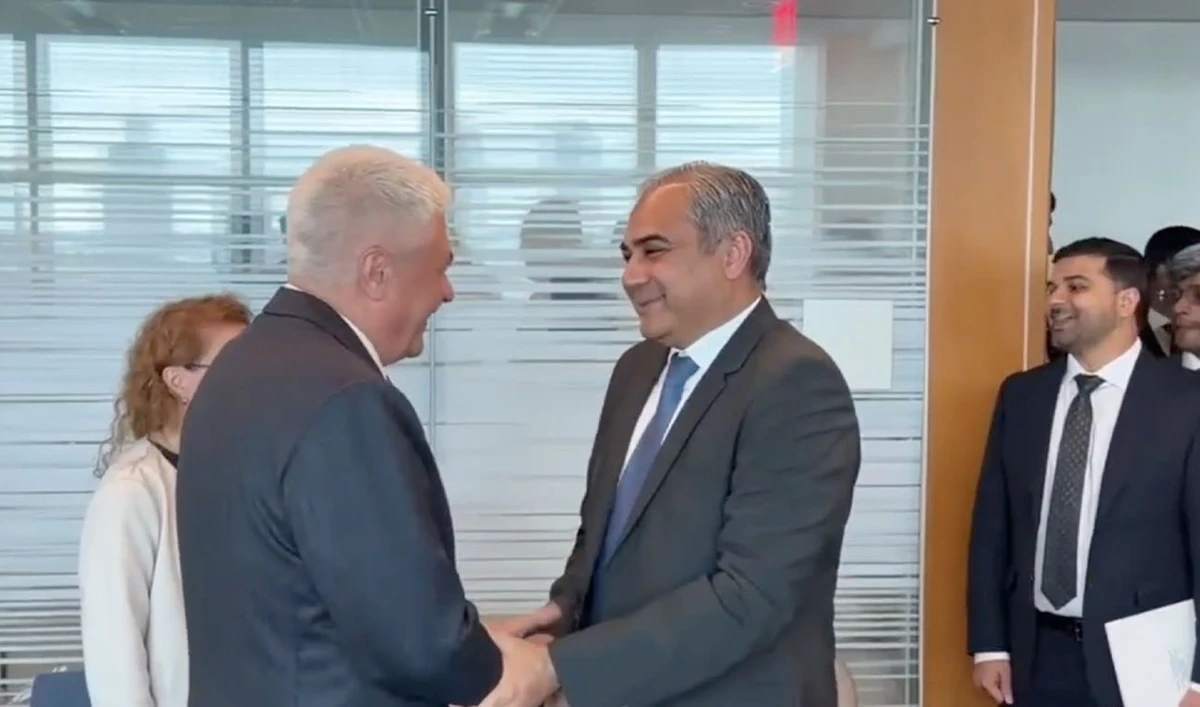
The proposed pact, which came under discussion in a meeting between Interior Minister Mohsin Naqvi and his Russian counterpart, Vladimir Kolokoltsev, at the United Nations headquarters, would reflect a gradual deepening of Pakistan-Russia relations beyond their traditional diplomatic and defense engagement into law enforcement and internal security.
For Pakistan, the cooperation comes as Islamabad continues to press the international community over militant groups it says operate from Afghan territory, a charge Kabul denies. Russia has also intensified its focus on security threats emanating from Afghanistan, particularly after attacks claimed by Daesh’s regional affiliate and concerns about instability spilling into Central Asia.
“Both sides agreed to pursue a memorandum of understanding (MoU) between their interior ministries to expand bilateral cooperation,” the Pakistani interior ministry said in a statement, without providing more details of the agreement.
The statement said the ministers discussed expanding cooperation on counterterrorism, counternarcotics, cybercrime and joint police exercises. They also exchanged views on the regional security situation and discussed a joint strategy against terrorist networks operating in the region, particularly in Afghanistan, according to the Pakistani side.
Referring to the security situation in Afghanistan, Naqvi said more than 25 terrorist organizations remained active in Afghanistan.
“Eliminating these extremist organizations is a shared responsibility of all. We need to work together to eradicate this menace,” the ministry quoted Naqvi as telling his Russian counterpart.
Relations between Pakistan and Afghanistan have deteriorated sharply since late 2024, driven by Islamabad’s accusations that the Taliban administration has failed to curb the activities of the Tehrik-i-Taliban Pakistan (TTP), whose fighters Pakistan says use Afghan territory to launch attacks across the border. Kabul has repeatedly denied the allegations, insisting it does not allow its soil to be used against other countries.
The worsening tensions have led to the closure of key border crossings, exchanges of fire between security forces and Pakistani airstrikes targeting what it says are militant hideouts inside Afghanistan.