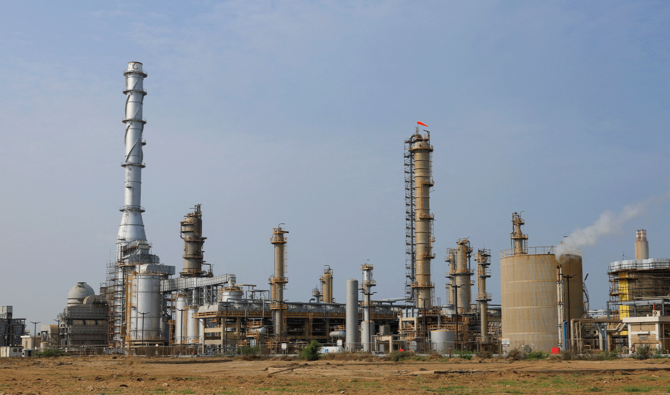

KARACHI: Pakistan’s state-owned Oil and Gas Development Company Limited (OGDCL) plans to begin horizontal drilling at its first shale gas pilot well in September, a senior company official said on Wednesday, marking the country’s most significant step yet toward commercial production of the unconventional fuel as it seeks to curb costly energy imports.
The horizontal drilling campaign at the Kunnar Unconventional-1 (KUC-1) well in the southern Sindh province will test whether shale gas trapped deep underground can be commercially extracted using hydraulic fracturing, or fracking, a technique that has transformed energy production in countries such as the United States.
Pakistan has struggled with declining conventional natural gas production while domestic demand continues to rise, forcing it to rely on expensive liquefied natural gas (LNG) imports to meet energy needs. Officials hope developing domestic shale resources will help cut the country’s import bill and conserve foreign exchange reserves.
OGDCL estimates the Indus Basin contains around 135 trillion cubic feet (TCF) of shale gas in place across its lower, middle and upper sections. The estimate refers to gas believed to exist underground rather than the amount that can be commercially recovered, which will depend on the results of exploration and production.
“Now we are moving toward the horizontal because in shale gas, first you drill a vertical well and after that you test it horizontally,” OGDCL Executive Director Exploration Khalid Amin Khan told Arab News on Wednesday.
“In the mid of September, we are going to start it and move toward horizontal fracking.”
Fracking is a well-stimulation technique that injects high-pressure fluid into underground rock formations to release trapped oil or natural gas. The method has underpinned the shale boom in the United States but remains largely unexplored in Pakistan.
OGDCL has been working on the shale gas pilot project for the past five years in Hyderabad and Sanghar districts of Sindh, where company studies indicate some of the country’s largest shale gas resources.
“The overall area we have studied has a potential capacity of 135 TCF shale gas in-place,” Khan said.
He said the company had identified around 74 TCF of shale gas in Sanghar and 7.5 TCF in Hyderabad.
The KUC-1 well is expected to complete horizontal drilling by February or March next year.
“KUC-1 is the first one and then in the next five years, we have a plan of drilling 23 vertical wells followed by their horizontal component in which we will be drilling wells and fracking,” Khan said.
He said OGDCL hoped to begin commercial shale gas production within five years, or even sooner if early pilot wells proved commercially viable.
“It would take at least, if not five, then three years or something like that,” he said.
Rahmat Ali, OGDCL’s manager for shale and tight gas, said Pakistan could eventually produce up to 900 million standard cubic feet of shale gas per day after sufficient wells were drilled.
“When we get to know about the potential of this study, for example in 77 TCF Sinjhoro (Sanghar) and 7.5 TCF (Hyderabad), we put a recovery factor in it that how much this recovery factor will be,” he said. “Ten percent, 12 percent or 50 percent.”
Independent energy expert Muhammad Saad Ali cautioned that Pakistan remained some way from commercial shale gas production.
“Obviously, if something big is found, then we will not extend our long-term LNG contracts, which are with Qatar,” he said, noting that the agreements are due to expire around 2031.
Khan said even modest domestic shale gas production would strengthen Pakistan’s energy security.
“Because as much gas we would produce locally it would help us reduce imports and save foreign exchange,” he said.