

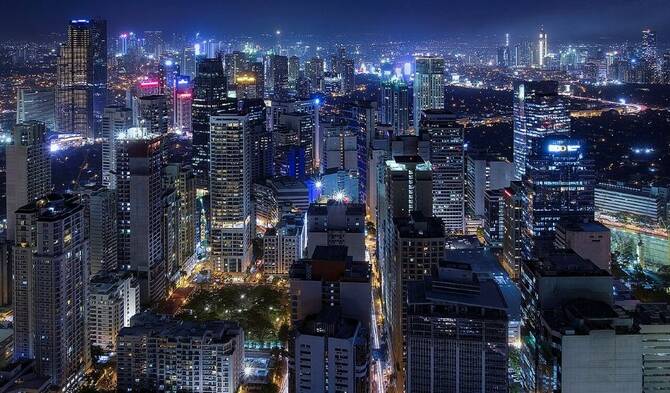

MANILA: The Philippines has been reclassified by the World Bank as an upper-middle income country — a target it has been trying to achieve since the 1980s — after posting a record gross national income per capita of $4,850.
The upper-middle income, or UMIC, rank is the World Bank’s category for economies with GNI per capita ranging from $4,636 to $14,375.
The Philippines was previously in the global lender’s lower-middle income bracket.
The World Bank’s latest country income classification on Wednesday showed that the Philippines’ GNI increased in 2025 by 8.5 percent from $4,470 in 2024, when it narrowly missed the UMIC threshold by $26.
“The Philippines achieved its reclassification through broad-based expansion. GDP grew at an average of 5.8 percent per year over five years, reflecting gains across all major industries, not a single sector boom, but an economy-wide shift,” the World Bank said in a statement on Wednesday.
For the Philippines — a country of nearly 120 million people — aspiring to the upper-middle income rank has for decades been a long-standing national development goal.
“It validates the progress we have made and the resilience of the Filipino people,” President Ferdinand Marcos Jr. said in a video message.
“After nearly four decades as a lower-middle income country since 1987, this milestone affirms that the economic policies we have pursued over the past four years have been effective.”
The year 1987 is when the World Bank’s classification system started to be introduced.
Based on GNI — the total income earned by a country’s residents in a year, including money made both inside the country and sent by nationals working abroad — and divided by population, it is mainly used to compare development levels and guide lending, aid, and policy decisions.
It does not directly measure standards of living. A country can be “upper-middle income” even if wealth is concentrated in a small group.
The only countries among the Association of Southeast Asian Nations that still remain in the lower-middle income country category are Cambodia, Myanmar, Laos, and Timor-Leste.
While Singapore is classified as high income, Malaysia and Thailand have been UMIC for decades. Indonesia joined the category in 2023. Vietnam was upgraded, together with the Philippines.
Michael Ricafort, chief economist at Rizal Commercial Banking Corp., told Arab News that the Philippines’ ascent had been mainly driven by its demographic sweet spot — a stage in which a country has a large working-age majority.
“This is largely due to the country’s favorable demographics,” he said.
“The Philippines only reached that demographic dividend since 2015, whereas other major ASEAN countries reached it much earlier than us … And now it’s the moment of the Philippines — it’s one of the fastest growing economies.”


