

DUBAI: “Dark comedy is my favorite genre,” says Saudi actress and writer Sarah Taibah. “So many comedy films are just silly jokes and nothing is serious, and so many Arabic dramas we watch are so much cheating, and weeping on the floor, and so much sadness. But what I like about dark comedy is that it’s closest to reality — I have days where I’ll cry my eyes out and then really have fun later on. Sometimes I laugh in the middle of crying. If you laugh at problems, they suddenly become lighter.”
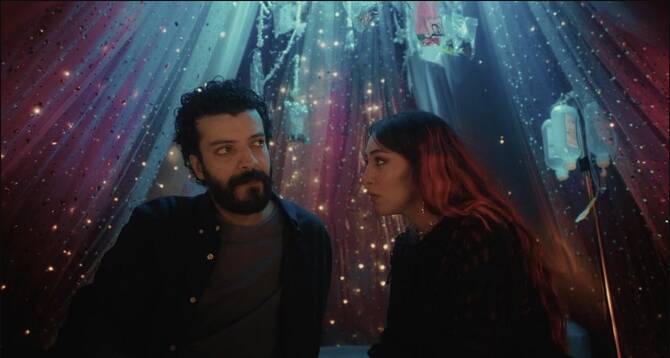
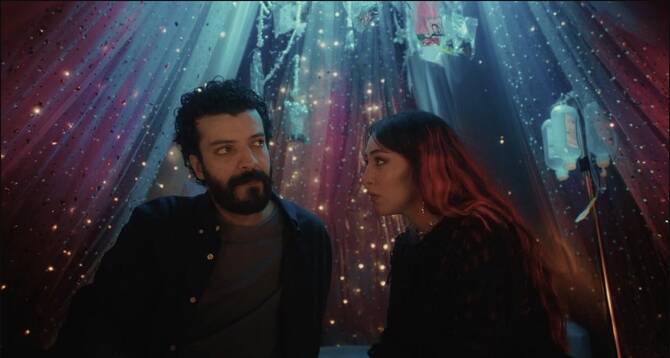
Taibah is discussing “A Matter of Life and Death,” a film she wrote and in which she plays the lead, 29-year-old Hayat, who believes she has inherited a family curse that means she will die on her 30th birthday. So the stubborn and superstitious Hayat decides to take matters into her own hands: She will end her life before life ends her. And when she meets heart surgeon Youssef in the emergency room, she’s convinced that he’s supposed to help her accomplish this unusual task.
“I really like that the (main) comment I get from people (who’ve watched the film) is: ‘You made us laugh and cry,’” Taibah says. “I feel like this is such an achievement.”
The film is packed with eccentric characters, from the evil aunts Rawya and Nafeesa, who take Hayat in after her she is orphaned, to the harasser Dr. Asaad, who torments Youssef. We meet a young child who’s afraid to lose the people he loves; a yellow-eyed black cat that can’t seem to leave Hayat’s family alone, and which she believes is the reincarnation of her grandmother; and a mother who has passed on her depression to her son’s heart during birth.
“The film’s genre hasn’t really been done before. That was what attracted me to the project,” says Yaqoub Alfarhan, who plays Youssef. “I know it’s a fantasy and a bit surrealist, but the project involves a return to feelings and emotions which is something I believe we’re missing. It’s pushing things in a way.”
Director Anas Ba-Tahaf tells Arab News: “I think audiences generally will relate, because, at its core, it’s a movie about generational trauma, and how the way we were raised, or the way we saw our parents dealing with each other, affects how we live our lives. And I think that’s a very universal thing. Then there’s the idea of obsession, or the idea of trying to be in control of everything, and again that’s something that is international.
“We brought that into more of a Saudi setup by having relatable characters,” he continues. “The aunt is like your aunties, for example. (You’ll recognize) the mean doctor.”
While Hayat is superstitious and darkly whimsical, Youssef is a brooding doctor who suffers from bradycardia, meaning his resting heart rate is abnormally low. It only increases when he’s performing surgery.
“He’s someone who suffers in silence, alone. But he comes to realize that maybe all he needed was someone to understand him and his struggles to pull him out of the space that he’s in,” Alfarhan says.
“It’s the story of two people who’ve lost what it means to actually live because of their obsession,” says Ba-Tahaf. “And then love brings them back and makes them realize that there is so much to live for.”
Addressing the film’s heavily stylized aesthetic — the purple and pink hues, Hayat’s witch-y style, the quirky interiors — Taibah says: “Although it has so much fantasy, color, romance, dreaminess, and lightness meeting darkness, all of that vibe… underneath it all, there are raw, relatable feelings: inherited trauma, getting stuck in your own head and obsessing about having things your way; getting anxiously attached to things; and constantly being scared of opening your heart up because you know you’ll lose things, so you’d rather not experience it in the first place.
“It has so much to do with attachment, obsession, and control, and how, in letting go of that, magic happens,” she continues. “This is the theme I wanted to convey. It’s very personal, so it wasn’t hard to build this world.”
Taibah says the script took her around two years of on-off writing to complete, but adds that, even during filming, it was still being adapted through suggestions from Ba-Tahaf.
“She allowed me to change so much in the script, and I thank her for that trust. I sort of just played with the themes that I love to play with,” the director says. “I’m very keen on the obsession theme. I’m a control freak myself so, in a way, I was trying to make a film to teach myself something. If you ask the team, you’ll know that I didn’t learn the lesson yet. But I’m trying.”


